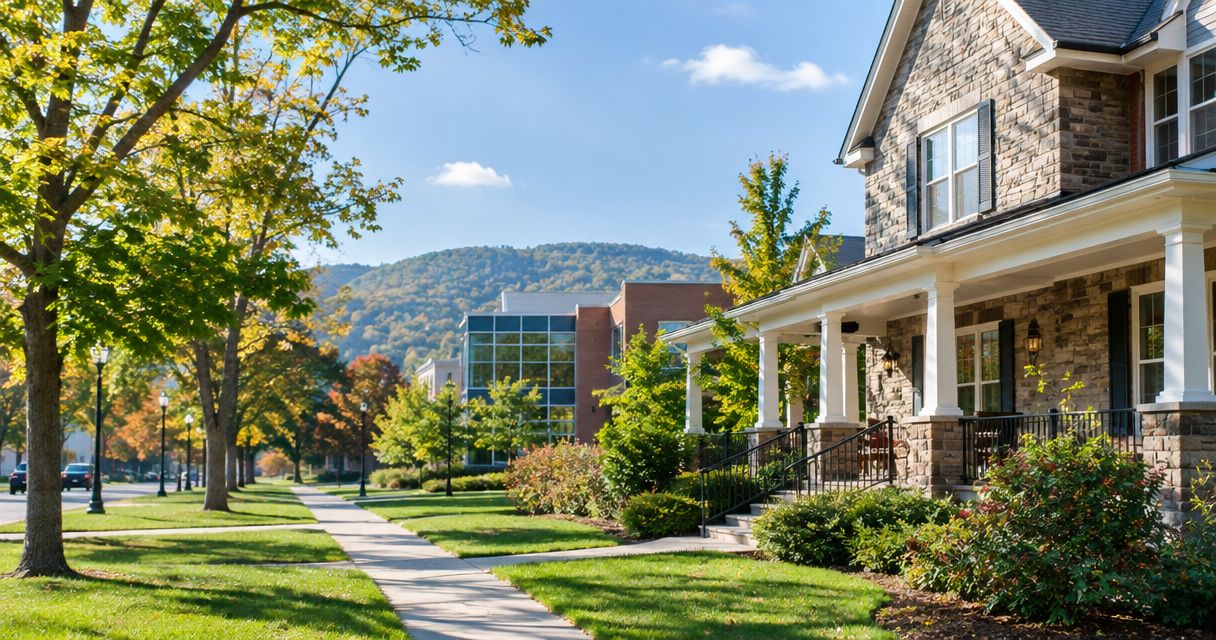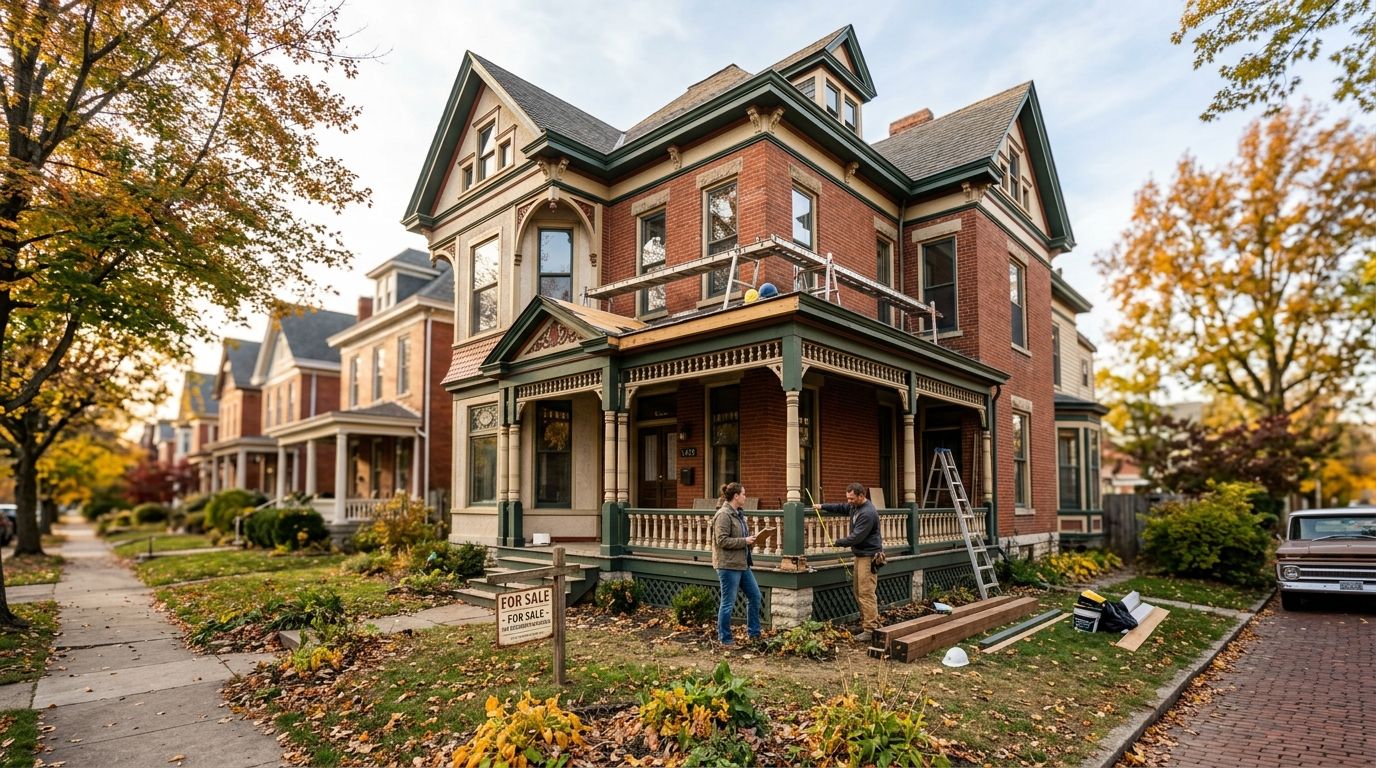
Historic homes for sale in Cincinnati for restoration buyers means century-old and pre-1940 properties in neighborhoods like Over-the-Rhine, Mount Adams, Clifton Heights, and East Walnut Hills that need work but carry architectural detail new construction can't replicate. Restoration buyers aren't chasing move-in-ready listings — they're pricing in the rewiring, the roof, and the plaster repair before they ever make an offer.
- Historic homes for sale in Cincinnati for restoration buyers cluster in Over-the-Rhine, Mount Adams, and East Walnut Hills, where pre-1940 stock dominates.
- Renovation loans like FHA 203k and Fannie Mae HomeStyle finance the purchase and the repairs in one mortgage.
- Permit history and open code violations matter more on a 1900s home than the listing photos do.
- Sandlin Realtors, led by Joey Sandlin with 20+ years in Southern Ohio and Cincinnati-area real estate, structures financing, inspection, and offer terms before you bid.
Why buying a historic home works differently for restoration buyers
A restoration buyer isn't evaluating square footage and fresh paint — they're evaluating whether the bones justify the work. That changes the financing conversation, the inspection scope, and the offer terms compared to a standard resale purchase in 2026.
Cincinnati's older neighborhoods carry housing stock built from the 1880s through the 1930s, much of it never brought up to modern electrical or plumbing code. A buyer who treats a 100-year-old listing like a turnkey house inherits unbudgeted repair costs in year one. Financing and inspection have to be sequenced correctly, not handled as afterthoughts.
How to buy a historic home for restoration in Cincinnati
Set your restoration budget and financing plan before you shop
Most restoration buyers underestimate the gap between purchase price and post-close repair cost on a pre-1940 home. Lock financing before touring, not after you've fallen for a listing.
- Get pre-qualified for a renovation-specific loan product rather than a plain conventional mortgage — how a renovation loan works in Cincinnati covers the purchase-plus-repair math
- Hold a contingency reserve above your contractor's bid; older homes surface hidden costs mid-project
- Confirm your lender will finance a property that fails a standard habitability check, because many historic listings do
- Verify whether the address qualifies for an Ohio historic preservation tax credit before you assume it does
Confirm the historic district and design review rules
A house inside a locally designated historic overlay comes with rules on exterior changes — windows, siding, roofline — that a house one block outside the boundary does not.
- Determine whether the property is inside a locally designated district or only listed on the National Register; the two carry very different renovation restrictions
- Ask the listing agent whether exterior alterations need design review board approval before permits issue
- Check whether the district restricts window replacement material or requires like-for-like siding
- Add time to your closing-to-renovation timeline if design review sign-off is required
Pull the permit and code history before you write an offer
Permit records tell you what has already been fixed and what is still original, and original 1910 wiring is not a selling point.
- Request the full permit history through the county before offering — how to check a home's permit history in Ohio shows where those records live
- Flag unpermitted additions and finished basements; both complicate insurance and resale
- Look for open, unresolved code violations tied to the address
- Cross-reference the permit record against what the seller's disclosure claims was updated
Budget for what the inspection will actually find
A general inspector and a historic-home specialist do not look at the same things. Pay for the second one.
- Schedule the full inspection before removing any contingency — how to prepare for a home inspection in Cincinnati covers sequencing
- Order separate assessments for knob-and-tube wiring, lead paint, and asbestos, all common in pre-1950 Cincinnati housing stock
- Have the foundation and chimney evaluated by a specialist instead of accepting "original" on a general report
- Get the roof age in writing rather than assuming the last renovation cycle included it
“If a 100-year-old home passes inspection with nothing flagged, the inspection wasn't thorough enough.”
Line up a restoration-experienced contractor before closing
General remodelers bid historic work wrong. Plaster, lath, and original millwork price differently than drywall and stock trim.
- Collect at least two bids from contractors with documented historic renovation work, not general remodeling portfolios
- Ask each contractor to walk the specific permit and inspection items already flagged
- Confirm their timeline accounts for design review approval if the property sits in a district
- Have the contractor sign off on your renovation loan draw schedule before closing if you're using one
Write an offer built for an older property
A competitive offer on a historic home still needs the right contingencies. Waiving inspection to win a bidding war on a 1905 house is a different risk than doing it on a 2015 build.
- Keep the inspection contingency even in a competitive market — how to write a competitive offer in the Cincinnati market covers terms that win without dropping protection
- Build extra due diligence days in for permit and title research
- Ask for a longer close when design review approval affects your renovation start
- Negotiate seller credits toward known repairs instead of a price cut alone; credits are often easier for sellers to accept
Talk to Sandlin Realtors about historic listings
20+ years guiding Southern Ohio and Cincinnati-area buyers through restoration purchases.
Comparison: four paths into a historic Cincinnati home
| Option | Best for | Key limitation |
|---|---|---|
| Property inside a designated historic district | Buyers who want protected architectural character long term | Exterior work needs design review approval, which slows the schedule |
| Older home outside a historic overlay | Buyers who want renovation freedom without a design board | Fewer protections against incompatible development nearby |
| Purchase with a renovation loan (203k or HomeStyle) | Buyers without cash reserves for repairs | Draw schedules and contractor approval add steps to closing |
| Distressed or foreclosure historic listing | Buyers comfortable with heavy repair scope for a lower entry point | Condition disclosures are limited or nonexistent |
Verdict: for most restoration buyers in Cincinnati in 2026, an older home just outside a designated district, financed with a renovation loan, gives the best mix of renovation freedom and manageable cost.
Common mistakes restoration buyers make in Cincinnati
- Skipping the specialty inspection. A general inspector will not flag knob-and-tube wiring or lead paint the way a historic-home specialist will.
- Pricing the purchase without pricing the repair. Buyers who anchor to list price alone get blindsided by the contractor bid that follows.
- Ignoring design review until after closing. Learning mid-renovation that the exterior work needs board approval stalls the entire project.
- Waiving inspection to win a bidding war. That tactic survives on newer construction. On a 1910 house it is how buyers inherit five-figure surprises.
- Using a standard loan on a home that won't pass habitability. Some historic listings require a renovation loan from day one or the deal dies at underwriting.
FAQ
Where are the best historic homes for sale in Cincinnati for restoration buyers?
Over-the-Rhine, Mount Adams, Clifton Heights, and East Walnut Hills carry the highest concentration of pre-1940 housing stock in the Cincinnati market in 2026. Each has different district rules, so confirm designation status before assuming renovation freedom.
Do I need a special loan to buy a historic home for restoration?
Not always, but a renovation loan such as an FHA 203k or Fannie Mae HomeStyle finances the purchase and the repairs in a single mortgage. Homes that fail a standard habitability check often cannot close on a conventional loan without one.
How much does it cost to restore a historic home in Cincinnati?
Restoration cost depends on condition, size, and whether the property sits in a district requiring design review. Get a contractor bid tied to your specific inspection findings rather than budgeting from a general estimate.
Is it hard to renovate a home in a Cincinnati historic district?
Exterior changes in a locally designated historic district require design review board approval before permits issue, which adds time to the renovation timeline. Interior work is typically unrestricted.
Should I waive the inspection on a historic home to win a bidding war?
No. Waiving inspection on a home built before 1950 carries far more risk than doing it on new construction, because wiring, plumbing, and foundation problems are common and expensive. Keep the contingency even in a competitive offer.
What is the difference between a National Register listing and a local historic district?
A National Register listing is largely honorary and does not restrict renovation. A local historic district designation does, requiring design review approval for exterior changes.
Can I check a home's permit and violation history before making an offer?
Yes. Permit and code violation records are public through the county and should be pulled before you write an offer on any pre-1950 property. They show what has been inspected and approved and what remains original.
One last thing
The detail most restoration buyers skip: a property's permit history tells a more honest story than the seller's disclosure. A disclosure lists what the seller remembers or chooses to mention. A permit record lists what actually got inspected and approved. On a historic Cincinnati property in 2026, pull the permit history before the inspection, not after — it tells you exactly what to ask the inspector to look at twice.
Joey Sandlin has spent 20+ years on Southern Ohio and Cincinnati-area transactions, including the financing and contingency structuring a restoration purchase demands. Sandlin Realtors works with buyers across Portsmouth, Scioto County, Wheelersburg, Lucasville, Otway, Rarden, and South Webster, plus the broader Cincinnati market covered here.