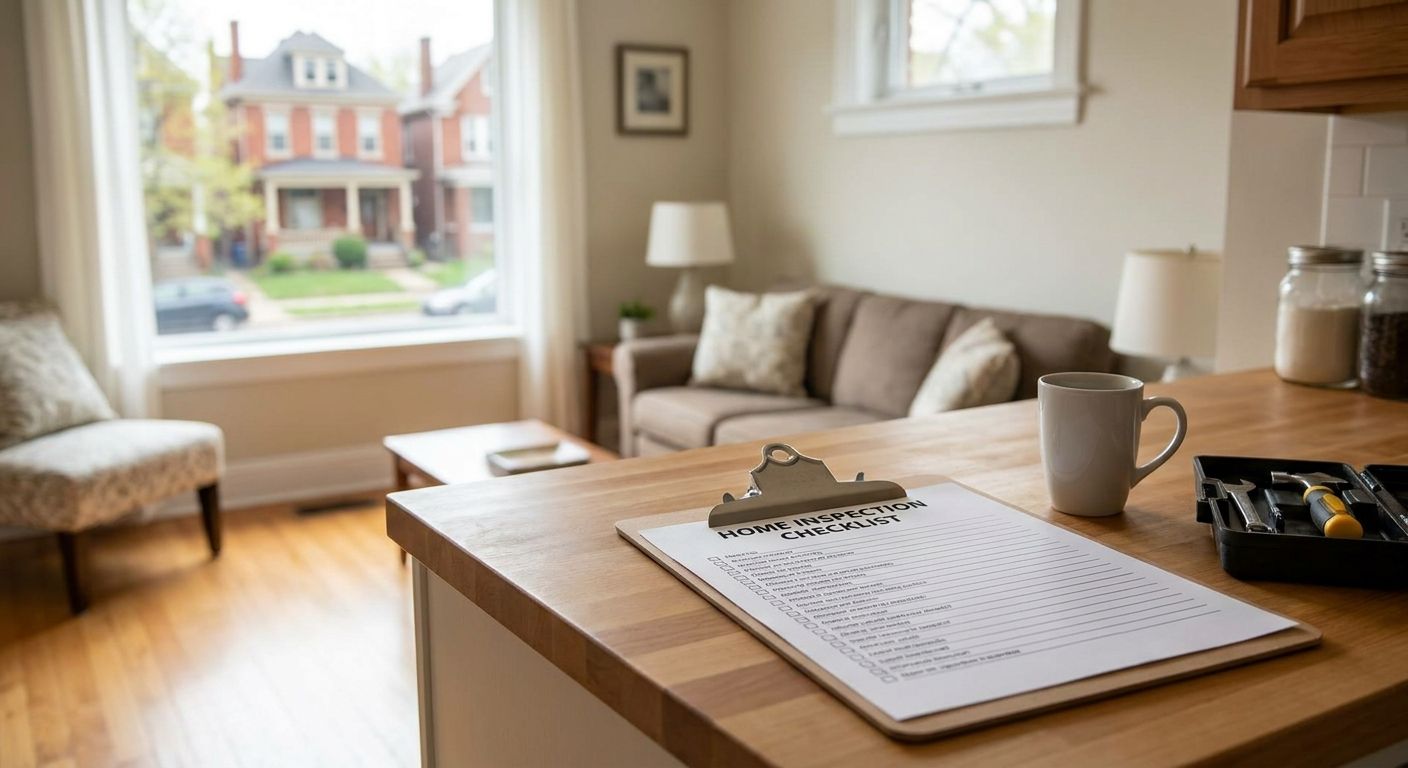
A home inspection checklist for Cincinnati sellers comes down to three things inspectors flag most in this market: aging electrical systems, foundation movement from the region's clay soil, and radon levels near or above the EPA's action threshold of 4 pCi/L. Clear access to the attic, crawlspace, and panel box, fix anything that leaks or trips a breaker, and pull permits for past renovations before the inspector arrives. The inspection itself doesn't pass or fail a house — an unprepared seller just hands the buyer's agent a longer punch list to negotiate against in 2026.
- Cincinnati inspections flag old wiring, foundation cracks, and radon above 4 pCi/L most often in 2026 listings.
- Fix small items — GFCI outlets, running toilets, slow drains — before showing; buyers negotiate on volume, not just severity.
- Sandlin Realtors walks Southern Ohio and Cincinnati sellers through pre-inspection prep so surprises don't stall closing.
- A typical inspection runs two to four hours; unpermitted work is one of the fastest ways to reopen negotiations.
Why this matters
An inspection report becomes the buyer's leverage the second it lands. In a market where Cincinnati's housing stock skews older — plenty of homes built before 1978 with original wiring or plumbing still in place — small deferred items add up fast on paper, even when the house is structurally sound.
Sellers who walk into the process blind usually end up re-negotiating price or repair credits over things a $200 fix would have handled. That's the gap Sandlin Realtors closes: choosing a real estate agent in Cincinnati who reviews your house before it's listed means fewer surprises once a buyer's inspector shows up in 2026.
How to prepare for a home inspection in Cincinnati
Work through these before the inspection date is set, not the night before:
- Clear physical access to the attic hatch, crawlspace, electrical panel, water heater, and HVAC unit — inspectors document anything they can't reach as "unable to inspect," which reads as a red flag to buyers.
- Test smoke and CO detectors and replace dead batteries; missing or non-functioning units are an easy, cheap fix that shows up on nearly every report otherwise.
- Run every faucet and flush every toilet before listing. Slow drains, running toilets, and small leaks under sinks are the most common items inspectors write up in Cincinnati homes.
- Grade soil and clean gutters so water moves away from the foundation — Cincinnati's clay-heavy soil holds moisture and expands, which is exactly what shows up as foundation movement on an inspection report.
- Pull permits for past work. Finished basements, decks, and electrical upgrades done without a permit are a common flag in Southern Ohio's older neighborhoods and can complicate financing, not just the inspection.
- Service the furnace and AC if it hasn't happened in the past year — inspectors note the age and condition of HVAC systems, and an undocumented service history reads worse than it should.
- Test for radon before listing rather than let the buyer's inspector find it first. Anything at or above 4 pCi/L typically triggers mitigation discussions, and knowing your number ahead of time keeps you in control of that conversation.
Get a pre-listing walkthrough
Know what a Cincinnati inspector will flag before your buyer's inspector does.
Why inspection findings vary from house to house
No two reports look the same, and the differences usually trace back to a handful of factors:
- Age of the home — pre-1978 houses carry lead paint disclosure requirements and older electrical panels that draw extra scrutiny.
- Foundation type and soil — homes on clay soil common around Cincinnati see more settling-related cracks than homes on rock or sand.
- Unpermitted renovations — finished basements or additions done without inspection sign-off resurface as flags years later.
- Proximity to water — homes near the Ohio River or other flood-prone areas get closer scrutiny on moisture, grading, and sump pump function.
- Deferred maintenance — a house that's been well-maintained for 10 years reads completely differently than one where repairs were pushed off.
- HVAC and roof age — systems past their expected service life get flagged even when they're still functioning.
Cosmetic fixes vs. structural repairs before the inspection
Inspectors don't grade paint or curb appeal — they grade function and safety. But cosmetic condition still shapes how a buyer reads the report once it lands. A house that looks cared-for on the surface gets more benefit of the doubt on minor items than one that looks neglected, even when the underlying systems are identical.
That's the same logic behind painting your house before selling: fresh paint doesn't fix a cracked foundation, but it changes how a buyer interprets everything else on the inspection report. Spend the repair budget on function first — wiring, plumbing, grading — then use whatever's left on the things a buyer sees before they ever read page one of the report.
One more distinction worth making plain: structural and safety items are negotiation leverage; cosmetic items are perception. Fixing both matters, but only one of them shows up as a line item a buyer can use to renegotiate price.
What do home inspectors look for in Cincinnati homes?
Cincinnati inspectors focus on the roof, foundation, electrical panel, plumbing, HVAC, and moisture intrusion first, since those are the systems most affected by the area's older housing stock and clay soil. They'll also check for radon, since Southern Ohio sits in a region where elevated readings aren't rare.
How long does a home inspection take in Cincinnati?
A standard single-family inspection takes two to four hours depending on the size, age, and condition of the house. Larger homes, finished basements, and additional structures like detached garages add time to the walkthrough.
What happens if the inspection finds problems?
Most findings turn into one of three outcomes: the seller makes the repair, the seller offers a credit at closing, or the buyer accepts the item as-is and moves forward. For negotiating a home offer after inspection, having repair estimates ready before the buyer's agent brings up a number keeps you in the stronger position.
Should sellers get a pre-listing inspection in Cincinnati?
A pre-listing inspection costs money upfront but gives you the same information the buyer's inspector will find — on your timeline, not theirs. Sellers who know their numbers going in negotiate from a position of knowledge instead of reacting to a report for the first time mid-contract.
FAQ
What is the most common home inspection issue in Cincinnati?
Electrical and plumbing items top most Cincinnati inspection reports, driven by the area's older housing stock. Foundation movement from clay soil and radon levels near the EPA's 4 pCi/L threshold are also common flags in 2026.
How much does a home inspection cost in Cincinnati?
Inspection pricing varies by inspector, home size, and add-ons like radon or sewer scope testing. Check with a licensed local inspector for a current quote rather than relying on a fixed figure.
Can a seller be present during the home inspection?
Sellers can typically be on the property but most inspectors and agents recommend leaving during the walkthrough so the buyer and inspector can talk freely. Being available by phone for questions is usually enough.
Do older Cincinnati homes fail inspections more often?
Older homes don't "fail" an inspection since inspections document condition rather than pass or fail a property. They do generate longer reports because original wiring, plumbing, and foundations show more wear than newer construction.
Is radon testing required in Ohio home sales?
Ohio doesn't mandate radon testing in every sale, but most buyer inspection packages in Southern Ohio include it given the region's known radon presence. A reading at or above 4 pCi/L usually opens a mitigation conversation.
What should sellers fix before a home inspection in Cincinnati?
Fix functional and safety items first — wiring, leaks, detectors, and drainage — since those carry the most negotiation weight. Cosmetic touch-ups help perception but won't offset an unresolved structural or safety item on the report.
How long is a home inspection contingency good for in Ohio?
Contingency timelines are set in the purchase contract and vary by deal, so there's no single standard length. Confirm the exact window with your agent before signing so repair negotiations don't run past the deadline.
One last thing
The item sellers underestimate most isn't the roof or the furnace — it's unpermitted work. A finished basement or an added bedroom done without a permit doesn't just show up on the inspection; it can complicate the buyer's financing entirely, since some lenders won't count unpermitted square footage toward the appraisal. Check your permit history before you list, not after an inspector asks for it.