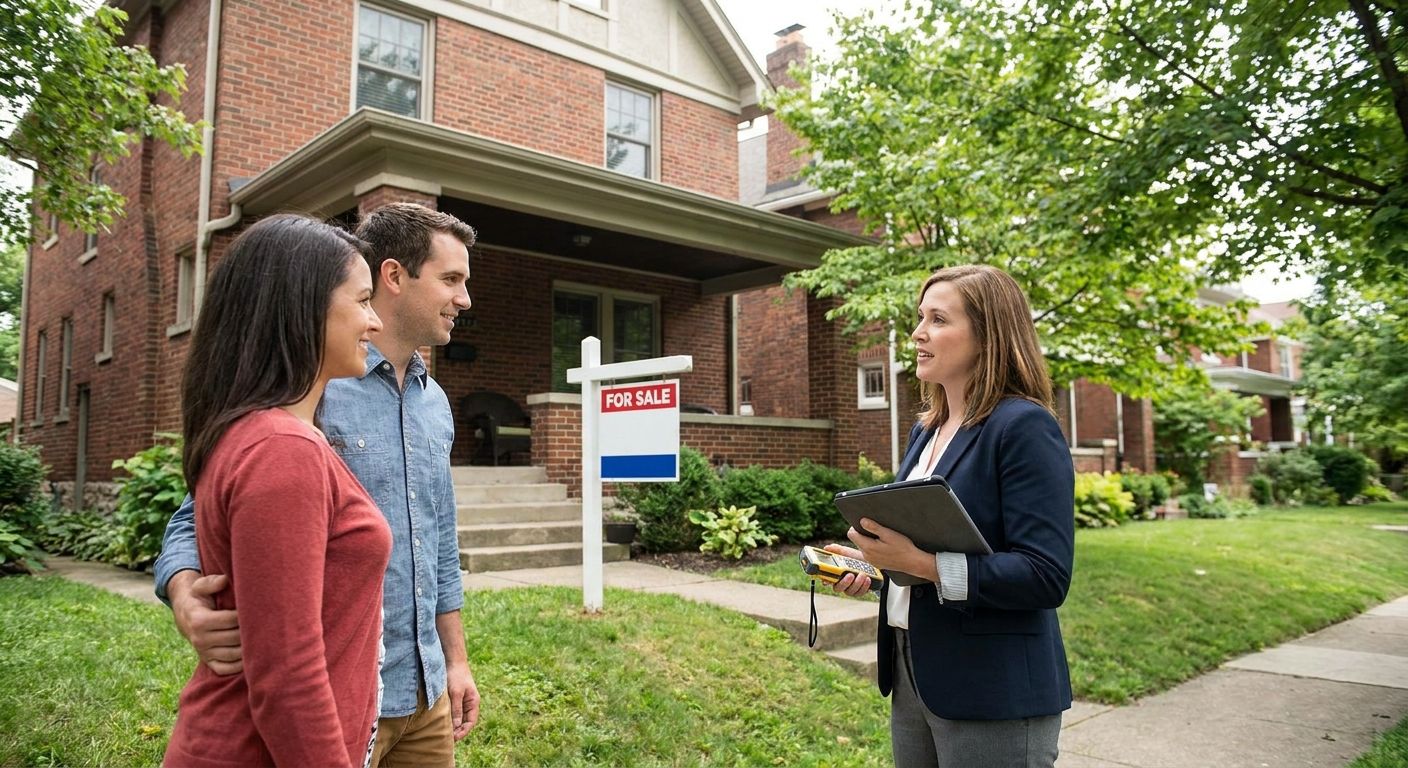
Getting a home appraisal in Cincinnati means your lender (or you, if you're selling FSBO or pre-listing) orders a state-licensed appraiser who inspects the property, compares it to 3 to 6 recent local sales, and returns a report in about 7 to 10 business days. The catch most buyers and sellers miss: the appraised value can land below the contract price, and when that happens the loan doesn't close until someone renegotiates, contests the report, or covers the gap in cash.
- The home appraisal process in Cincinnati starts with a lender-ordered, licensed appraiser inspecting the property and pulling 3 to 6 comparable sales.
- Reports typically take 7 to 10 business days — build that into your purchase contract's appraisal contingency window.
- A low appraisal doesn't kill a deal automatically; renegotiating price or challenging the report are both standard moves in 2026.
- Sandlin Realtors guides Southern Ohio sellers through appraisal timing and pricing strategy so the appraisal is a checkpoint, not a surprise.
Why this matters
An appraisal decides whether your lender will fund the loan at the price you agreed to — it's not optional paperwork. Sandlin Realtors works with sellers and buyers across Portsmouth, Scioto County, Wheelersburg, Lucasville, Otway, Rarden, and South Webster, and the same appraisal mechanics apply whether you're buying in Cincinnati or selling further south. Understanding the sequence before it starts saves you from a stalled closing in 2026.
Most deals never hit a snag because the appraised value clears the contract price with room to spare. The ones that stall almost always trace back to a seller or buyer who didn't know what the appraiser was looking at, or when.
How does the home appraisal process work in Cincinnati?
The sequence is the same for nearly every purchase or refinance in the Cincinnati market:
- Lender orders the appraisal. This usually happens right after the purchase contract is signed or once a refinance application is underwritten.
- An appraisal management company assigns a licensed appraiser. Neither the buyer nor the lender picks who shows up — that's a federal requirement meant to keep the value independent.
- The appraiser schedules the on-site inspection, typically within a few days of assignment.
- The inspection itself runs 30 to 60 minutes, covering square footage, condition, upgrades, and any obvious deferred maintenance.
- The appraiser pulls comparable sales — generally 3 to 6 closed sales from the past six months in the same neighborhood or a similar one.
- The final report goes to the lender, usually landing 7 to 10 business days after the inspection.
- Underwriting compares the appraised value to the contract price and either clears the loan or flags a shortfall.
That 7-to-10-day window is why most Cincinnati purchase contracts build a 10 to 14 day appraisal contingency — enough buffer to get the report back and still have a few days to negotiate if the number comes in short.
Purchase appraisal vs. refinance appraisal vs. pre-listing appraisal
The steps above stay consistent, but who orders the appraisal and what's riding on it changes by scenario.
| Type | Who orders it | Main purpose | Best for |
|---|---|---|---|
| Purchase appraisal | Buyer's lender | Confirm loan collateral matches contract price | Any financed home purchase |
| Refinance appraisal | Current lender | Set the new loan-to-value ratio | Homeowners refinancing or dropping PMI |
| Pre-listing appraisal | Seller (out of pocket, independently) | Set a defensible asking price before listing | Sellers pricing a unique or high-value property |
A pre-listing appraisal isn't required to sell, but sellers going the FSBO route in Cincinnati sometimes order one anyway to back up their asking price without an agent's comparative market analysis.
Why appraisal values vary across Cincinnati neighborhoods
Appraisers work from data, but the inputs differ block to block. The factors that move a Cincinnati-area appraisal most often:
- Comparable sale scarcity — fewer recent closings in a neighborhood forces the appraiser to reach further afield or further back in time.
- Unique renovations — a kitchen remodel or finished basement only counts if similar upgrades show up in the comps.
- Lot size and features — river frontage, acreage, or a larger-than-typical lot for the area can push value up if comps support it.
- School district boundaries — appraisers weigh district reputation the same way buyers do, and a boundary line can split value on the same street.
- Condition and deferred maintenance — a roof past its useful life or an outdated HVAC system shows up as a value adjustment, not just a buyer's opinion.
- Local market pace — in a fast-moving submarket, appraisers lean on the most recent closings even if inventory is thin.
What happens if the appraisal comes in low in Cincinnati?
A low appraisal means the lender won't finance more than the appraised value, so the buyer, seller, or both have to close the gap. The standard options are renegotiating the price down, the buyer paying the difference in cash, or contesting the report with additional comps — all three happen regularly in 2026 deals, and none of them require walking away from the contract. Buyers working through this stage often benefit from knowing how to negotiate a home offer in Cincinnati before the appraisal even lands.
Can you challenge a low home appraisal?
Yes — you can request a reconsideration of value by submitting comparable sales the appraiser didn't use or pointing out factual errors in the report. Lenders generally require the challenge to come with specific, verifiable comps rather than a general disagreement with the number.
Do you need an appraisal to sell a house by owner in Cincinnati?
No appraisal is required to list or sell FSBO, but any buyer using financing will still need one ordered by their lender before closing. Sellers pricing a home without an agent sometimes commission an independent appraisal first to avoid guessing at value.
Get local pricing guidance before you list
Work with a Southern Ohio team that tracks comparable sales every day.
FAQ
How long does a home appraisal take in Cincinnati?
A home appraisal in Cincinnati takes about 7 to 10 business days from order to final report, with the on-site inspection itself lasting 30 to 60 minutes. Purchase contracts typically build in a 10 to 14 day contingency to cover this window.
Who pays for the appraisal, buyer or seller?
The buyer typically pays for the appraisal as part of closing costs on a financed purchase in 2026. On a refinance, the homeowner refinancing covers the cost directly.
What's the difference between a home appraisal and a home inspection?
An appraisal estimates market value for the lender using comparable sales; an inspection evaluates the physical condition of systems and structure for the buyer. They're ordered separately and serve different parties in the transaction.
Can a seller be present during the appraisal?
Sellers can be present, but most appraisers prefer to work without commentary from either party during the inspection. A clean, accessible home matters more than anything said out loud.
Does a higher offer affect the appraisal value?
No, the appraiser values the property independently of the contract price using comparable sales, not the offer amount. A higher offer can still come in above appraised value, which is what creates a shortfall.
Is an appraisal required for a cash purchase in Cincinnati?
No, cash buyers aren't required to order an appraisal since no lender is involved, though many choose one anyway to confirm they're not overpaying. Financed purchases always require one.
What happens if the appraisal comes in higher than the offer?
A higher appraisal than the contract price is good news for the buyer — it means instant equity at closing and doesn't change the agreed purchase price. It has no effect on the loan approval process either way.
One last thing
The appraisal contingency deadline in your contract matters more than the appraisal itself — miss it, and you can lose the right to renegotiate or walk away even if the value comes in short. Read that date the day you sign, not the day the report shows up.