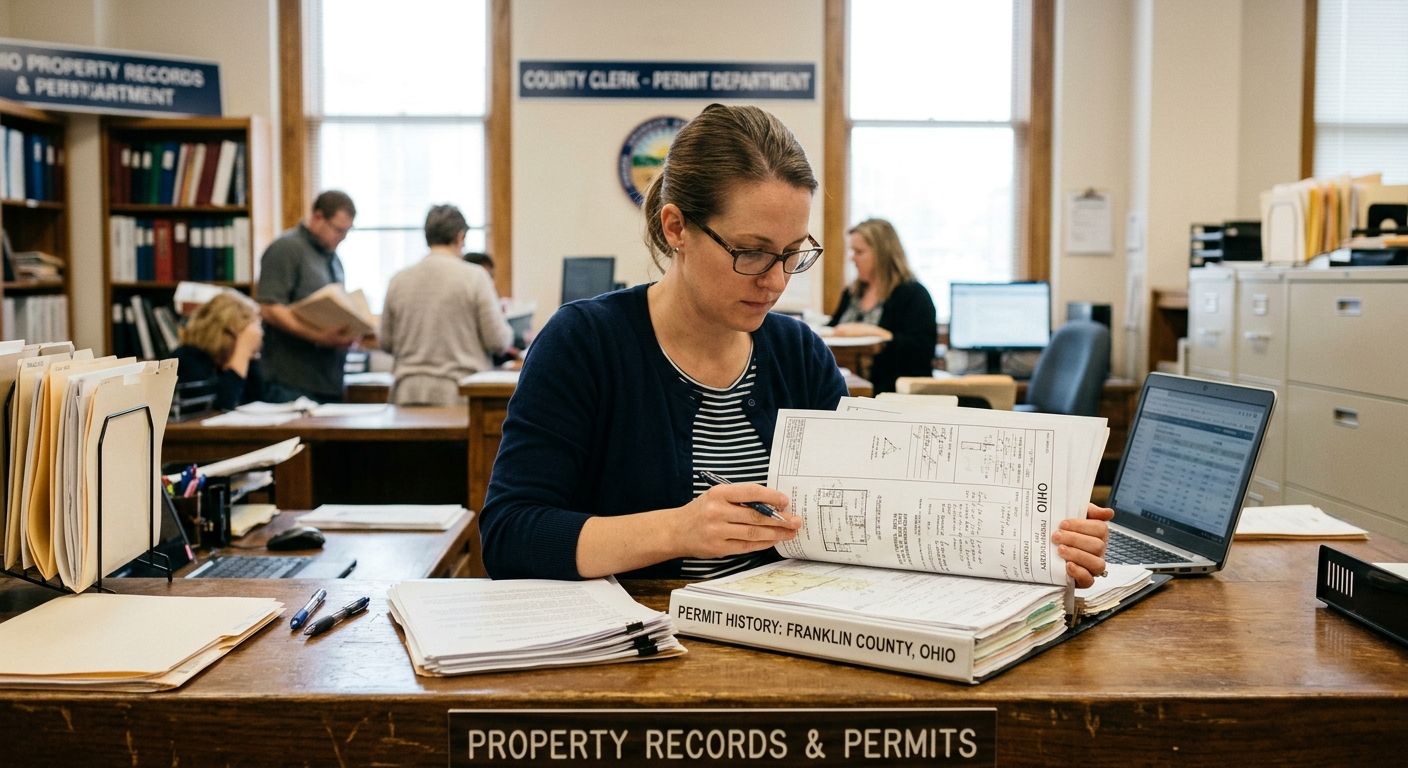
A home's permit history in Ohio lives with the county, not with the state, and the fastest path is a direct call to the county building or engineer's department where the property sits. This guide walks through where those records actually live in Southern Ohio and the Cincinnati market, and what a missing permit means for a sale.
- Home permit history ohio records are held at the county building department, not a single statewide database.
- Scioto County and most Southern Ohio counties require a parcel number and address to pull permit files.
- Unpermitted additions, decks, garages, or septic work surface during inspection and can stall financing in 2026.
- The county auditor's GIS site gives you the parcel number before you call the building department.
- Sandlin Realtors pulls permit and parcel history as part of due diligence on every listing and offer.
Why this matters
Ohio doesn't run one central permit portal. Each county clerk's building department, engineer's office, or health department keeps its own paper or digital files, and coverage varies by year built. A buyer who skips this check can inherit an unpermitted addition that an insurer flags, or a lender's appraiser discounts. A seller who doesn't confirm permit history before listing risks a surprise during the buyer's inspection period in 2026 that reopens negotiations late in the deal.
Joey Sandlin has spent 20+ years working Southern Ohio transactions across Portsmouth, Scioto County, Wheelersburg, Lucasville, Otway, Rarden, and South Webster, and permit gaps show up more often on older farmhouses and rural parcels than on newer subdivision builds. Sandlin Realtors treats a permit check as a standard step before a listing goes live, not an afterthought.
How do you check a home's permit history in Ohio?
Follow these steps in order — most Ohio counties process a request the same or next business day:
- Find the parcel number on the county auditor's website using the property address.
- Call or email the county building department (or the city building department if the home sits inside city limits) and request permit records tied to that parcel number.
- Ask specifically about additions, garages, decks, roofing, HVAC, electrical, and septic permits — clerks often only pull what you name.
- Request copies of the certificate of occupancy or final inspection sign-off for any major work, not just the permit application.
- Cross-check the health department separately if the property runs on a well or septic system, since those permits are often filed apart from building permits.
- Compare permit dates against square footage changes on the auditor's record card — a jump in finished square footage with no matching permit is the clearest red flag.
A home inspection won't catch permit gaps on its own; the inspector reports on condition, not paperwork, so the permit search has to happen separately and early.
County building department: the primary record source
Most Southern Ohio counties keep permit files at the building department in paper form for anything built before the mid-2000s, with digital records more common for recent work. Scioto County residents typically get faster answers by phone than by searching online, since the county doesn't run a public-facing permit portal. Expect to provide the parcel number, the address, and ideally the name on the deed at time of construction.
Best for: buyers and sellers in rural or older Southern Ohio properties where records are still paper-based.
County auditor's GIS site: parcel and structure data
The auditor's online GIS map shows square footage, year built, and sometimes a record of permitted improvements pulled from tax assessment updates. It won't show the permit application itself, but a mismatch between recorded square footage and what you see in person is the fastest way to flag undocumented work before you call the building department.
Best for: a quick first pass before you spend time on the phone with the building department.
Local health department: septic and well permits
Septic system installs, repairs, and well permits are usually filed with the county health department, separate from the building department's file. This matters most on rural parcels outside city sewer lines, which is common across Southern Ohio. If you're evaluating a property with a septic system, request the health department's permit and inspection file directly rather than assuming the building department has it.
Best for: rural and unincorporated properties without municipal sewer service.
Why permit records vary by county in Ohio
- Digitization level — larger counties near Cincinnati have moved more records online than smaller rural counties.
- Age of the structure — homes built before widespread digital recordkeeping often only have paper files.
- City vs. county jurisdiction — a property inside city limits may file with the city building department instead of the county.
- Type of work — additions and structural changes are tracked differently than cosmetic remodels, which often required no permit at all.
- Ownership history — multiple past owners can mean permits were pulled under a prior name, making search by current owner name unreliable.
- Septic and well systems — these route through the health department, not the building department, so a single request rarely covers both.
Related questions
What happens if you buy a house with unpermitted work in Ohio?
Unpermitted work doesn't automatically void a sale, but it can affect financing, insurance, and resale value down the line. Lenders and insurers sometimes require the buyer to pull a retroactive permit or have the work inspected before closing, which can add weeks to a 2026 closing timeline.
Do you need a permit to remodel a bathroom in Ohio?
Most Ohio jurisdictions require a permit for plumbing, electrical, or structural changes during a bathroom remodel, even when the footprint doesn't change. Purely cosmetic work — new fixtures, tile, or paint — typically doesn't need one, but the threshold varies by county building department.
Can a home seller be held liable for unpermitted work in Ohio?
A seller can face liability if they knowingly misrepresent or fail to disclose known unpermitted work discovered later, which is why Ohio's residential property disclosure form asks about known defects and modifications directly. Disclosing what you know up front, rather than hoping an inspection misses it, protects the seller more than silence does.
A property with a clean permit trail closes faster and negotiates better — that's the practical payoff of checking early rather than after an offer is already signed.
“A property with a clean permit trail closes faster and negotiates better than one with unanswered questions on the county file.”
Work with a local permit-history expert
Get Southern Ohio guidance before you buy or list.
FAQ
How do I find the permit history of a house in Ohio?
You find permit history by contacting the county building department where the property is located and requesting records by parcel number and address. Most Southern Ohio counties keep these files in-house rather than in a searchable online database, so a phone call is usually faster than a web search.
Is there a statewide database for Ohio building permits?
No, Ohio does not run one statewide permit database; each county and, in some cases, each city maintains its own building department records. You have to check with the specific county or city where the home sits.
What records show if an addition was permitted in Ohio?
The county building department's permit file and the certificate of occupancy or final inspection sign-off show whether an addition was permitted. The county auditor's GIS record can flag a square footage mismatch that suggests unpermitted work, but it won't confirm the permit itself.
Do septic system permits show up with building permits in Ohio?
No, septic system and well permits are usually filed with the county health department, separate from the building department's records. Request both files separately when evaluating a rural Southern Ohio property.
How long does it take to get permit records from an Ohio county?
Most county building departments process a permit records request the same day or within one business day when you provide the parcel number. Older paper files can take longer if staff need to pull physical archives.
Can unpermitted work affect a home appraisal in Ohio?
Yes, an appraiser can discount value or flag unpermitted square footage, which can affect the loan amount a lender approves. This is one reason to check permit history before listing or making an offer, not after.
One last thing
The auditor's GIS square footage figure is the single fastest tell for undisclosed work — if the listed square footage looks larger than what a buyer sees walking through the home, that gap almost always traces back to an unpermitted addition somewhere on the county's paper trail.