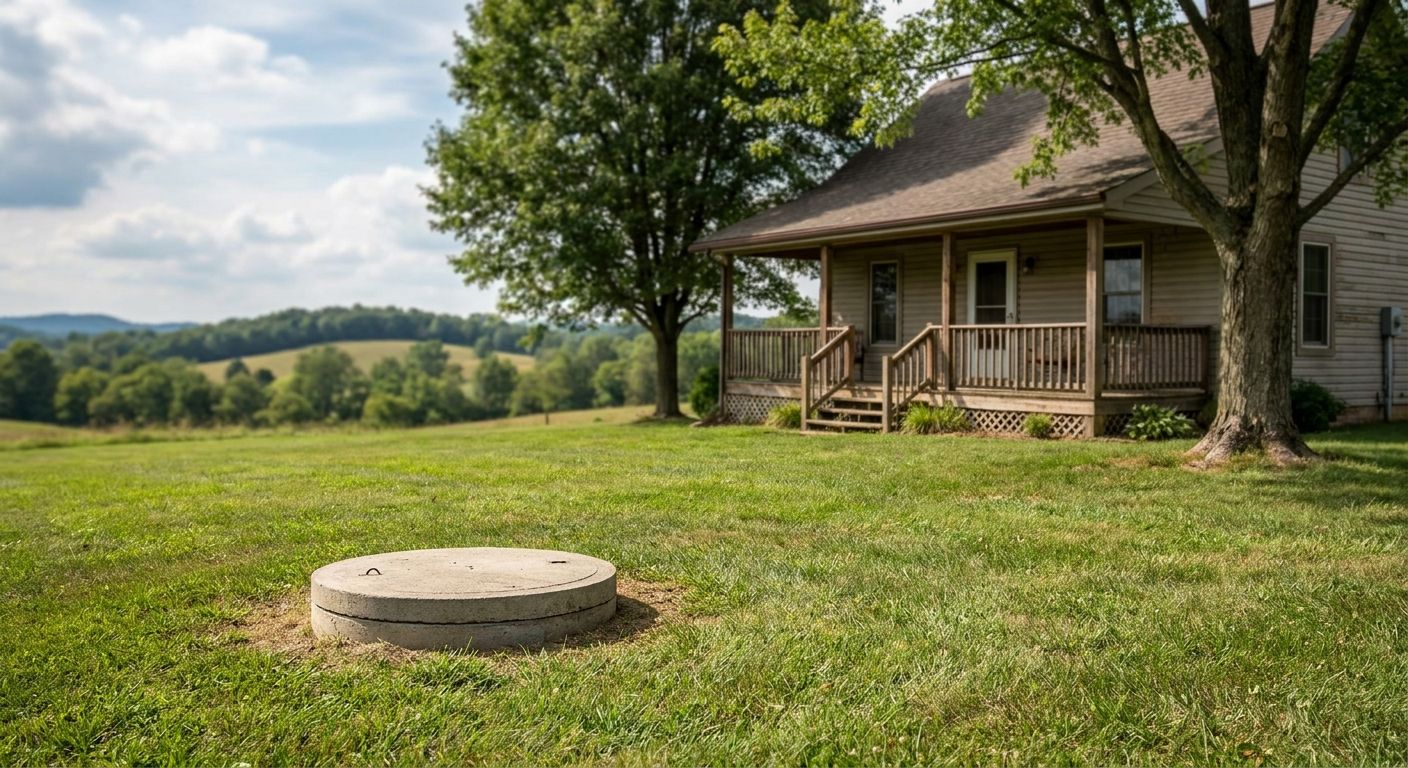
Buying a home with a septic system in Southern Ohio is routine, not risky, as long as you verify the system's permit history, tank capacity, and inspection results before closing. The hidden cost buyers skip is the standalone septic inspection — separate from the general home inspection — plus confirming the county health department has the system on record as approved for the property's bedroom count.
- A home with a septic system in Southern Ohio needs its own inspection, not just a general home inspection.
- Scioto County and surrounding health departments keep permit records — pull them before you write an offer.
- Conventional systems typically last 20-30 years; ask when the tank was last pumped.
- USDA and FHA loans require the septic system to meet local health department standards before closing.
- Sandlin Realtors has guided buyers through septic-equipped properties across Portsmouth, Wheelersburg, and Lucasville for over 20 years.
Why this matters
Most of Portsmouth, Wheelersburg, Lucasville, Otway, Rarden, and South Webster sits outside municipal sewer lines, so septic is the default, not the exception. A property with a failing or undersized system can stall your closing, trigger a repair negotiation, or get flagged by an appraiser before your loan even funds. Buyers who treat septic due diligence the same way they treat a roof or foundation check close faster and negotiate from knowledge rather than guesswork.
The process itself isn't complicated. It just requires a few extra steps most buyers in municipal-sewer areas never think about, and skipping them is how deals fall apart in the final week before closing in 2026.
How to buy a home with a septic system in Southern Ohio
Follow these steps in order, starting the moment a septic-equipped property goes under contract:
- Pull the county health department record. Scioto County and neighboring counties keep permits and inspection history for every household sewage treatment system on file — request it before or immediately after your offer is accepted.
- Schedule a dedicated septic inspection. This is separate from your home inspection preparation and should include a tank pump-out and a visual check of the leach field.
- Confirm the system matches the home's bedroom count. Ohio permits size systems to bedrooms, not square footage — a 3-bedroom home needs a system rated for 3 bedrooms, regardless of later additions.
- Check for a percolation test on file. If none exists and you plan an addition or a garage near the leach field, you'll need one before you build.
- Loop in your lender early. USDA and FHA loans both require the septic system to meet local health department standards, and an appraiser flagging an unapproved system can delay funding by weeks.
- Negotiate repairs or credits from the inspection report, not assumptions. A system that's pumped, permitted, and passing is a non-issue; one that isn't becomes a line item in your purchase agreement.
Properties on larger tracts — including much of what sells as rural property in Southern Ohio — often carry systems installed decades ago, which makes steps one and two non-negotiable rather than optional in 2026.
Conventional septic systems: what to expect
A conventional system uses a septic tank and a gravity-fed leach field, and it's the most common setup across Scioto County. Best for: buyers purchasing a home with well-drained soil and a documented, recently pumped tank. The tradeoff is that a conventional system depends entirely on soil quality — sandy or well-draining soil works fine, while dense clay shortens its usable life. Verdict: buy, once the pump-out and permit records check out.
Aerobic treatment systems: what to expect
An aerobic treatment system uses a mechanical aerator to treat wastewater before it reaches the drain field, and it shows up on properties where soil conditions ruled out a conventional install. Best for: buyers on tighter lots or poor-percolation soil. The tradeoff is mechanical and electrical components that need periodic servicing — ask for the maintenance contract history, not just the pump-out record. Verdict: buy, with the service history in hand.
Mound and sand-filter systems: what to expect
Mound systems raise the drain field above grade using imported sand when natural soil or a high water table won't support a standard leach field. Best for: hillier or lower-lying Southern Ohio parcels where a conventional system failed its percolation test. The tradeoff is a larger visible footprint on the lot and heavier long-term maintenance than a conventional system. Verdict: buy, but budget for upkeep.
Manufactured and modular homes in the region frequently pair with one of these three system types rather than municipal sewer. If that's your path, the guide on buying a manufactured home in Southern Ohio covers the financing quirks specific to that property type.
Why septic requirements vary across Southern Ohio
A handful of factors decide whether a system passes inspection cleanly or turns into a repair negotiation:
- Soil type and drainage — clay-heavy lots push you toward a mound or aerobic system; sandy soil supports conventional systems longer.
- Lot size and setback distances — county health departments enforce minimum distances from wells, property lines, and water sources.
- System age — most conventional systems run 20-30 years before major components need replacement.
- Bedroom count versus system rating — an undersized system for the actual bedroom count is one of the most common inspection findings.
- Maintenance history — a documented pump-out schedule is worth more at the table than a seller's verbal assurance.
- Proximity to the Ohio River and other waterways — properties near water face stricter permitting because of runoff.
“Pull the permit record first, then let the inspection confirm what the paperwork already told you.”
Get local guidance before you offer
Joey Sandlin's team reviews septic and permit history on Southern Ohio listings.
Does a septic system affect home financing in Ohio?
Yes — USDA and FHA loans both require the septic system to be approved by the local health department before closing, and an appraiser who flags an unpermitted or failing system can delay or deny funding. Conventional loans are more flexible, but most lenders still want the system documented in the appraisal. Buyers using rural financing should read the breakdown of USDA loans in rural Southern Ohio before writing an offer in 2026.
How do I find out if a septic system has a permit on file?
The county health department maintains permit and inspection records for every household sewage treatment system, and you can request that history during your due diligence period. A missing permit doesn't automatically kill a deal, but it does mean you'll likely need a percolation test before any future addition or outbuilding.
What happens if the septic system fails inspection after I'm under contract?
A failed inspection leads to one of three outcomes: the seller repairs or replaces the system before closing, you negotiate a credit toward the repair, or you exit under your inspection contingency. Which route makes sense depends on the scope of the failure and how the property was priced going in.
FAQ
How do I know if a Southern Ohio home has a septic system instead of city sewer?
Check the county health department records or have your agent confirm it during the listing review. Most rural properties around Scioto County, Wheelersburg, and Lucasville run on septic because municipal sewer lines don't reach them.
Is buying a home with a septic system a bad idea?
No, buying a home with a septic system is standard across Southern Ohio and isn't a red flag on its own. The real risk is skipping the dedicated septic inspection and permit check before closing.
How often should a septic tank be pumped?
Most conventional septic tanks need pumping every 3-5 years depending on household size and tank capacity. A seller who can produce that pump-out history negotiates from a stronger position.
Can I get a USDA loan on a home with a septic system in rural Ohio?
Yes, USDA loans are common for septic-equipped rural properties in Southern Ohio. The system must be approved by the local health department and documented in the appraisal before funding.
What's the difference between a septic inspection and a home inspection?
A home inspection covers the structure, roof, and major systems, while a septic inspection evaluates the tank, leach field, and pump-out history. You need both when buying a septic-equipped home.
Do all Southern Ohio counties require the same septic permits?
No, each county health department administers its own household sewage treatment permit process. Requirements and inspection timelines differ from one county to the next.
How long does a septic system typically last?
A conventional septic system typically lasts 20-30 years with regular pumping and maintenance. Aerobic and mound systems vary more because of mechanical wear and soil conditions.
Who pays for the septic inspection in an Ohio home purchase?
It's negotiable and usually falls to the buyer as part of due diligence, though sellers sometimes cover a pre-listing inspection. Put whichever arrangement you agree on in writing in the purchase contract.
One last thing
The detail most buyers overlook: a septic permit is tied to bedroom count, not to how many people live in the house. If a seller finished a basement bedroom or added a bunkroom without updating the permit, the county can treat the system as undersized — and that surfaces late, often during the final week before closing. Ask for the permit and the bedroom rating in the same breath, and you'll never get blindsided by that one.