
Homes for sale in Cincinnati with solar panels put you in a smaller, trickier pool than the standard resale market: fewer listings, uneven disclosure quality, and a paperwork trail that decides whether the panels are actually worth anything to you at closing. This guide walks Cincinnati buyers through what to check before writing an offer on a solar-equipped house in 2026.
- Homes for sale in Cincinnati with solar panels split into owned systems and leased systems, and the difference changes financing, appraisal value, and your offer terms.
- Verify ownership paperwork and permit history before you fall for a listing photo of panels on a roof.
- A home inspection for a solar house should cover roof penetrations, wiring, and inverter condition, not just the panels themselves.
- Leased solar systems typically add zero appraised value in 2026 and can complicate your mortgage approval if the lease isn't assumable.
- Sandlin Realtors verifies solar disclosure paperwork for Cincinnati buyers before an offer goes in, not after.
Why homes with solar panels matter for Cincinnati buyers
Cincinnati sits in Duke Energy Ohio's service territory, and Ohio's net metering rules let homeowners with grid-tied solar systems bank bill credits for excess production. That's the upside buyers are chasing: lower monthly electric costs from day one, without going through the installation process themselves.
But the segment has a different risk profile than a standard home search. You're not just evaluating square footage and school districts — you're evaluating a piece of equipment with its own ownership structure, warranty, and lien status. Sandlin Realtors works Cincinnati buyer searches with that distinction built in from the first showing, and Joey Sandlin brings over 20 years of experience guiding buyers through exactly these paperwork-heavy transactions across Southern Ohio and greater Cincinnati.
Skip the verification steps and you risk one of two outcomes in 2026: overpaying for a leased system with no resale value, or underpaying because an appraiser couldn't confirm the panels were owned outright.
Define your solar priorities before you search
Set your filters before you start scrolling listings, not after you've fallen for a house.
- Decide whether you want owned panels only, or you're open to a home with a transferable lease
- Set a target for system age — panels older than 15 years are approaching the tail end of a standard manufacturer warranty
- Note your roof orientation preference, since south- and west-facing roofs in the Cincinnati area produce the most output
- Decide if you need net metering already enrolled with Duke Energy Ohio, or you're willing to re-enroll after closing
- Flag whether you want roof space or an electrical setup that supports a future battery backup
Search listings and confirm the disclosure paperwork exists
A listing that says "solar" in the headline tells you almost nothing on its own.
- Pull the full MLS remarks and photos, not just the headline keyword
- Ask the listing agent for the original solar installation contract or lease agreement
- Request the last 12 months of utility bills to see real production and cost offset
- Check the city or county permit history for the solar installation before you assume it was done to code
- Confirm the system carries a manufacturer or installer warranty that survives a change in ownership
Verify the system is owned, not leased
This single question changes your financing, your offer, and your long-term cost.
- Ask directly: is the system owned outright, financed with a loan attached to the home, or leased through a third-party company
- If leased, get the lease terms in writing, including the payment and remaining term
- Confirm whether the lease is assumable and what credit approval the leasing company requires from you as the new owner
- Run the numbers on a leased system's payment against your expected electric bill savings before making an offer
- Have your agent check for a UCC filing tied to the panels, which signals a lender or leasing company holds a lien on the equipment
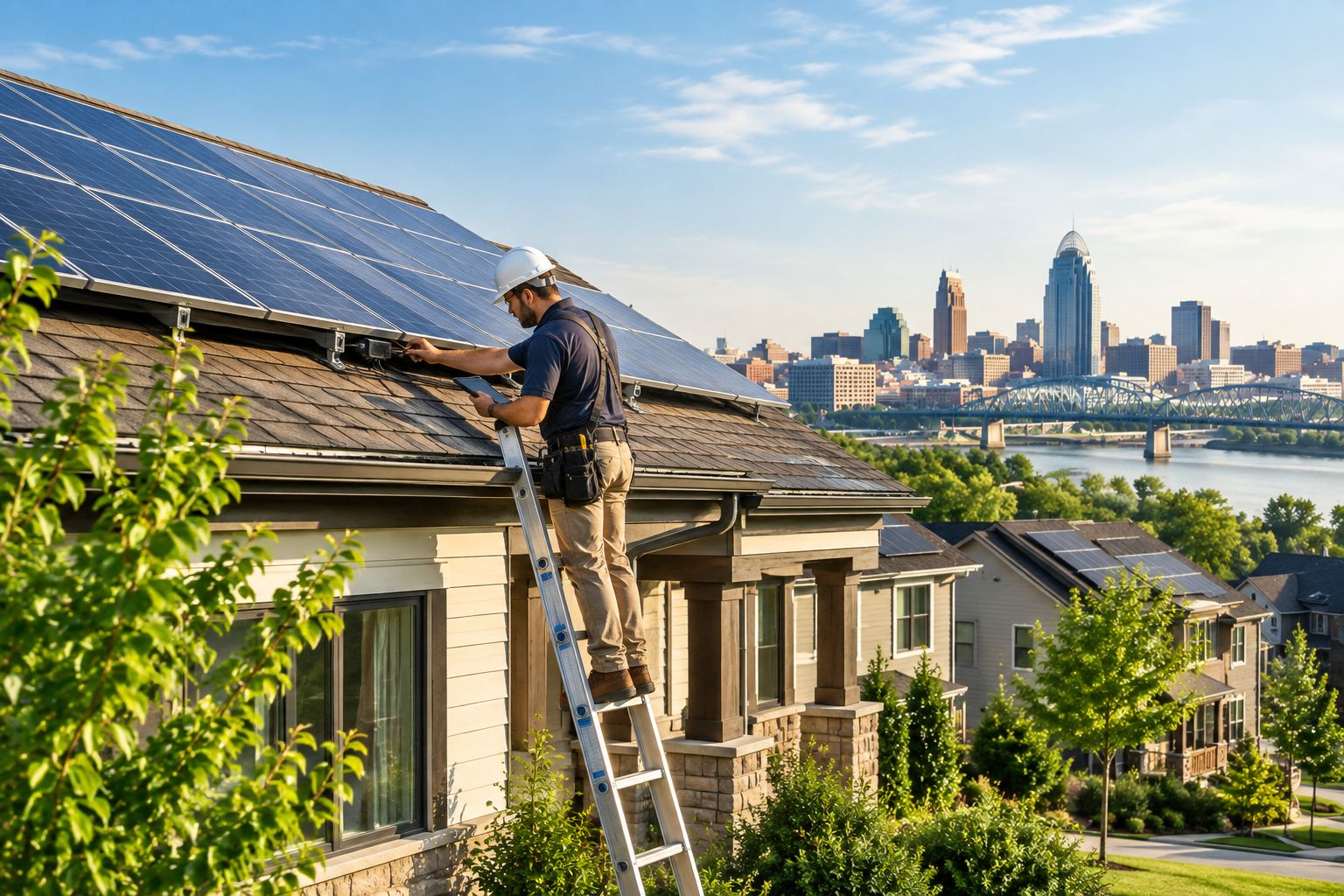
Get the panels inspected as part of your home inspection
A general home inspector won't automatically dig into solar-specific issues unless you ask.
- Add solar-specific line items to the inspection scope: roof penetration seals, wiring, and inverter condition
- Ask the inspector to check the roof condition underneath the panels — replacing a roof with panels installed adds cost and coordination
- Request inverter production data or app access to review actual output history, not just the sales brochure numbers
- Confirm the electrical panel and disconnect switches meet current code
- Note any visible panel damage, discoloration, or loose mounting hardware in the home inspection report
Confirm the appraisal accounts for the solar system
An appraiser can only credit equipment they can confirm you'll own.
- Ask your lender whether the appraiser will value owned solar equipment as part of the home or exclude it entirely
- Understand that leased systems typically add no appraised value, since the buyer doesn't own the equipment
- Bring the installation contract and any home energy audit to the appraisal appointment
- If the appraisal comes in low, ask your agent to pull comparable sales with owned solar systems for the report
Write an offer that protects you on solar terms
Don't remove contingencies until the solar paperwork checks out.
- Make the offer contingent on receiving and approving transfer paperwork for owned systems
- For leased systems, make the offer contingent on lender and lease-company approval of the transfer
- Ask for a production guarantee or workmanship warranty transfer in writing before waiving contingencies
- Confirm in writing which fixtures stay — without a signed transfer, some sellers try to renegotiate around the panels at closing
Ask about solar-home listings in Cincinnati
Get owned-vs-leased verification before you write an offer.
Close and transfer the utility account and net metering enrollment
The paperwork doesn't end at the closing table.
- Contact Duke Energy Ohio to transfer the utility account into your name effective on closing day
- Re-enroll or confirm continued enrollment in net metering so bill credits keep flowing without a gap
- Register warranty transfers with the manufacturer or installer within their stated window
- Save every transfer document — you'll want it for any future resale, insurance claim, or refinance
Ways to find and buy a solar-equipped home in Cincinnati
| Option | Best for | Key limitation |
|---|---|---|
| MLS search filtered for "solar" keyword | Buyers who want immediate inventory to review | Owned-solar homes aren't tagged consistently on Cincinnati MLS listings |
| Agent-assisted search with disclosure verification | Buyers who want vetted, permit-checked solar homes | Depends on the agent's local network and follow-through on paperwork |
| New construction with solar-ready wiring | Buyers who want to add panels on their own timeline | System isn't installed at closing; you add the cost later |
| Any home, retrofit solar after purchase | Buyers focused on layout and location over an existing system | Retrofit timeline, permitting, and installer selection sit outside your purchase closing |
Verdict: an agent-assisted search that verifies ownership and permit history before you write an offer beats a raw MLS keyword search every time in 2026 — the paperwork is where solar deals fall apart, not the roof.
Common mistakes Cincinnati solar-home buyers make
- Assuming "solar" in the listing means owned outright. Many Cincinnati listings use the word loosely for leased or financed systems with a lien attached.
- Skipping the permit check. An unpermitted installation can complicate your insurance and your own future resale.
- Ignoring how the appraisal treats a leased system. Leased panels routinely appraise at zero added value, which affects your loan-to-value math.
- Not confirming net metering transfers. Some sellers forget to notify Duke Energy Ohio of the sale, leaving credits misapplied for months.
- Overlooking roof age under the panels. A 20-year-old roof under a 10-year-old solar array means a costly removal-and-reinstall project down the road.
FAQ
What's the best way to find homes for sale in Cincinnati with solar panels?
Work with an agent who verifies ownership and permit paperwork on every solar listing rather than relying on MLS keyword searches alone, since "solar" in a listing doesn't confirm the system is owned outright in 2026.
Is a home with leased solar panels worth buying?
It can be, but only after you review the lease terms, confirm the lease is assumable, and compare the monthly lease payment to your expected electric bill savings before making an offer.
Do solar panels increase a home's appraised value in Cincinnati?
Owned solar systems can add appraised value when the appraiser can confirm ownership and installation documentation; leased systems typically add none since the buyer doesn't own the equipment.
How do I transfer net metering when buying a solar home in Ohio?
Contact Duke Energy Ohio directly after closing to transfer the account and confirm continued net metering enrollment, since the seller's account closes automatically at sale.
Should a home inspection include the solar panels?
Yes — ask your inspector to add solar-specific checks for roof penetrations, wiring, and inverter condition, since a standard inspection scope doesn't always cover them by default.
What happens to solar panel warranties when a home sells?
Most manufacturer warranties, often running 25 years from installation, transfer to the new owner if registered with the manufacturer within their stated window after closing.
Are there specific Cincinnati neighborhoods with more solar-equipped homes?
Solar adoption in Cincinnati skews toward newer-construction suburbs with fewer tree-canopy and HOA restrictions, though inventory shifts year to year and is worth checking listing by listing.
Can I add solar panels after buying a home in Cincinnati instead of searching for one that already has them?
Yes, retrofitting is common and lets you choose your own installer and system size, but it adds a separate project timeline and cost outside your home purchase.
One last thing
A rooftop full of panels proves nothing by itself — the installation contract does. Before you get attached to any home for sale in Cincinnati with solar panels in 2026, ask for that one document first; everything else in the transaction, from your appraisal to your offer terms, follows from whether it says "owned" or "leased."