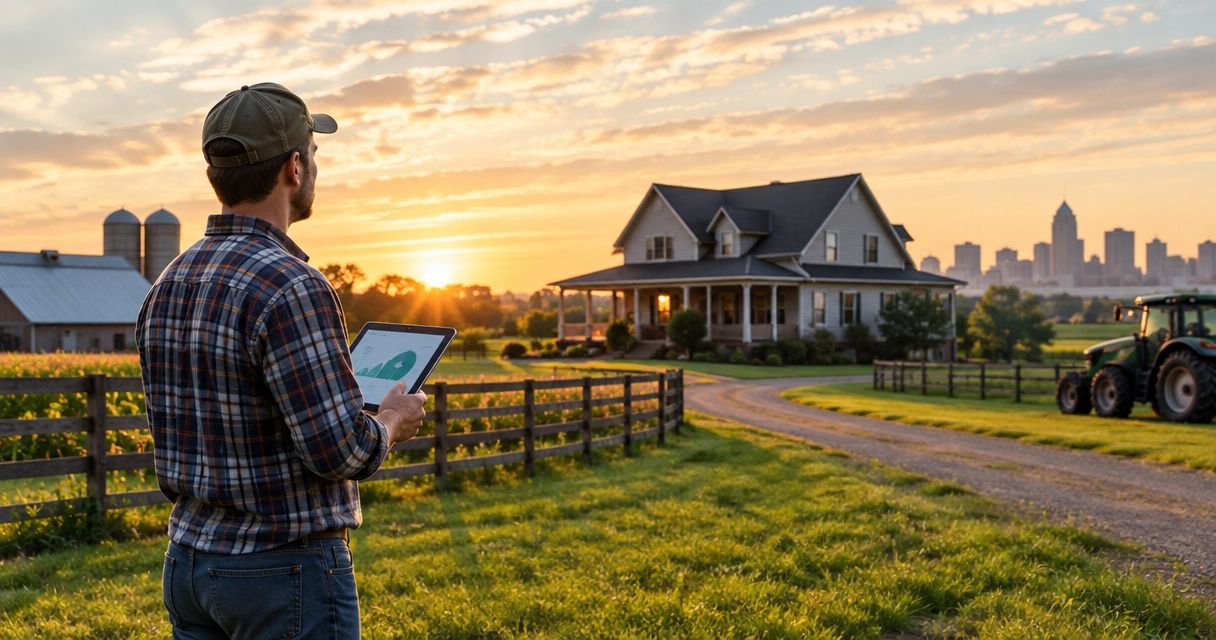
Buying a farm or agricultural property near Cincinnati means shopping outside the city limits, in the counties where zoning still allows livestock, row crops, and outbuildings — Clermont, Brown, Adams, and the rural edges of Warren and Highland counties see most of that inventory move. Farmers and agricultural buyers need acreage, water rights, and soil that work for their operation, not just a bigger lot line on a listing sheet.
- Homes for sale in Cincinnati for farmers and agricultural buyers sit mostly in rural counties outside the city, not inside Cincinnati proper.
- Zoning, well/septic condition, and soil drainage matter more to agricultural buyers than school ratings.
- USDA Rural Development loans can finance qualifying farmland near Cincinnati and across Southern Ohio in 2026.
- Sandlin Realtors, led by Joey Sandlin with 20+ years in Southern Ohio real estate, verifies acreage and zoning before you write an offer.
Why this matters for farmers and agricultural buyers
Agricultural buyers search differently than the average homebuyer. A 4-bedroom colonial with a two-car garage is irrelevant if the parcel doesn't carry agricultural zoning or the well can't support irrigation.
Farms and acreage for sale in Southern Ohio move on different timelines than suburban listings — fewer comparable sales, wider price swings, and county auditor records that often lag behind actual land use. Buyers who skip zoning verification or a soil test end up finding out post-closing that the parcel can't support what they planned.
Sandlin Realtors works these transactions the way agricultural buyers need them worked: zoning confirmed, water tested, and outbuildings inspected before an offer goes in, not after. Joey Sandlin has spent 20+ years in Southern Ohio real estate, and that experience covers the rural parcels around Cincinnati's exurbs as well as land closer to Portsmouth, Scioto County, Wheelersburg, Lucasville, Otway, Rarden, and South Webster.
Steps to find the right agricultural property near Cincinnati
Define your acreage and zoning needs before you search
Most portal searches filter by bedrooms and bathrooms, not by agricultural zoning code — that filter has to happen manually or with an agent who knows the county codes.
- Pull the zoning designation directly from the county auditor's site, not the listing description
- Decide whether you need agricultural-exempt zoning or just rural-residential with acreage
- Confirm minimum lot size requirements if you plan to add structures later
- Check whether the parcel currently carries a CAUV (Current Agricultural Use Valuation) designation, since that affects your first property tax bill
- Rule out parcels split by an easement that blocks equipment access
Check soil, drainage, and water rights
A gorgeous 15-acre parcel is worthless for row crops if half of it floods every spring.
- Request a soil survey or pull one from the USDA Web Soil Survey tool for the parcel
- Ask whether the property has tile drainage installed, and when
- Confirm water rights and any shared-well or shared-pond agreements with neighboring parcels
- Walk the property after a rain if the tour timing allows it
- Check for wetland designations that restrict tilling or building
Verify septic and well systems before you tour twice
Rural properties near Cincinnati run on well water and septic far more often than city listings, and both systems age differently than municipal utilities.
- Ask for the septic permit and last inspection date from the county health department
- Test well output and water quality, not just whether the tap runs
- Confirm septic system size matches household and any farm-use needs
- Budget for a system replacement if the septic was installed before 1990
- Review how to buy a home with well water in Southern Ohio before you write an offer on a well-dependent property
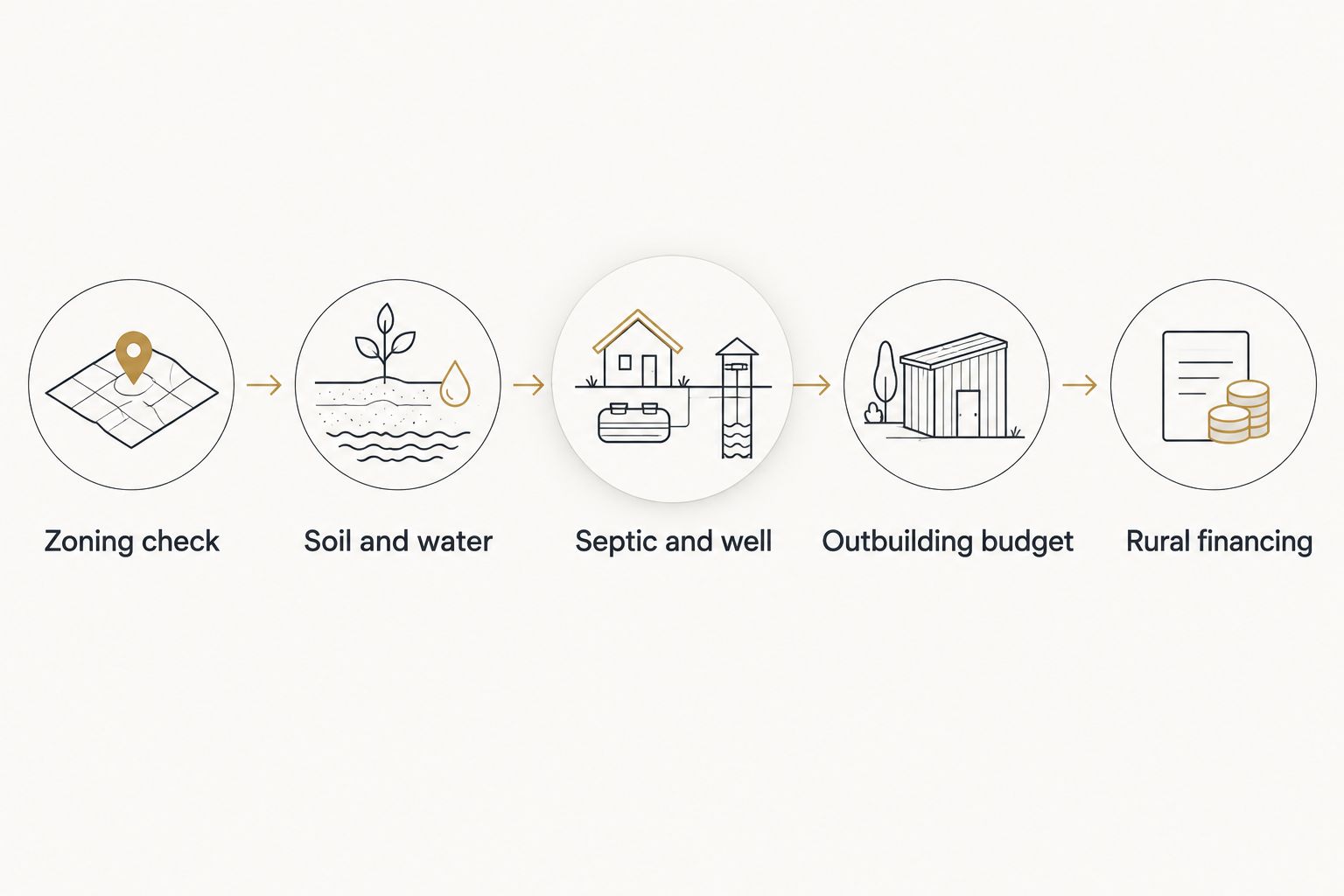
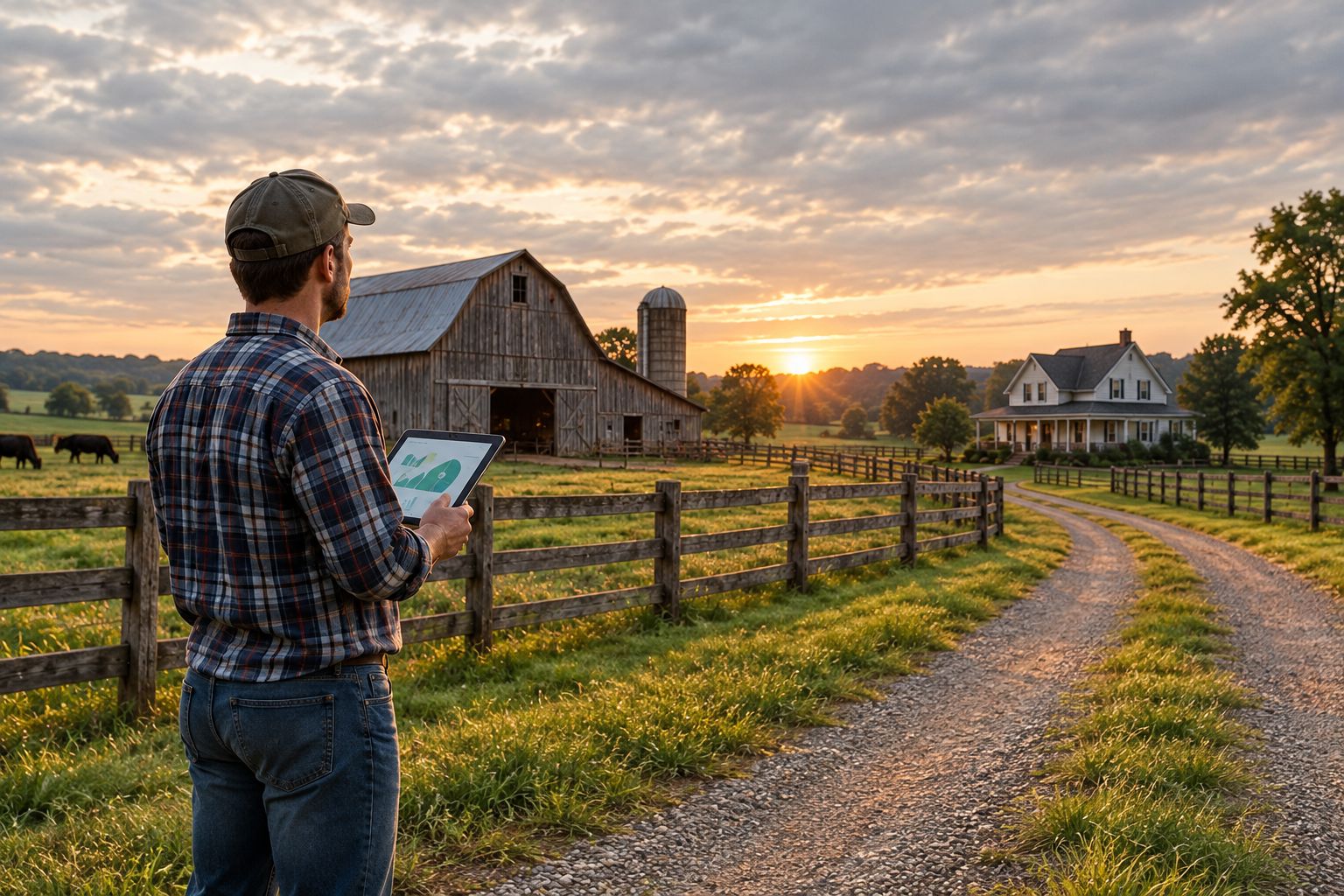
Budget for outbuildings and infrastructure, not just the house
The house is often the smallest cost consideration on an agricultural property — barns, fencing, and grain storage carry their own repair and insurance realities.
- Inspect barn roof, foundation, and structural framing separately from the home inspection
- Check fencing condition if livestock is part of the plan
- Confirm electrical service reaches outbuildings, not just the house
- Ask about existing equipment sheds, grain bins, or silos and their current condition
- Factor insurance costs for structures beyond the primary residence into your budget
Explore financing built for rural and agricultural property
Conventional mortgage underwriting doesn't always fit a parcel with a working barn or acreage well beyond a standard suburban lot.
- Ask a lender whether the parcel qualifies for a USDA Rural Development loan
- Compare a USDA loan against a conventional loan if the acreage and location qualify for both
- Confirm whether income-producing acreage changes your loan program eligibility
- Get pre-approved with a lender who has closed rural property loans before, not just suburban ones
- Review USDA loans for homebuyers in rural Southern Ohio to see if the program fits your target parcel
Search beyond city limits, in the right counties
Most of the acreage that supports real agricultural use sits well outside Cincinnati's incorporated boundary.
- Widen your search radius to Clermont, Brown, Adams, and Highland counties
- Search for homes for sale in Cincinnati with acreage for gardening if your needs are closer to homestead-scale than full farm operation
- Consider equestrian properties for sale in Southern Ohio if horses, not crops, are the priority
- Cross-reference county road access and winter maintenance before committing to a remote parcel
Property options for Cincinnati-area agricultural buyers
| Property Type | Best For | Key Limitation |
|---|---|---|
| Working farm with existing operation | Buyers ready to run crops or livestock immediately | Comes with equipment and lease terms that need untangling |
| Hobby farm / homestead, 5-20 acres | Buyers who want land without full-scale farming | Acreage may be too small for commercial-scale operations |
| Raw land with a home-to-build lot | Buyers who want to design outbuildings from scratch | Requires permitting, well, and septic installation before move-in |
| Equestrian property | Buyers focused on horses rather than row crops | Fencing and barn condition vary widely; inspect closely |
| Land-only parcel, USDA-eligible | Buyers financing through USDA Rural Development | Property must sit in a USDA-designated rural area to qualify |
Talk through your acreage search
Get zoning and water questions answered before you tour a property.
Common mistakes agricultural buyers make near Cincinnati
- Assuming city zoning rules apply outside the city. County agricultural zoning codes differ parcel by parcel and don't follow city boundary lines.
- Skipping a septic or well inspection because "it's just a house." On a rural parcel, the water and waste systems are as important as the roof.
- Underestimating outbuilding repair costs. A barn roof replacement or fence rebuild can run higher than buyers expect going into an offer.
- Ignoring easements and shared access roads. Equipment access across a neighbor's parcel needs a documented easement, not a handshake.
- Relying on tax map acreage instead of a survey. County records estimate boundaries; a survey confirms them before you finalize financing.
“If the well hasn't been tested in the past year, that's a renegotiation point on price, not a reason to walk away.”
FAQ
What counts as an agricultural property near Cincinnati?
A property zoned for agricultural or rural-residential use with acreage that supports crops, livestock, or outbuildings beyond a standard suburban lot. Zoning code, not marketing language, determines what qualifies.
Can you get a USDA loan for a farm near Cincinnati?
Yes, if the parcel sits in a USDA-designated rural area and you meet income eligibility. USDA Rural Development loans work well for qualifying acreage in Clermont, Brown, Adams, and Highland counties in 2026.
How many acres do you need to legally farm in Ohio?
Ohio doesn't set a statewide minimum acreage to farm, but county zoning and CAUV tax program eligibility often require several contiguous acres in active agricultural use. Check the specific county auditor for the parcel.
Is farmland near Cincinnati more affordable than land in Southern Ohio?
Land closer to Cincinnati's growth corridors tends to price higher than comparable acreage farther into Southern Ohio near Portsmouth and Scioto County. Distance from the metro core is the biggest driver of per-acre cost.
Do you need a special real estate agent to buy a farm?
You need an agent who understands agricultural zoning, well and septic systems, and rural financing programs. Sandlin Realtors handles these details as part of representing acreage buyers across Southern Ohio.
What should you check before buying a home with well water in Ohio?
Test water quality and output flow, and confirm the well's age and depth before closing. A weak well can limit both household use and any irrigation plans on the property.
Are equestrian properties different from farm listings?
Yes. Equestrian properties prioritize fencing, barn stall count, and pasture rotation over row-crop soil quality or grain storage. Inspect fencing and barn structure separately from a general home inspection.
How far from Cincinnati do you need to go to find real farmland?
Most working farmland with true agricultural zoning sits in the outer counties, roughly 30 to 50 miles from downtown Cincinnati. Closer-in parcels tend to be hobby-farm scale rather than production acreage.
One last thing
Ask the seller for the current CAUV status on any parcel you're serious about — Current Agricultural Use Valuation lowers property taxes on land in active agricultural use, but it doesn't transfer automatically with the sale. Buyers who assume it carries over sometimes get a surprise reassessment in their first year of ownership, and that number can be large enough to change your monthly budget.