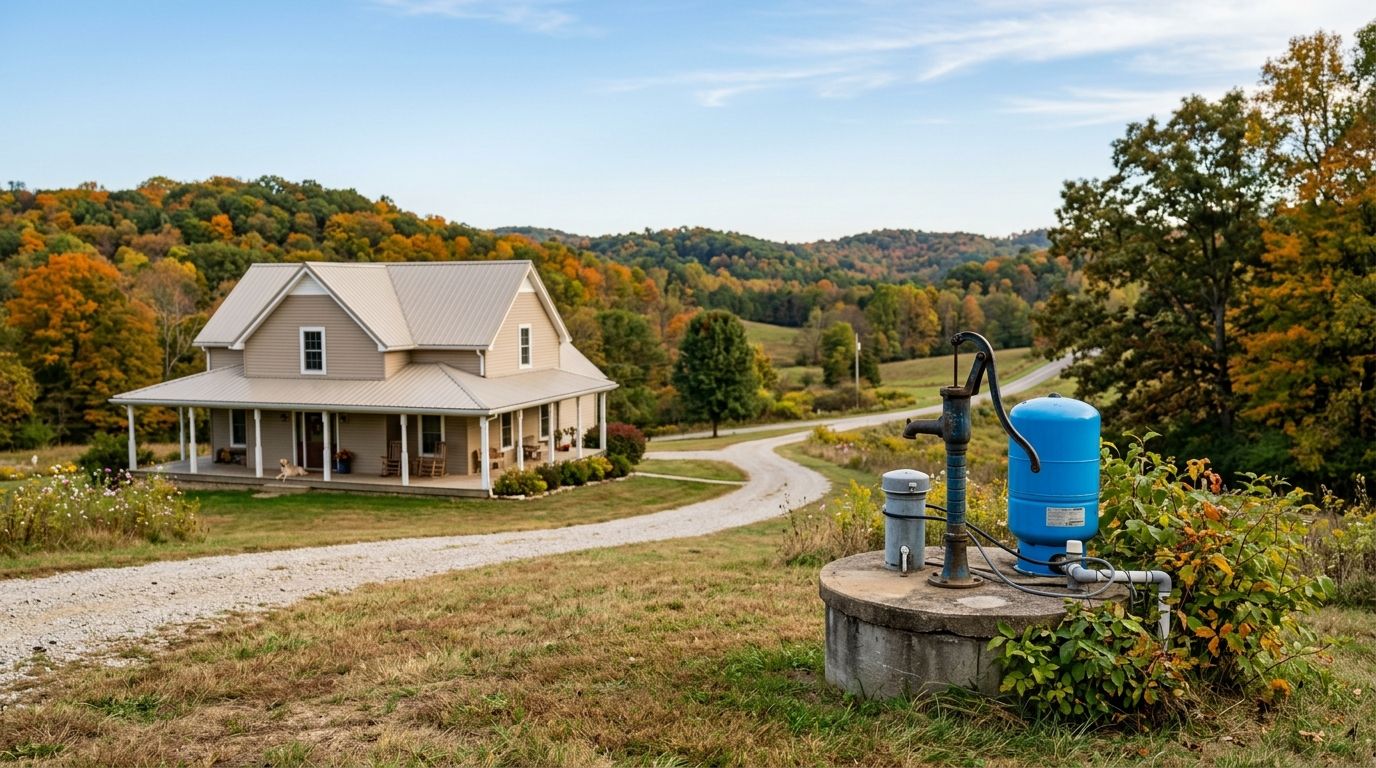
Buying a home with well water in Southern Ohio means testing the water before closing, confirming the well meets your lender's standards, and budgeting for maintenance that a city-water buyer never thinks about. A well-tested, well-maintained private well is not a red flag in Scioto County — it's the norm, but skipping the test or the flow check is the fastest way to end up with a house you can't finance or a water problem you didn't see coming.
- Buying a home with well water in Southern Ohio requires a potability test before closing, not after.
- FHA, VA, and USDA loans all require a passed water quality test on private wells.
- Well depth, flow rate, and pump age vary widely between Wheelersburg, Lucasville, and Otway properties.
- Wells and septic systems get inspected together in most Scioto County transactions.
- Sandlin Realtors coordinates well testing timelines with local inspectors across Southern Ohio.
Why this matters
A private well isn't just a water source — it's a system the buyer inherits, pump and all. Unlike a municipal water bill, there's no utility company backstopping quality or pressure. If the test comes back with bacteria, high nitrates, or low flow, that becomes your negotiating point or your walk-away trigger, and you need to know it exists before you're locked into a contract with a tight inspection window.
In 2026, most Southern Ohio counties still rely heavily on private wells outside town limits — Sandlin Realtors works these transactions regularly across Portsmouth, Scioto County, Wheelersburg, Lucasville, Otway, Rarden, and South Webster, where municipal water lines don't reach.
How to Buy a Home With Well Water in Southern Ohio
Follow this sequence and you'll avoid the two most common well-water deal-killers: a failed test discovered too late and a lender requirement nobody flagged.
- Write the offer with a water testing contingency. Don't wait for the general home inspection — schedule the well test the same week so results come back inside your inspection period.
- Test for bacteria (total coliform and E. coli) and nitrates at minimum. These are the two results every lender and the local health department want to see.
- Ask the seller for well records. Depth, age, pump type, and any prior water treatment (softener, filtration, UV) should be in the seller disclosure or well permit file.
- Confirm lender requirements early. FHA, VA, and USDA loans each require a passed potability test — your loan officer should tell you this on day one, not week three.
- Check separation from the septic system. Most homes on well water in Southern Ohio are also on septic, and the local health department has minimum distance rules between the two.
- Budget for the system you're inheriting. Pump replacement, pressure tank age, and filtration upkeep are ongoing costs a city-water buyer never has — talk to a septic system specialist about the pairing before closing.
| Water Source | Who Tests It | Lender Requirement | Ongoing Buyer Responsibility |
|---|---|---|---|
| Municipal water | City utility | None beyond bill history | Monthly utility payment |
| Private well | Buyer arranges test | FHA/VA/USDA require passed potability test | Pump, pressure tank, filtration maintenance |
The quotable verdict: a well water home in Southern Ohio is financeable and livable, but only after the water test clears and the lender signs off on it in writing.
“A well water home is only a good buy once the potability test clears — everything else is negotiable, that isn't.”
Why well water requirements vary across Southern Ohio
No two properties on well water look the same once you get outside Portsmouth city limits. A handful of factors drive the difference:
- Aquifer depth and rock type — wells in the limestone and sandstone pockets around Otway and Rarden can differ significantly in flow from wells closer to the Ohio River bottomland.
- Well age and pump condition — older rural properties in Lucasville and South Webster sometimes still run original pumps that are decades old.
- Distance to septic — local health department rules govern minimum separation between the well and the septic system on the same lot.
- Lender program — USDA loans, common for rural properties in Southern Ohio, carry their own water quality documentation requirements on top of the appraisal.
- Prior treatment systems — a home with an existing softener or iron filter may need that system serviced or disclosed as part of the sale.
- Seasonal flow changes — some wells in the hillier parts of Scioto County show flow variation between wet and dry months, which is why timing the test matters.
Related questions buyers ask
Do I need a water test to buy a house with well water in Ohio?
Yes, a water test is required by nearly every lender before closing on a well water property in Ohio, and it's the single most important document in a well water purchase. Skipping it, even on a cash deal, leaves you buying an unknown.
Can I get an FHA loan on a home with a well and septic system?
Yes, FHA loans allow well and septic systems as long as the well passes a potability test and the septic system meets local health department standards noted on the appraisal. The appraiser will flag separation distance and system condition as part of the report.
What's different about buying a well water home versus a city water home?
The buyer takes on the maintenance role that a city utility normally handles — testing, pump upkeep, and filtration — in exchange for no monthly water bill. It's a trade-off worth understanding before you fall in love with the acreage.
How do USDA loans handle well water requirements in rural Southern Ohio?
USDA loans require a passed water quality test just like FHA and VA, and because USDA loans are common financing for rural Scioto County purchases, this step gets built into the timeline from the start rather than added late.
Joey Sandlin's team has spent over 20 years walking buyers through exactly this sequence across Southern Ohio, coordinating the well test, the septic inspection, and the lender's paperwork so nothing surfaces as a surprise three days before closing.
Talk to Sandlin Realtors before you offer
Get local guidance on well and septic homes across Southern Ohio.
FAQ
What's the best way to test well water before buying a home in Southern Ohio?
The best approach is scheduling a certified water test for bacteria and nitrates during your inspection period, not after closing. Results typically come back within days, giving you time to negotiate or walk away.
Is a home with well water harder to sell than one on city water?
A home with well water is not harder to sell in Southern Ohio in 2026, since private wells are common outside town limits, but it does require the same documentation a well water buyer needs: a passed potability test and clear well records.
How much water flow does a well need to support a household?
Lenders and appraisers look for a documented flow test from a licensed well contractor rather than a fixed number, since flow expectations vary by household size and local health department standards.
Do VA loans require well water testing in Ohio?
Yes, VA loans require a passed water quality test on private wells, similar to FHA and USDA requirements, before the loan can close.
Can a well and septic system fail inspection together?
They can, and it happens most often when the separation distance between the two doesn't meet local health department minimums or the septic system shows signs of failure during the same visit.
Should I get a home inspection in addition to a well water test?
Yes, a general home inspection and a water test cover different things, and skipping either one leaves a gap in what you know about the property before closing.
What happens if the well water test fails?
A failed test typically triggers a negotiation for treatment, well repair, or a price adjustment, and the buyer has the right to request retesting after any fix is made before closing.
One last thing
The detail most buyers miss isn't the water test itself — it's the timing. Order the well test the same day you sign the contract, not after the general inspection comes back, because potability results in Southern Ohio can take longer to return than a standard inspection window allows, and a late test is how deals stall in the final week.