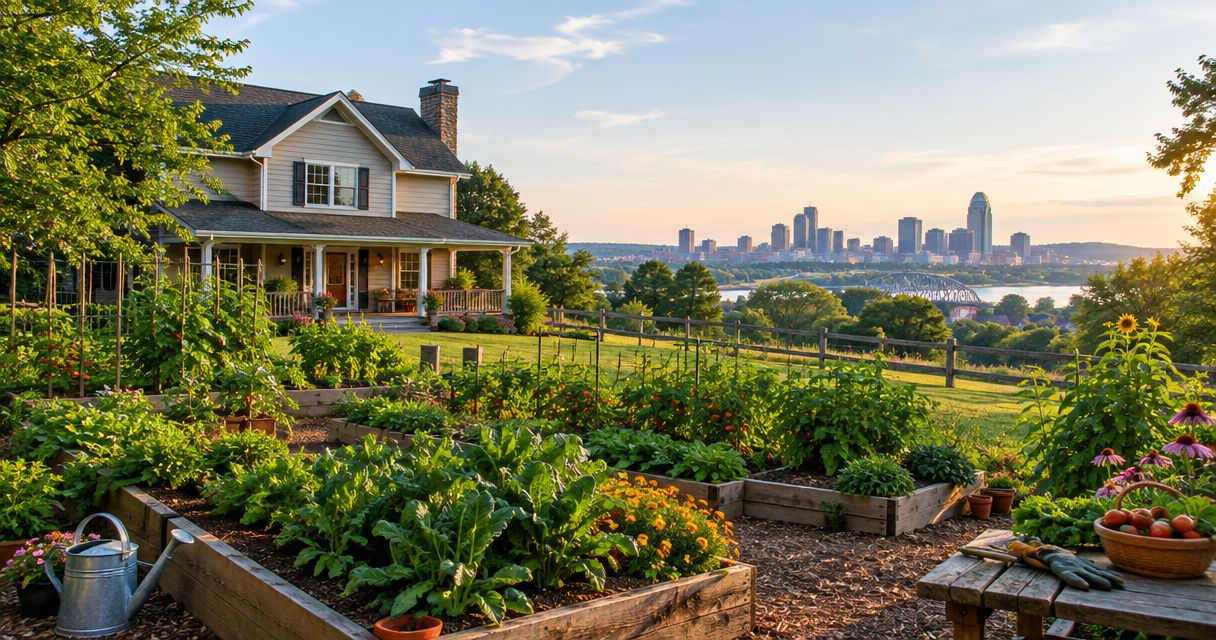
Homes for sale in Cincinnati with acreage for gardening are properties carrying at least a half-acre of usable, well-drained ground beyond the house footprint, built for buyers who want raised beds, an orchard row, or a small market plot without a 45-minute drive past the suburbs. This segment cares less about square footage inside the house and more about sun exposure, soil, and what's underneath the yard.
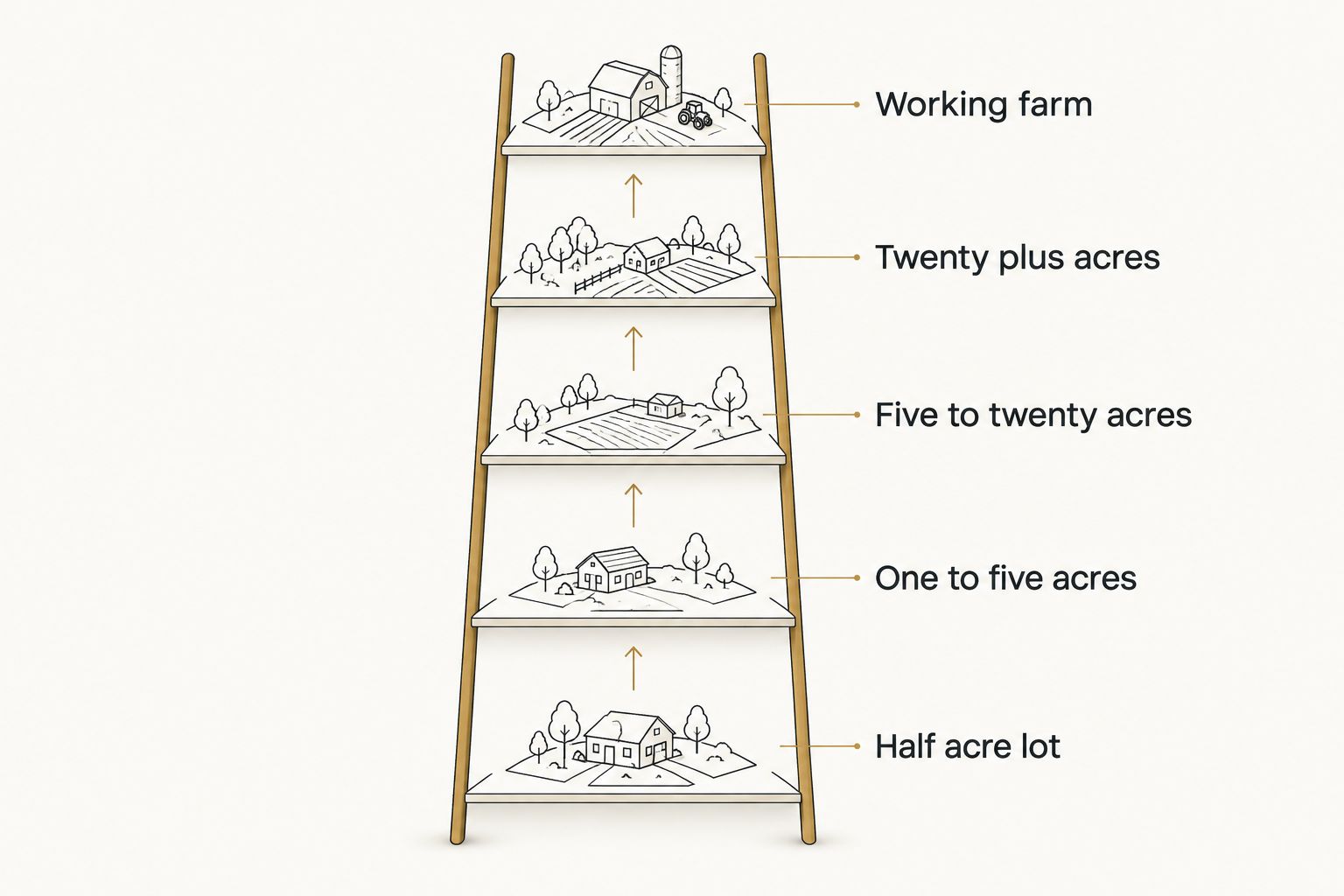
- Homes for sale in Cincinnati with acreage for gardening start around a half-acre and scale to 20+ acre farmettes on well and septic.
- Soil drainage and southern sun exposure matter more than lot size on the listing sheet.
- Well capacity and septic placement can eliminate half of a shortlist before a tour happens.
- Sandlin Realtors has spent 20+ years reading rural parcels across Southern Ohio and the Cincinnati fringe.
Why acreage matters for gardening-focused buyers
A standard Cincinnati subdivision lot rarely clears 0.25 acres, and HOA rules in many of those neighborhoods restrict fencing, raised beds, or anything that looks like a garden shed. Buyers chasing real growing space have to move to the fringe counties or into unincorporated townships where zoning is looser and lots run bigger.
That shift changes the whole search. A garden-ready property lives or dies on soil, drainage, and water access, not on granite countertops. The farms and acreage listings across Southern Ohio show the pattern clearly: the properties that hold value are the ones where the seller already dealt with drainage and well capacity, not the ones with the prettiest photos.
Sandlin Realtors has worked Southern Ohio and Cincinnati-fringe acreage deals for over 20 years under Joey Sandlin, and the recurring lesson in 2026 is the same one from a decade ago: buyers who skip the soil and water questions end up renegotiating after inspection, or walking away from earnest money.
Define your minimum usable acreage
Don't shop by total lot size. Shop by usable, flat, sun-exposed square footage, because a 3-acre parcel with a ravine running through it might offer less growing space than a well-graded half-acre.
- Walk the parcel boundaries on the listing, not just the plat map
- Ask for a topo overlay if the listing doesn't include one
- Flag anything described as "wooded" or "partially cleared" for a site visit before writing an offer
- Confirm setback rules with the township, since some limit how close a garden structure can sit to a property line
- Rule out floodplain overlap using county GIS before you tour
Check soil and drainage before you tour
A listing photo can't tell you if the soil is Cincinnati's common silty clay, which drains slowly and needs amendment, or a sandier loam near the river terraces that drains fast and dries out in July.
- Pull the county soil survey (free through USDA Web Soil Survey) for the parcel's exact soil type
- Look for standing water in listing photos taken after rain
- Ask the listing agent how the previous owner used the land
- Check the grade near the house foundation, since poor drainage there often means poor drainage across the lot
- Budget for a percolation test if you plan anything beyond raised beds
Confirm well capacity and water rights
Most acreage properties outside Cincinnati's water district run on private wells, and well output varies enormously by parcel, even on the same road. A well pumping 4 gallons per minute won't support both a household and irrigation for a market garden.
- Request the well log and flow test results from the seller
- Ask when the well was drilled and to what depth
- Confirm there's no shared well agreement with a neighboring parcel
- Check if the property has ever had a water quality test for bacteria or nitrates
- Review the guide to buying a home with well water in Southern Ohio before you write an offer contingent on well testing
Verify zoning and agricultural allowances
Zoning determines whether you can keep chickens, build a greenhouse, or sell what you grow. Township zoning across Hamilton, Butler, Clermont, and Warren counties varies parcel to parcel, and "rural residential" doesn't always mean "agricultural."
- Call the township zoning office directly rather than relying on the listing description
- Ask specifically about accessory structures like greenhouses or hoop houses
- Check for any deed restrictions layered on top of township zoning
- Confirm whether a current agricultural tax exemption transfers to a new owner or resets
- Ask if livestock (even a handful of chickens) is permitted on the parcel size you're considering
Evaluate sun exposure and topography on-site
Listing photos are almost always shot for curb appeal, not for growing conditions. A yard facing north behind mature trees might look lush and still be unusable for vegetables.
- Visit at midday to see how much of the lot sits in direct sun
- Note which direction the primary garden area faces
- Walk the slope; anything over roughly 10-15% grade complicates raised beds and irrigation
- Check for mature trees that will shade a garden area as they grow taller
- Ask about frost pockets in low spots, common on Southern Ohio hillside parcels
Budget for septic, and work with an agent who reads rural parcels
Acreage properties almost always run on septic rather than municipal sewer, and septic placement dictates where you can plant, dig, or build. A septic field under your planned garden area is a dealbreaker you want to catch before closing, not after.
- Request the septic permit and inspection history from the county health department
- Ask where the septic field sits relative to any planned garden or orchard area
- Confirm the system's age and last pump-out date
- Review the septic system buying guide for Southern Ohio before you finalize an offer
- Bring in an agent who's walked rural parcels before, since a generic buyer's agent often misses well and septic red flags that a Southern Ohio specialist catches on the first tour
Sandlin Realtors covers acreage searches from the Cincinnati fringe down through Portsmouth, Scioto County, Wheelersburg, Lucasville, Otway, Rarden, and South Webster, and Joey Sandlin's 20+ years in this exact market means the well, septic, and zoning questions get answered before you waste a weekend touring a parcel that won't work.
“If a well log or septic permit isn't in the listing file, get it before you tour, not after you offer.”
Comparing acreage options for gardening buyers
| Option | Best for | Key limitation |
|---|---|---|
| Half-acre suburban-adjacent lot | Buyers who want raised beds without leaving town limits | HOA and setback rules often restrict structures |
| 1-5 acre rural parcel | Serious home gardeners and small orchards | Well and septic due diligence becomes mandatory |
| 5-20 acre farmette | Buyers planning livestock or a market garden | Zoning and ag-exemption transfer must be confirmed |
| 20+ acre working farm | Buyers scaling toward commercial growing | Financing and insurance get more complex |
Find the right acreage parcel
Get a Southern Ohio and Cincinnati-fringe search built around soil, water, and zoning, not just square footage.
Common mistakes gardening buyers make
- Shopping by total acreage instead of usable acreage. A 5-acre lot with a ravine can offer less growing space than a well-graded 1-acre lot.
- Skipping the well flow test. Buyers assume "it has a well" means adequate capacity, then discover a 3 GPM well can't handle irrigation in a dry Southern Ohio summer.
- Ignoring septic field placement. Planting an orchard over a leach field in year one, then having to relocate it in year three.
- Assuming rural zoning allows anything. Townships around Cincinnati vary block to block on livestock, greenhouses, and accessory structures.
- Touring only on weekends with good weather. A parcel that looks fine on a dry Saturday can reveal standing water and poor drainage after a normal Tuesday rain.
FAQ
What's the minimum acreage for a home garden near Cincinnati?
A half-acre of usable, sun-exposed, well-drained ground supports raised beds and a small orchard. Anything under that in a standard subdivision usually runs into HOA restrictions before it runs into a space problem.
Is well water safe for irrigating vegetables in Southern Ohio?
Most private wells in Southern Ohio and the Cincinnati fringe are safe for irrigation once tested for bacteria and nitrates. Get the well log and a current water test before closing, not after.
Do I need a special permit to build a greenhouse on acreage near Cincinnati?
It depends on the township. Some Hamilton, Butler, Clermont, and Warren county townships require a permit for any structure over a set square footage, so call zoning directly before you buy.
How much acreage do I need to keep chickens near Cincinnati?
Zoning, not acreage, usually decides this. Some unincorporated townships allow chickens on a half-acre; some incorporated suburbs ban them entirely regardless of lot size.
Does a septic system limit where I can plant a garden?
Yes. The septic field and any leach lines need to stay clear of deep-rooted plants and heavy soil disturbance, so confirm the field's exact location before you plan garden beds.
Are agricultural tax exemptions transferable when buying acreage in Ohio?
Sometimes, but not automatically. Confirm with the county auditor whether the current exemption carries over to a new owner or resets at closing in 2026.
What's the best area near Cincinnati for buying acreage for gardening in 2026?
Unincorporated townships in the outer ring of Hamilton, Butler, Clermont, and Warren counties, plus Southern Ohio parcels toward Portsmouth and Scioto County, offer the most acreage per dollar with fewer HOA restrictions.
Should I get a soil test before making an offer?
Yes, especially on any parcel listed as wooded or partially cleared. A soil test through USDA Web Soil Survey costs nothing and can rule out drainage problems before you're under contract.
One last thing
The parcels that actually work for gardening in 2026 rarely advertise it. Listings market acreage on total size, and the deciding factors, soil type, well flow, septic placement, sit buried in county records most buyers never pull before touring. Pull them first, and you'll cut a ten-property shortlist down to three before you burn a single Saturday.