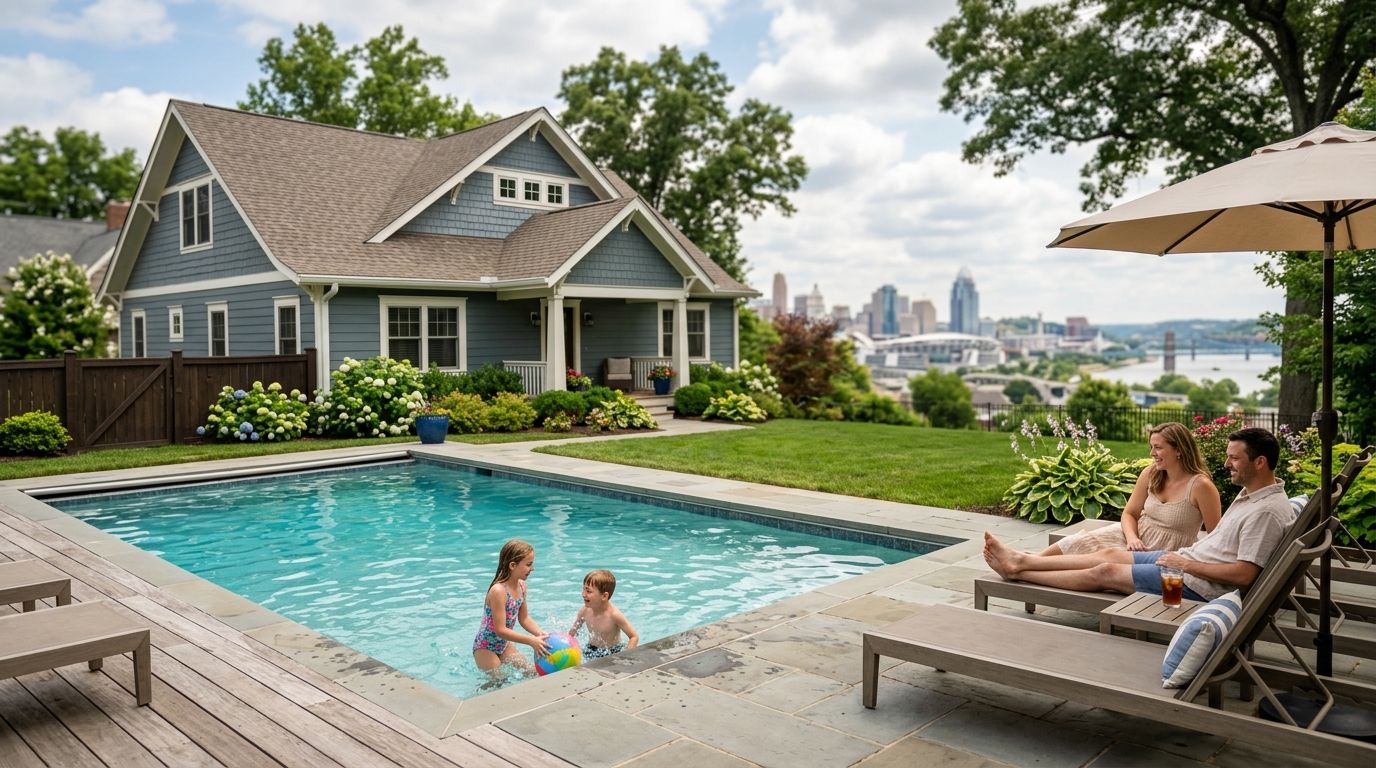
Buying a home with a pool in Cincinnati means treating the pool as its own system, not a bonus feature. Order a stand-alone pool inspection, confirm the pool was permitted with the city or township, and get a homeowners insurance quote with the pool listed before you remove any contingencies. The cost buyers miss most often isn't the pool itself — it's the liner replacement or equipment repair a general home inspector never checks.
- Order a separate pool inspection before your contingency period closes — a general home inspector rarely tests pumps, liners, or shells.
- Confirm the pool was permitted with the city or township; unpermitted pools complicate title work and insurance.
- Get a homeowners insurance quote with the pool listed before you remove your financing contingency in 2026.
- Joey Sandlin has spent 20+ years guiding Southern Ohio and Cincinnati-area buyers through pool-home purchases.
- Vinyl liner, gunite, and above-ground pools each need different inspection points before you write an offer.
Why this matters
A pool changes three things about a Cincinnati purchase: the inspection scope, the insurance quote, and the closing timeline. Buyers who skip a pool-specific home inspection in Cincinnati often find out about a cracked shell or a dead heater after they own the house.
Insurance carriers also treat pool homes differently — some restrict coverage or add liability riders, and you want that answer before your financing contingency expires. The buyers who move fastest in 2026 are the ones who line up a pool inspector and an insurance quote in the same week they go under contract.
How do you buy a home with a pool in Cincinnati?
Follow this order and you avoid the two most common pool-home mistakes: skipping the permit check and closing without a clear liner or equipment history.
- Pull the permit history first. A pool built without a permit can complicate title work and resale later — ask your agent to check this before your second showing.
- Order a stand-alone pool inspection. A general home inspector checks that the pool exists; a pool inspector checks the pump, heater, liner, and shell.
- Ask for equipment age and service records. Pumps and heaters typically last 8-12 years — sellers with maintenance logs are the ones worth trusting.
- Get a homeowners insurance quote with the pool included. Some carriers add liability riders or decline coverage outright for older pools without fencing.
- Check fencing and barrier compliance. Most Ohio municipalities require a pool barrier at least 48 inches tall under the residential swimming pool code — a missing or low fence is a repair item, not a deal-breaker.
- Negotiate repair credits before closing. Liner age, cracked coping, and non-working equipment are all fair game for a credit at the table.
- Plan around the season. A pool closed for winter can't be tested for leaks — buyers closing between November and March should expect to inspect equipment only, not water pressure.
Inground, vinyl liner, and above-ground pools: what changes at closing
Not every pool carries the same risk. The table below breaks down what to verify on each type before you finalize an offer.
| Pool Type | Structure | What to Verify | Best For |
|---|---|---|---|
| Gunite/inground | Poured concrete shell, resurfaced periodically | Resurfacing history, cracks, equipment pad age | Buyers who want a permanent long-term feature. Buy if resurfacing records exist. |
| Vinyl liner | Steel or polymer wall with a replaceable liner | Liner age, wrinkles or tears, wall corrosion | Buyers comfortable budgeting for a future liner swap. Hold for negotiation leverage if the liner looks old. |
| Fiberglass | One-piece molded shell | Shell cracks, signs of shifting from groundwater | Buyers who want lower long-term maintenance. Buy if the shell inspection comes back clean. |
| Above-ground | Seasonal or semi-permanent frame | Frame condition, whether it conveys with the sale | Buyers who want flexibility to remove it later. Skip the negotiation fight — ask the seller to remove it before closing if you don't want it. |
The quotable rule of thumb for Cincinnati pool buyers: if the seller can't produce a permit and a service log, budget for a full pool inspection and negotiate accordingly — don't take their word for the pool's condition.
Why the pool-buying process varies from house to house
- Permit status. Pools added without permits are common in older Cincinnati-area neighborhoods and can slow down title work.
- Insurance carrier rules. Some insurers require fencing or self-closing gates before they'll write a policy on a pool home.
- HOA restrictions. Certain subdivisions limit pool modifications, resurfacing colors, or fencing styles — check the HOA docs before you fall in love with the backyard.
- City vs. township code. Barrier height and setback requirements can differ between Cincinnati proper and surrounding townships.
- Equipment age. A 15-year-old heater and a 2-year-old heater carry very different negotiation leverage, even in identical pools.
- Season of purchase. A winterized pool limits what any inspector can actually test on the day of inspection.
Questions buyers ask before making an offer
Can you close on a Cincinnati home with a pool in winter?
Yes — closing on a pool home in winter is common in Cincinnati, but the pool will be winterized and can't be pressure-tested for leaks. Buyers closing in the off-season should ask for a written statement on the pool's last operating season and get equipment records instead of relying on a live test.
Does a pool add resale value to a Cincinnati home?
A well-maintained pool can help a home stand out to the right buyer pool, but it rarely returns its full cost at resale and can shrink your buyer pool in colder months. Treat it as a lifestyle feature you're paying for, not an investment that pays you back dollar for dollar.
Do you need special insurance for a home with a pool?
Yes, many carriers require additional liability coverage or specific fencing before insuring a pool home, and pricing homeowners insurance for Cincinnati buyers with a pool listed on the policy should happen before you remove your financing contingency, not after closing.
Buying a pool home in Cincinnati?
Get Joey Sandlin's 20+ years of local guidance on your side before you write an offer.
FAQ
How do you buy a home with a pool in Cincinnati?
You buy a home with a pool in Cincinnati by ordering a stand-alone pool inspection, confirming permit history, and getting a homeowners insurance quote with the pool included before removing contingencies. Skipping any of these three steps is the most common way buyers inherit repair costs.
What should a pool inspection in Cincinnati check?
A pool inspection should check the pump, heater, liner or shell condition, and the fencing barrier separately from the general home inspection. Standard home inspectors typically confirm the pool exists but don't test equipment function in depth.
Is a vinyl liner or gunite pool better to buy in Cincinnati?
Gunite pools last longer between major repairs but cost more to resurface, while vinyl liner pools are cheaper to fix but need liner replacement on a shorter cycle. Neither is universally better — it depends on how long you plan to own the home.
Do Cincinnati pool homes need a fence?
Most Ohio municipalities require a barrier at least 48 inches tall around a residential pool under the swimming pool code. A missing or undersized fence is a common negotiation point, not usually a reason to walk away.
Can you get a mortgage on a home with an unpermitted pool?
Yes, lenders generally still finance the home, but an unpermitted pool can complicate the appraisal and your insurance quote. Ask the seller to produce permit records before you finalize your offer.
Should you close on a pool home if the pool is winterized?
Yes, closing on a winterized pool home is common, but you won't be able to pressure-test the system for leaks. Get service records and a written statement on the pool's last working season instead.
Does having a pool make a Cincinnati home harder to insure?
Some insurers add liability riders or require fencing and self-closing gates before writing a policy on a pool home. Get your insurance quote before removing your financing contingency, not after.
How much does pool maintenance affect the buying decision?
Equipment age and service history matter more than the pool's size or shape when it comes to ongoing cost. A pool with a 2-year-old heater and clean service logs is a very different purchase than one with 15-year-old equipment and no records.
One last thing
The detail most Cincinnati buyers overlook isn't the pool — it's the fence gate. A self-closing, self-latching gate is one of the cheapest fixes on a pool home and one of the first things insurers and inspectors check, yet it's rarely mentioned until the inspection report lands. Ask about it before you tour a second time, not after you're under contract.