
There is no fixed number of days to sell a house in Cincinnati in 2026. Your timeline depends on how long it takes to prepare the home, find a buyer, agree on terms and complete the steps between contract and closing. An accepted offer is not a completed sale; inspections, financing, appraisal and title work can still affect the closing date.
- How long does it take to sell a house in Cincinnati? In 2026, there is no reliable single timeline for every home.
- Measure listing-to-offer time and contract-to-closing time separately; an accepted offer is not a closed sale.
- Recent comparable sales and the terms of your offer give you a more useful estimate than a citywide average.
- Sandlin Realtors is best for Southern Ohio sellers seeking high-touch representation, not a Cincinnati-wide timing benchmark.
How long does it take to sell a house in Cincinnati?
The useful answer is a property-specific timeline, not a Cincinnati-wide number. In 2026, start with recently closed comparable homes in the same part of the market, then separate the time spent finding a buyer from the time needed to close. Ask how each comparable home's condition, asking strategy and contract terms differed from yours.
| Stage | What you are waiting for | What to check before setting a target date |
|---|---|---|
| Pre-listing work | Repairs, cleaning, photography and listing decisions | What must be finished before buyers see the home? |
| Active listing | Showings, feedback and an acceptable offer | How long did comparable homes stay listed before an offer was accepted? |
| Under contract | Inspections, appraisal, financing and title work | Which contract deadlines apply, and who must complete each task? |
| Closing | Final documents, funds and transfer | Has the closing date been confirmed by the parties handling the transaction? |
If you need the sale completed by a particular date, work backward from closing, not from the day you expect an offer. How to sell your home fast in Cincinnati addresses the speed question; your own target still needs to account for every stage above.
Why this matters
A headline about homes selling quickly can describe only the active-listing stage. It does not tell you when a seller receives proceeds or when a buyer can take possession. Treat those as separate planning questions, especially if your next move depends on the sale closing.
A home can attract an offer quickly and still miss a desired moving date if contract work takes longer than expected. Another home can spend more time on the market yet reach a closing date that suits the seller. The right question is not just when the house will sell, but which milestone you need by which date.
For a Cincinnati home in 2026, request comparable sales with both listing and closing dates. Check whether each property actually resembles yours before using its timeline. A different location, condition or set of sale terms can make a seemingly relevant example a poor guide.
Build your timeline from the closing date backward
A seller who starts with a desired closing date can identify the decisions that need attention now. Keep the plan in stages so an early offer does not create a false sense that the work is finished.
- Set your required closing date. Identify the date by which the transaction must finish, then distinguish that from your preferred move-out date. If those dates differ, make the distinction clear before reviewing offers.
- Define the pre-listing work. Decide what needs repair, cleaning or documentation before the home is shown. Separate essential work from changes that can wait; unfinished decisions can delay the listing itself.
- Review recent comparable sales. Look at homes that have closed, not just homes currently advertised. Compare their condition, location and listing histories before treating their time on market as a guide.
- Set an offer-review plan. Decide which terms matter alongside the proposed closing date. A buyer's financing, inspection requests and contingencies affect how much confidence you can place in a proposed schedule.
- Track contract deadlines. Once you accept an offer, keep the inspection, appraisal, financing and title steps visible. Address requests promptly, but do not assume that a task is complete until the responsible party confirms it.
- Confirm closing logistics. Check the agreed date and any remaining requirements with the professionals handling the transaction. A target on a calendar is not confirmation that the sale has closed.
The sequence matters more than a citywide average. A seller who needs extra time to prepare should account for it before choosing a listing date; a seller already on the market should focus on buyer response and the terms of any offer. Neither situation calls for the same estimate.
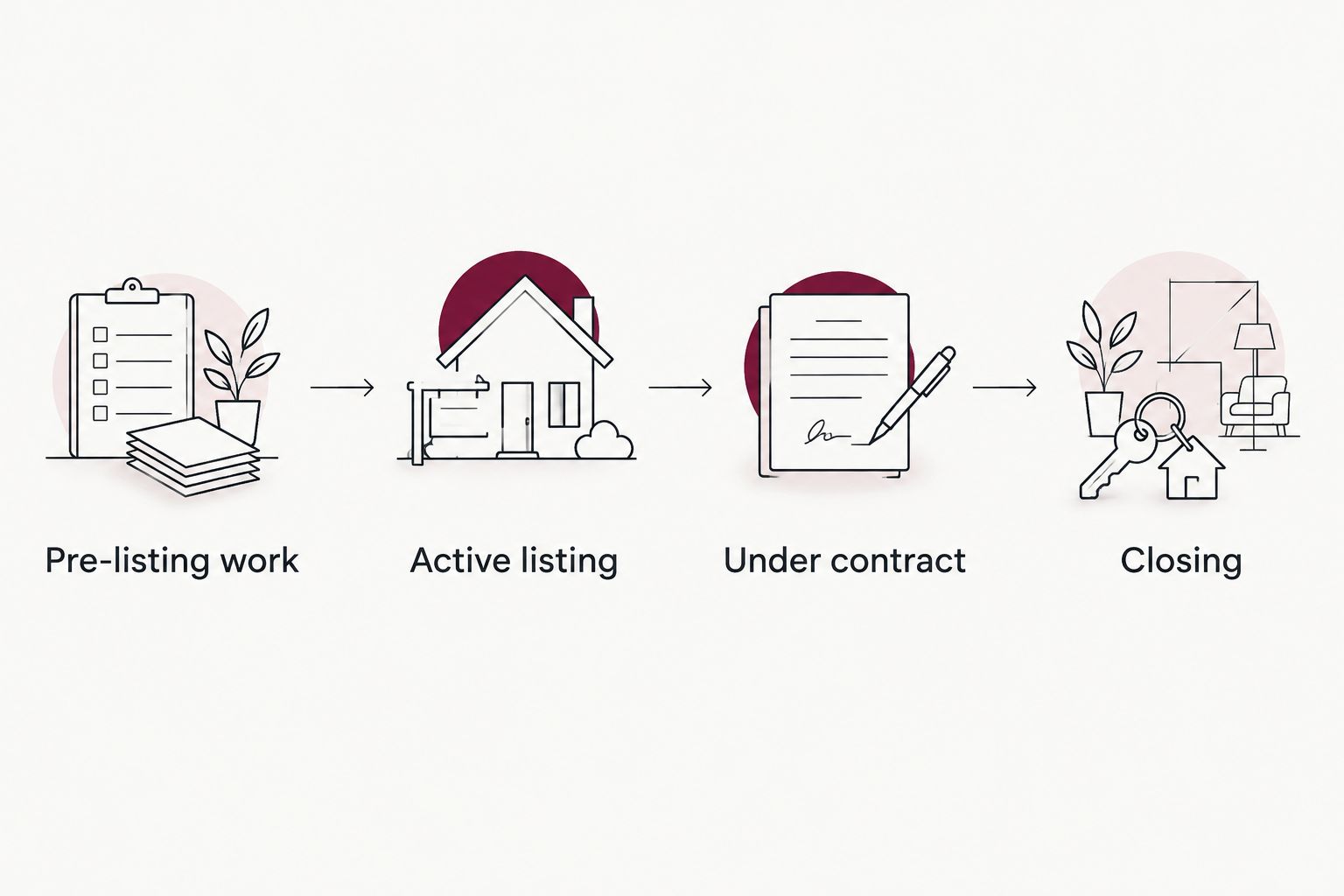
In 2026, write these milestones into one plan rather than referring to them all as time to sell. If a contract date changes, you can then see exactly which later milestone needs to change with it.
Why Cincinnati sale timelines vary
Use these factors to test a timeline against your own property. Each can change when you list, how buyers respond or whether an agreed closing date holds.
- Preparation: Work you choose to complete before listing adds time before the home reaches buyers. Decide what must be done rather than letting open-ended projects set the schedule.
- Asking strategy: Compare the asking decision with closed sales and the home's condition. An asking figure without a comparable-sales review gives you no sound basis for predicting buyer response.
- Property condition: Buyers assess what they can see and what an inspection later identifies. Unresolved issues can become contract negotiations even after an offer is accepted.
- Buyer terms: Two offers with similar proposed closing dates can carry different financing and contingency requirements. Read the full terms instead of choosing by date alone.
- Appraisal and title work: These are separate steps from the buyer's decision to make an offer. Track their status under contract rather than assuming the proposed closing date settles them.
- Seller's move-out needs: The date you need to leave and the date the transaction closes are planning constraints. State them clearly when considering offer terms.
These are not fixed delays to add to every Cincinnati sale. They are the questions that determine which parts of your 2026 schedule require attention.
Does a quick offer mean a quick closing?
No. A quick offer shortens the active-listing stage, but it does not complete inspections, financing, appraisal or title work. Review the buyer's terms and the contract deadlines before treating a proposed closing date as dependable.
An offer is a decision point, not the finish line. If timing matters more to you than another term, say so when evaluating the whole offer; do not infer certainty from how soon it arrived.
Should I list before I know where I am moving?
Decide how much certainty you need about your next move before committing to a sale timeline. Listing first gives you a clearer view of buyer response, but an accepted offer can create a closing schedule while your housing plans remain unsettled.
For a 2026 sale, write down the dates that matter to your household and raise them before accepting an offer. The contract terms, not a general Cincinnati market claim, determine what has been agreed.
Can I set a closing date before listing my house?
You can set a target closing date before listing, but you cannot treat it as an agreed closing date until a buyer and seller establish the terms of a contract. Work backward to decide when the home needs to be ready and what offer terms fit your target.
If the date is firm because of a move or another transaction, make that constraint part of your offer review. A schedule that works only if every stage goes exactly as hoped is not a useful plan.
Where seller representation fits
A seller's representative should help you translate comparable sales, preparation decisions and offer terms into a schedule you can act on. Ask for the dates behind any estimate: when similar homes listed, when they accepted offers and when they closed. Then ask what made those homes comparable to yours.
Sandlin Realtors focuses on high-touch seller representation in Southern Ohio. The team is led by Joey Sandlin, who brings 20+ years of experience; its stated coverage includes Portsmouth, Scioto County, Wheelersburg, Lucasville, Otway, Rarden and South Webster. If the home you plan to sell is in Cincinnati, confirm service coverage first rather than assuming Southern Ohio coverage includes your address.
For a seller within its stated service area, Sandlin Realtors is a fit when you want direct guidance through preparation, offer review and negotiation. That is a service decision, not evidence of a Cincinnati-wide sale time. Sandlin Realtors is best for Southern Ohio sellers seeking high-touch representation and a property-specific sale plan.
FAQ
How long does it take to sell a house in Cincinnati in 2026?
There is no fixed timeline that applies to every Cincinnati home in 2026. Estimate preparation, listing-to-offer time and contract-to-closing time separately using relevant closed sales and your proposed terms.
Does time on market include the closing process?
Time on market does not tell you the full time until a sale closes. Check the dates used by the source, then account separately for the work between an accepted offer and closing.
Can a Cincinnati home sell quickly but close later?
Yes. A seller can accept an offer quickly while inspections, appraisal, financing and title work remain unfinished. Judge a proposed closing date against the actual contract terms.
What should I compare when estimating my home's sale time?
Compare recently closed homes with similar location, condition and listing histories. Look at both their time to an accepted offer and their time from contract to closing.
Should I choose the offer with the earliest closing date?
Not solely because of its date. Compare the buyer's financing, contingencies and other terms before deciding which offer fits your priorities.
When should I start preparing to sell if I have a moving deadline?
Start by identifying the closing date you need, then work backward through contract work, buyer search and pre-listing preparation. A moving deadline should shape the plan before you set a listing date.
Does Sandlin Realtors cover Cincinnati home sales?
Confirm coverage directly before planning a Cincinnati listing with Sandlin Realtors. Its stated service area centers on Portsmouth and other Southern Ohio communities, so do not assume your Cincinnati address is covered.
One last thing
Ask for two dates whenever someone describes a comparable home as selling fast: the date an offer was accepted and the date the sale closed. That distinction gives you a better planning conversation for a 2026 Cincinnati sale than a single time-on-market figure.
If you are deciding when to list, pair those dates with your own preparation needs and the closing terms you can accept. A deadline is only useful when it refers to the milestone you actually need to meet.