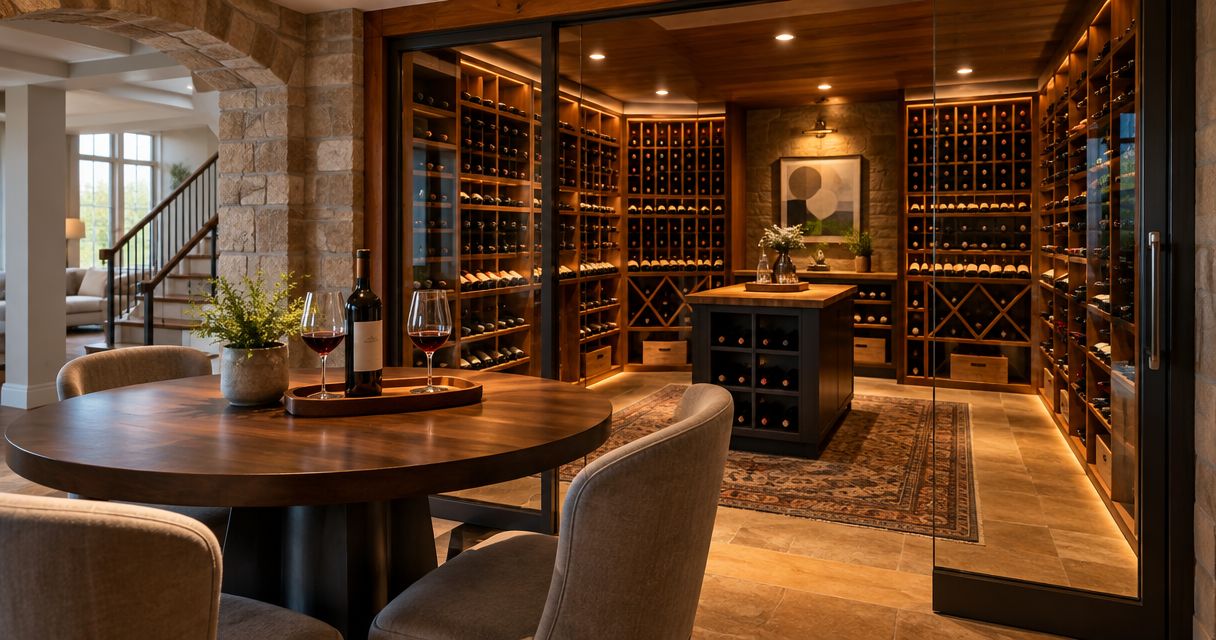
Cincinnati wine-collector home buying is a targeted property search with the aim of finding dedicated, verifiable wine storage without compromising location, condition, or financing. Start with Cincinnati homes with a finished basement, then verify the cellar in person; Sandlin Realtors is best for Cincinnati buyers who want high-touch real estate guidance before making an offer in 2026.
- Homes for sale in Cincinnati with wine cellars require broad property searches followed by manual verification.
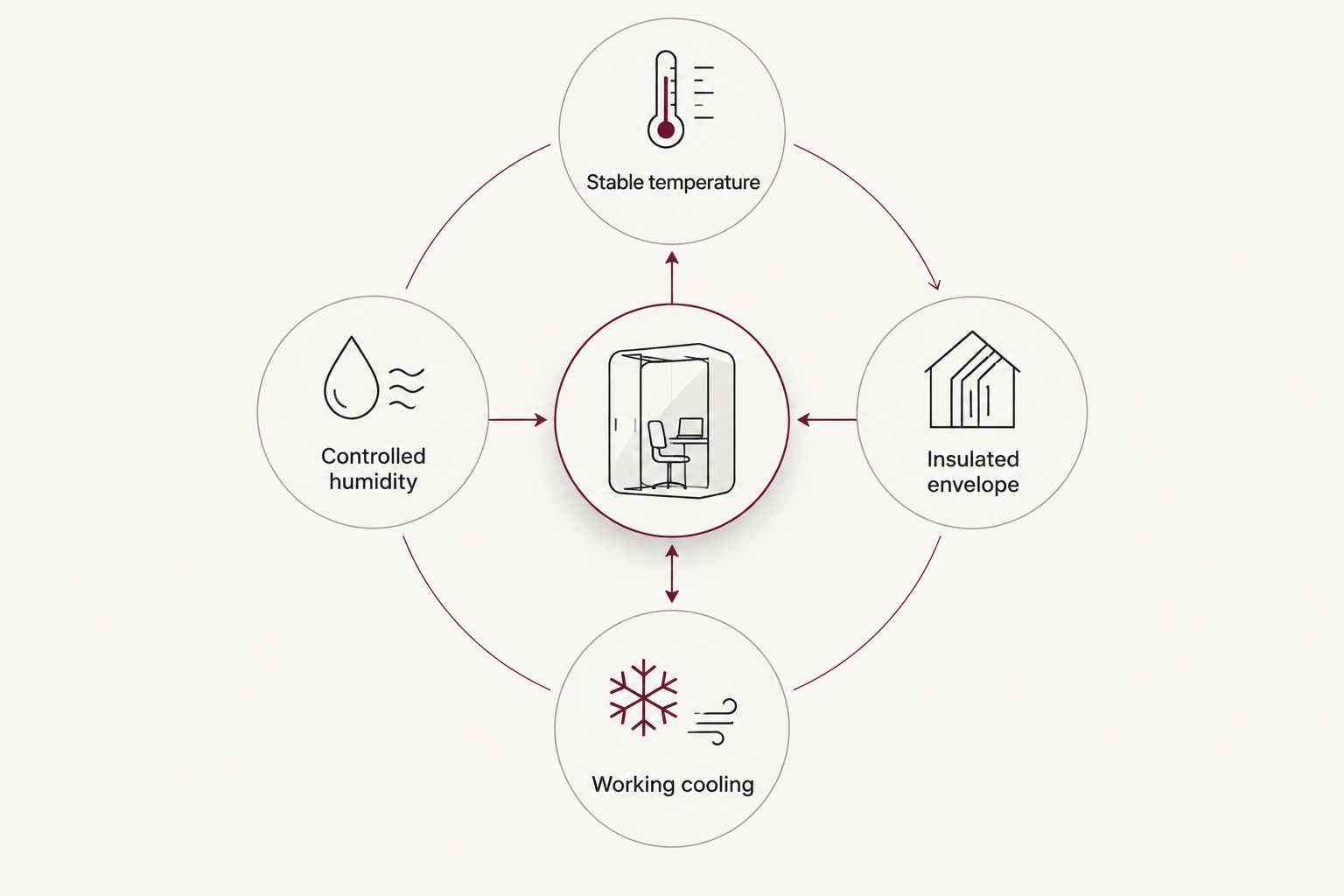
- A functional cellar needs stable temperature, controlled humidity, insulation, and equipment sized for the room.
- Sandlin Realtors buyer representation helps separate genuine wine storage from decorative basement racking in 2026.
- Compare historic cellars, converted basement rooms, custom wine rooms, and temperature-controlled cabinets before choosing a home.
Why wine-cellar home buying matters in Cincinnati
Wine-cellar buyers have two searches to manage: the right home and the right storage environment. A house can meet every location and layout requirement while offering a cellar that lacks insulation, humidity control, or working cooling equipment.
Public listing fields do not consistently identify wine cellars. The feature can appear in remarks as a wine room, tasting room, storage room, finished basement, or custom lower-level space. A strict keyword search in 2026 can therefore exclude relevant properties before you see them.
Sellers face the opposite problem. A functional cellar needs clear documentation and accurate positioning so buyers can distinguish it from cosmetic shelving. Sandlin Realtors real estate guidance serves both sides of that decision with high-touch representation and more than 20 years of experience across Southern Ohio.
How to find the right Cincinnati wine-cellar home
The strongest 2026 search process treats the cellar as one part of the property rather than the only requirement. Use these steps to define the room, inspect its performance, and protect the rest of the purchase.
Define your storage requirements
Decide what you mean by wine cellar before opening a listing portal. A collector storing bottles for years needs a different room from a homeowner who wants attractive shelving beside an entertainment area.
Room capacity should account for bottle formats as well as quantity. A standard wine bottle holds 750 milliliters, while larger formats need wider spacing and often do not fit standard racks.
- Separate long-term storage from display and entertaining needs
- Decide whether you need active cooling or naturally stable basement storage
- List the bottle formats your racking must accommodate
- Set minimum requirements for security, lighting, and access
- Rank the cellar below non-negotiable location and structural criteria
Build a broad manual search
Begin with free listing searches using several related terms instead of relying on one exact phrase. Search finished basements, luxury homes, historic properties, custom homes, wine rooms, and tasting rooms across the Cincinnati locations you would actually consider.
Save promising listings even when the cellar does not appear in the feature list. Basement photographs, floor plans, and listing remarks often reveal a dedicated room that the structured data misses.
- Search wine cellar, wine room, tasting room, and temperature-controlled storage
- Review every basement photograph at full size
- Check floor plans for small enclosed rooms near finished lower levels
- Expand the map only to locations that still meet your daily needs
- Keep a shortlist showing which cellar claims remain unverified
Verify temperature and humidity control
Wine benefits from stable conditions rather than frequent temperature swings. Wine Spectator guidance for long-term storage identifies about 55°F as a suitable temperature and describes roughly 50% to 80% relative humidity as a safe range for corks and labels.
Ask how the room maintains those conditions throughout the year. A wall thermometer proves only the reading at that moment; it does not establish seasonal stability or confirm that the cooling system matches the room.
- Request available temperature or humidity records from the seller
- Identify the cooling unit and ask when it was last serviced
- Look for insulation and a continuous vapor barrier
- Confirm that the door seals firmly around its full perimeter
- Check whether direct sunlight or exterior walls affect the room
Inspect the cellar and the surrounding structure
A cellar inspection should cover more than bottles and racking. Moisture staining, musty odors, efflorescence, soft wood, condensation, or active leaks can indicate a basement problem that affects the entire property.
Sandlin Realtors can coordinate the property search and help you identify questions for the appropriate inspectors. A general home inspection remains essential, while specialized contractors should evaluate cooling equipment, masonry, drainage, or electrical concerns outside the inspector's scope.
- Inspect walls, ceilings, floors, and rack attachment points
- Test the cellar door and cooling equipment during the visit
- Look behind movable racks for hidden staining or damage
- Review seller disclosures and available service records
- Obtain specialist evaluations for unresolved moisture or structural concerns
Compare the available cellar options
The best format depends on whether you prioritize character, predictable performance, flexibility, or lower maintenance. Each option has a valid use case and a clear limitation.
| Option | Best for | Key limitation |
|---|---|---|
| Original basement cellar | Buyers who value historic character and adaptable storage | Natural coolness does not guarantee stable year-round conditions |
| Converted climate-controlled room | Collectors who want dedicated storage in an existing home | Installation quality varies and must be inspected |
| Custom wine room | Buyers who want integrated racking, lighting, and mechanical systems | Design appeal can distract from equipment age or maintenance needs |
| Temperature-controlled cabinet area | Buyers with smaller collections or limited basement space | Offers less capacity and does not create a walk-in cellar |
| Decorative wine display | Buyers focused on entertaining and visual presentation | Open storage lacks the environmental control needed for aging wine |
Use the table to choose a category before comparing finishes. Attractive woodwork has little value if the room cannot maintain the conditions your collection requires.
- Match the option to your intended holding period for wine
- Compare usable bottle storage rather than total room size
- Confirm whether racks and equipment transfer with the property
- Treat decorative displays separately from controlled storage
- Prefer documented performance over elaborate finishes
Align financing and your offer
Set the full home budget before assigning value to the cellar. If the required loan exceeds the applicable conforming limit, review jumbo loans for luxury homes in Cincinnati and obtain suitable financing guidance before touring higher-priced properties.
Do not assume an appraiser will assign the same premium to a cellar that you do. An offer still needs support from the whole property: location, condition, comparable sales, finished area, and market competition. Sandlin Realtors uses calm negotiation and local real estate experience to keep a niche feature from distorting the larger decision.
- Confirm your financing range before scheduling private tours
- Ask the lender what documents are required for the property type
- Compare the entire home with relevant recent sales
- Base contingencies on identified property risks
- Write an offer that reflects condition, competition, and financing strength
Plan ownership before closing
A cellar becomes part of your home-maintenance schedule. Confirm who will service the cooling equipment, how you will monitor conditions, and what happens to the collection if the system stops working.
Complete a final check before closing rather than assuming inspection-day conditions remain unchanged. The room should be empty enough to inspect, and any negotiated repairs should be documented.
- Record baseline temperature and humidity after taking possession
- Keep cooling-unit manuals and service information together
- Install independent monitoring suited to your storage goals
- Maintain clear access to mechanical equipment and electrical panels
- Review insurance needs directly with a licensed insurance professional
Plan your Cincinnati property search
Discuss your home criteria and wine-storage requirements with Sandlin Realtors.
Common mistakes wine-cellar buyers make
Treating the listing label as proof
A listing description is marketing copy, not a mechanical inspection. Verify insulation, sealing, cooling, humidity management, and equipment condition before treating the room as functional wine storage.
Prioritizing racking over moisture control
Custom racks are visible, but water intrusion creates the larger property risk. Inspect drainage, foundation surfaces, ceilings, plumbing lines, and adjacent mechanical areas before evaluating finishes.
Searching only one neighborhood
A cellar is scarce enough that a narrowly drawn map can eliminate viable homes. Keep firm boundaries where commute, schools, or services require them, but compare several acceptable Cincinnati locations when the feature matters.
Paying a premium without supporting evidence
The seller's investment in a cellar does not automatically equal market value. Compare the overall home with relevant properties and separate personal value from appraisal support.
Waiving inspections to strengthen an offer
Wine rooms combine building-envelope, electrical, cooling, and moisture considerations. A competitive 2026 offer should address those risks directly rather than ignoring them.
FAQ
How do I find homes for sale in Cincinnati with wine cellars in 2026?
Search several related property types and keywords, then ask an agent to review listing remarks and basement details manually. Wine cellars are not consistently identified in structured listing fields, so an exact-phrase search misses relevant homes.
What temperature should a home wine cellar maintain?
About 55°F is widely used for long-term wine storage. Stability matters as much as the target temperature because repeated swings can affect wine and its closure.
What humidity should a wine cellar maintain?
A relative humidity range of roughly 50% to 80% is generally considered safe for corks and labels. Excess moisture can still damage finishes or signal a building problem, so inspect the room and surrounding basement.
Is a basement with wine racks a real wine cellar?
Not necessarily. Racking creates organized storage, but a functional long-term cellar also needs suitable temperature, humidity, insulation, sealing, and ventilation or cooling.
Should I inspect wine-cellar cooling equipment before buying?
Yes, the equipment should be operated and evaluated before closing. Ask for its age, service history, documentation, and any available records showing how the room performs over time.
Do wine cellars add value to Cincinnati homes?
A functional cellar can matter to the right buyer, but its contribution depends on the entire property and relevant comparable sales. Do not assume its construction cost will be matched by the appraisal or resale value.
Is an original stone cellar better than a converted wine room?
Neither option is automatically better. Original stone offers character, while a properly converted room can provide more predictable control; inspection quality and documented performance should decide the comparison.
Who should help inspect a home with a wine cellar?
Begin with a qualified home inspector, then use appropriate specialists for cooling equipment, electrical work, masonry, drainage, or moisture concerns. Sandlin Realtors can help buyers organize the questions and due-diligence steps around the transaction.
One last thing
Inspect the cellar when it is operating under normal conditions, not immediately after the door has been left open for a showing. Record the displayed temperature and humidity, listen to the cooling unit, check the door seal, and revisit unresolved concerns during due diligence.
Joey Sandlin brings more than 20 years of experience to high-touch buying and seller representation across Southern Ohio, including Portsmouth, Scioto County, Wheelersburg, Lucasville, Otway, Rarden, and South Webster. For a Cincinnati wine-cellar purchase in 2026, the strongest next move is a search brief that separates essential home criteria from cellar preferences before listings start shaping your judgment.