
Buying an energy-efficient home in Cincinnati starts with checking the HERS Index score, not the listing photos. Ask for a HERS rating, an ENERGY STAR certification, or at minimum the age of the HVAC system, insulation, and windows before you write an offer, since those four items drive most of a home's actual operating cost. The hidden catch: a home can look updated and still carry a poor efficiency rating if the mechanicals weren't touched during a cosmetic renovation.
- Ask for a HERS Index score before making an offer on a Cincinnati home in 2026 — it's the fastest way to compare true operating cost.
- New construction in Cincinnati suburbs generally scores lower on the HERS scale than pre-1990 resale stock with original HVAC.
- A home inspection and a separate energy audit answer different questions — order both when efficiency matters to you.
- Sandlin Realtors works with Cincinnati-area buyers to build efficiency checks into the offer and inspection timeline, not after closing.
Why this matters
Most buyers shop on square footage and finish quality and skip the systems that actually set the monthly bill. Duke Energy serves most of the Cincinnati market, and a poorly insulated 1970s colonial can cost noticeably more to run than a smaller, better-sealed home nearby regardless of listing price. Sandlin Realtors treats efficiency as a due-diligence item on par with preparing for a home inspection, because HVAC age and insulation depth rarely show up in listing photos.
Joey Sandlin has spent more than 20 years guiding buyers across Southern Ohio and the Cincinnati market through exactly this kind of due diligence, and the pattern holds in 2026: the buyers who ask for efficiency documentation before closing are the ones who don't get surprised by a winter gas bill.
How do you buy an energy-efficient home in Cincinnati?
Follow this sequence and you'll catch most of the efficiency problems before they become your problem:
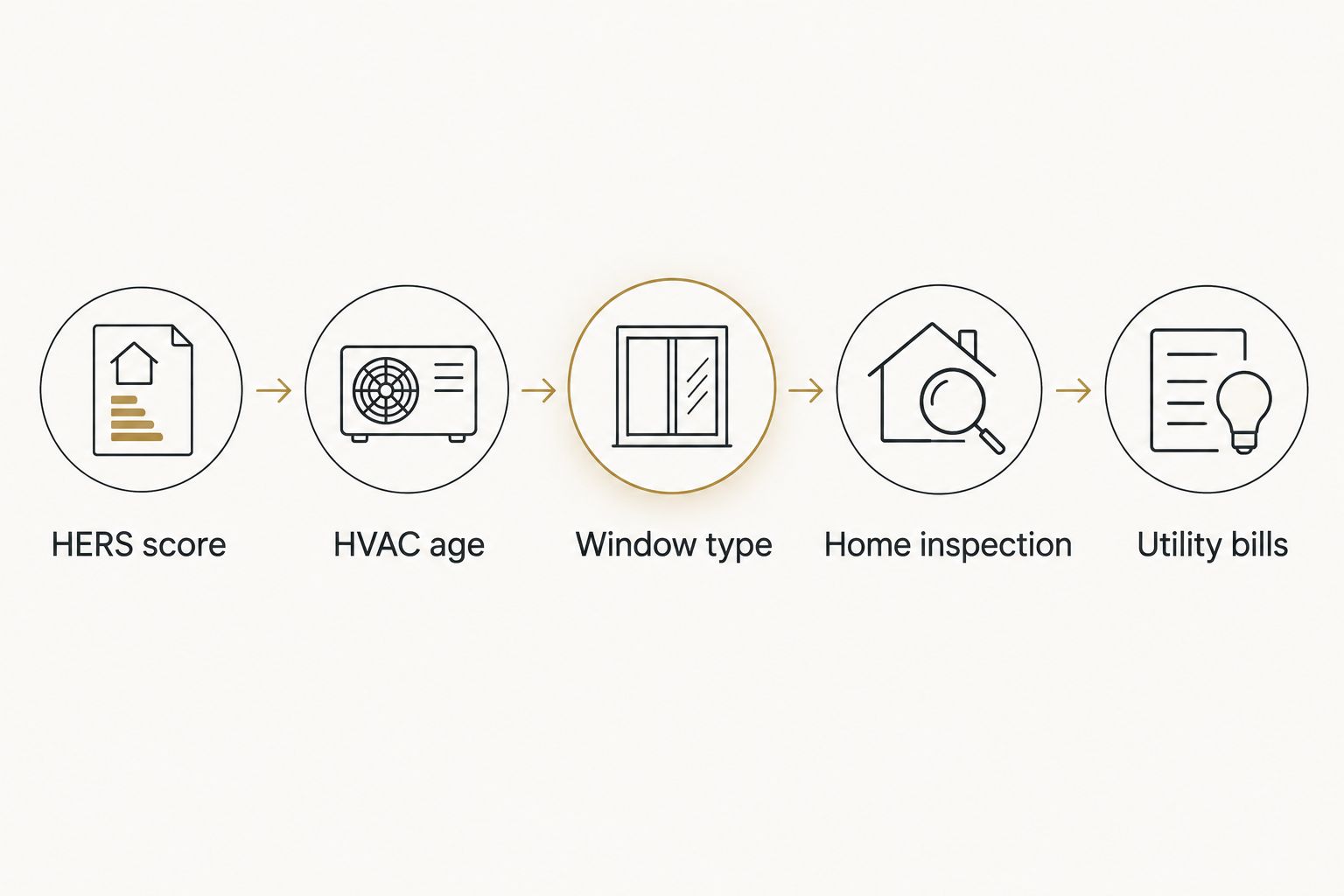
- Ask the listing agent for a HERS Index score or ENERGY STAR certificate on any home built after 2005 — builders in the region increasingly provide one.
- Pull the age of the HVAC system, water heater, and roof from the seller's disclosure. Equipment past 15 years old usually means a near-term replacement and a jump in efficiency.
- Check window type. Single-pane or original aluminum-frame windows on a pre-1990 home signal higher heating and cooling loss even if everything else looks updated.
- Order a home inspection that includes attic and crawlspace insulation depth, not just a general systems check.
- Request 12 months of utility bills from the seller. This is the single most reliable real-world efficiency indicator available and it costs nothing to ask for.
- Factor a renovation loan into your financing conversation if the home needs insulation or HVAC work — a renovation loan can roll efficiency upgrades into the purchase instead of forcing a cash outlay after closing.
- Get a standalone energy audit before your inspection contingency expires if the home is older than 20 years and lacks any efficiency documentation.
Comparing home types by efficiency signal
| Home Type | Typical Efficiency Signal | Best For |
|---|---|---|
| New construction (post-2015) | HERS score or ENERGY STAR certificate usually available | Buyers who want documented efficiency with no retrofit work |
| Resale with recent HVAC/window upgrades | Permit history and receipts, no formal HERS score | Buyers comfortable verifying upgrades through permit records |
| Pre-1990 resale, no upgrades | No documentation; utility bills tell the real story | Buyers planning a renovation loan and efficiency retrofit |
Why energy efficiency varies so much from house to house in Cincinnati
Two homes on the same street can carry very different operating costs. The factors that matter most:
- HVAC age and type — a furnace or heat pump past 15 years old runs less efficiently than current equipment, even when it's still working.
- Insulation depth in the attic and basement — this is invisible during a walkthrough and rarely disclosed unless you ask.
- Window type and count — original single-pane windows on an older Cincinnati home are a common and expensive gap.
- Ductwork sealing — leaky ducts in a crawlspace or attic waste conditioned air before it reaches the living space.
- Home orientation and shade — a west-facing home with no mature tree cover runs harder in summer.
- Utility provider and rate structure — Duke Energy's rate structure applies across most of the Cincinnati metro, so the equipment and envelope of the house, not the utility company, is where efficiency differences actually come from.

“A HERS Index score under 70 tells you more about a home's true monthly cost than its listed square footage ever will.”
Does a HERS rating actually affect resale value in Cincinnati?
A documented HERS rating gives a future buyer verified proof of lower operating costs, which is a real selling point in a market where utility costs factor into monthly affordability calculations. It won't move price the way a renovated kitchen does, but it removes a question mark that otherwise slows negotiations. Homes with no documentation at all put the burden on the buyer to estimate cost from utility bills and HVAC age alone.
Are older Cincinnati homes always less energy-efficient than new construction?
Not always — a well-maintained older home with replaced HVAC, upgraded windows, and added insulation can perform close to new construction. The deciding factor is documented upgrades, not the home's age on paper. Ask for permit history and receipts before assuming an older home is automatically the less efficient choice, or before assuming new construction is automatically efficient without a HERS score to confirm it.
Should you order an energy audit before writing an offer?
An energy audit is worth ordering when a home is more than 20 years old and carries no HERS score or ENERGY STAR documentation, because it identifies air leaks and insulation gaps a standard home inspection won't flag. It typically runs as a separate appointment from your general inspection, so build the extra time into your contingency period. Skip it on new construction that already has documented certification — the audit would confirm what the builder's paperwork already shows.
Talk to a Cincinnati buyer's agent
Sandlin Realtors builds efficiency checks into the offer and inspection timeline.
FAQ
How do I know if a Cincinnati home is energy-efficient before making an offer?
Ask the listing agent for a HERS Index score, an ENERGY STAR certificate, or 12 months of utility bills. Absent any of those, check the age of the HVAC system and window type as the next-best indicators.
What is a good HERS Index score for a home in 2026?
A HERS Index score below 100 means the home uses less energy than a standard new build under the 2006 baseline, and scores in the 60s to 70s are typical for ENERGY STAR-certified homes. The lower the number, the less energy the home uses.
Is new construction always more energy-efficient than resale homes in Cincinnati?
New construction built after 2015 usually comes with a documented HERS score or ENERGY STAR certification, which resale homes often lack. That doesn't mean every resale home is less efficient — it means new construction is easier to verify.
Does Duke Energy affect how much I'll pay to run a home in Cincinnati?
Duke Energy serves most of the Cincinnati metro area, so the rate structure is largely the same across neighborhoods. The bigger driver of your bill is the home's HVAC age, insulation, and window type, not which utility serves the address.
Should I get a home inspection and an energy audit, or just one?
Get both when efficiency matters to you — a home inspection checks safety and system function, while an energy audit specifically measures air leaks and insulation performance. They answer different questions and one doesn't substitute for the other.
Can I finance efficiency upgrades into my home purchase?
Yes, a renovation loan lets you roll insulation, window, or HVAC upgrades into your purchase financing instead of paying out of pocket after closing. This is worth discussing with your lender before you make an offer on an older home.
Do sellers have to disclose HVAC age or insulation levels in Ohio?
Ohio's seller disclosure form covers known material defects but doesn't require a HERS rating or insulation depth measurement. That's why requesting utility bills and permit history directly from the seller matters more than relying on the disclosure form alone.
One last thing
The detail most buyers skip: asking for 12 months of utility bills. It costs nothing, sellers rarely refuse, and it tells you more about real operating cost in 2026 than any certificate on the wall. If a seller hesitates to provide them, treat that as information too.