
Buying a home with a bridge loan in Cincinnati means using the equity in your current house as short-term collateral so you can close on a new one before your old one sells. It works when you have real equity and a realistic timeline to sell — it backfires when either is thin.
A bridge loan doesn't lower your purchase price or beat a normal mortgage rate. It buys you sequencing: the ability to make a non-contingent offer in a market where contingent offers routinely lose.
- A bridge loan lets Cincinnati buyers close on a new home before selling their current one, using existing home equity as collateral.
- Terms typically run 6 to 12 months, so a realistic sale plan for the current property is non-negotiable.
- Lenders qualify buyers as if both mortgages are active at once — budget for that overlap before applying.
- Sandlin Realtors sequences the sale and purchase sides together so the bridge loan window doesn't close on you.
- Best fit: sellers with strong home equity who need to move fast in the 2026 Cincinnati market.
Why this matters
Cincinnati's resale market in 2026 still rewards clean, non-contingent offers over anything tied to "pending sale of my current home." Sellers and their agents read a sale-contingent offer as a risk, and in a multiple-offer situation it's often the first one passed over.
A bridge loan removes that contingency from your offer. You close on the new home using the loan, then sell your current one on a normal timeline instead of a rushed one. That's the entire value proposition — it's a timing fix, not a discount.
Joey Sandlin has represented buyers and sellers across Southern Ohio for 20+ years, including Cincinnati-area purchases that hinge on getting the sale-then-buy sequence right. Sandlin Realtors works both sides of that sequence at once, which is where bridge loan deals most often fall apart.
How to buy a home with a bridge loan in Cincinnati
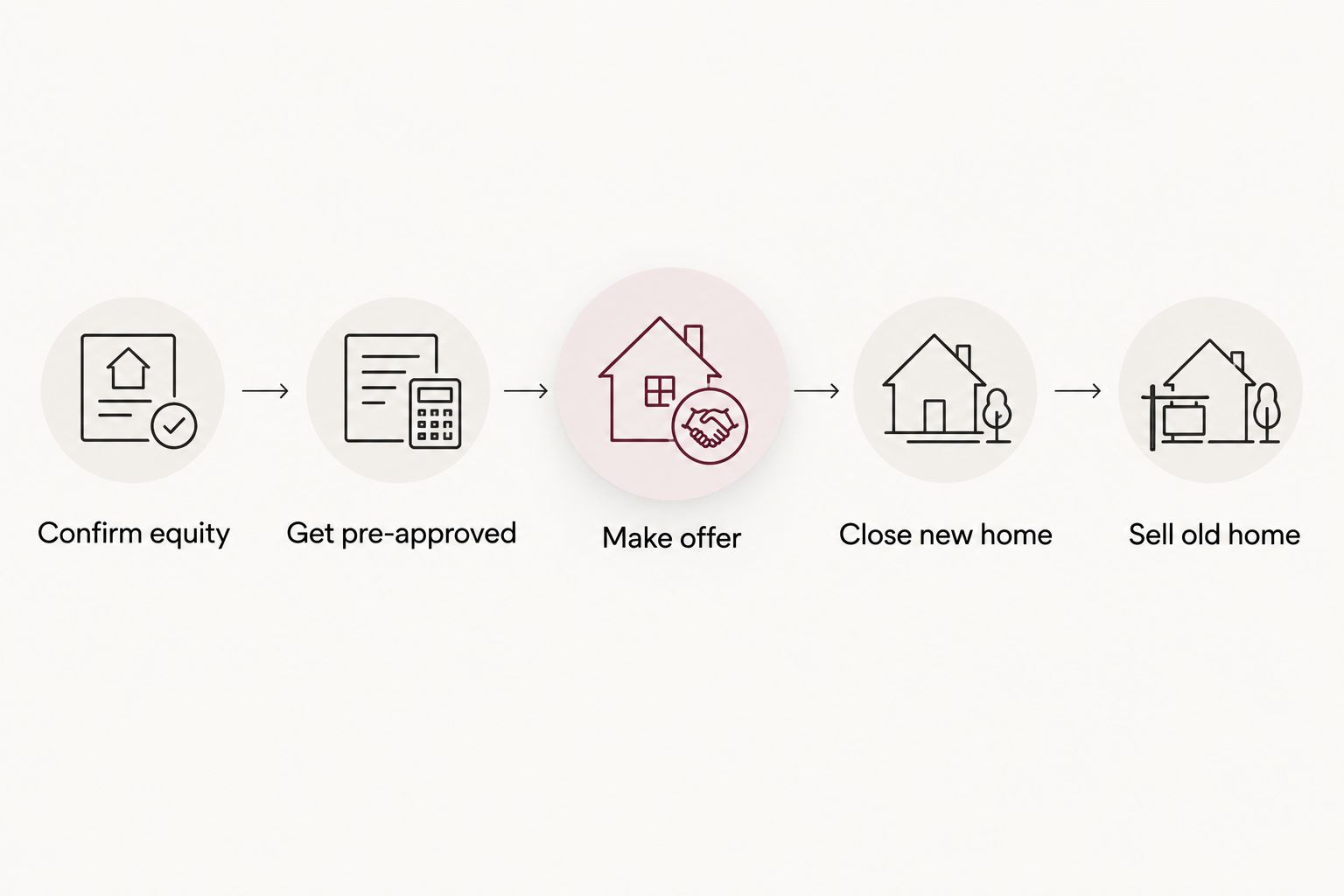
The process runs in a fixed order. Skipping a step, especially the equity check, is how buyers end up with a loan they can't actually use.
- Confirm your current home's equity first. Most bridge loan programs require substantial equity in the home you're leaving, often cited industry-wide at 20% or more, before a lender will even quote terms.
- Find a lender that underwrites bridge loans in Ohio. Not every bank offers them. Community banks, credit unions, and some regional lenders are the more common sources than the big national mortgage shops.
- Get pre-approved for both the bridge loan and the new purchase mortgage. Lenders typically qualify you as if you're carrying both payments simultaneously, so your debt-to-income picture has to hold up under that combined load.
- Write a non-contingent offer on the new property. This is the whole point of the loan — see how to write a competitive offer in the Cincinnati market for how sellers evaluate offer strength beyond price.
- Close on the new home using bridge loan funds. The loan typically covers the gap between your current equity and the new home's purchase requirements.
- List and sell your current home on a normal timeline. An accurate home appraisal early in this process keeps your pricing grounded instead of guessed.
- Pay off the bridge loan at your old home's closing. The remaining sale proceeds are yours; the bridge loan is retired in full.
Why bridge loan terms vary
No two bridge loan quotes look the same. The gap between a workable offer and a rejected application usually comes down to a handful of factors:
- Equity in the current home — thin equity means less collateral, and some lenders won't quote a loan at all.
- Lender appetite — bridge products are a smaller niche than standard mortgages, so pricing and terms differ more between lenders than a 30-year fixed does.
- Combined debt-to-income — carrying two mortgage payments at once tightens what a lender will approve.
- Appraisal gap — a wide difference between the current home's value and the new home's price changes how much bridge financing is needed.
- Expected days on market — a current home in a slow-moving Cincinnati neighborhood makes a 6 to 12 month bridge term riskier to plan around.
- Loan term length — shorter terms carry tighter payoff pressure; longer terms usually cost more in fees.
Sequence your sale and purchase correctly
Get a Cincinnati-area equity and timing review before applying for a bridge loan.
Is a bridge loan the same as a HELOC?
No — a bridge loan is a short-term loan sized for a specific purchase and repaid at your old home's sale, while a HELOC is a revolving line of credit against your home's equity that you can draw on repeatedly. Some buyers use a HELOC instead of a formal bridge loan for the same purpose, but the underwriting and repayment structure differ.
How much equity do I need for a bridge loan in Cincinnati?
Most programs look for substantial equity, commonly in the range of 20% or more of your current home's value, before approving a bridge loan. Below that threshold, lenders generally steer buyers toward a HELOC, a contingent offer, or a rent-back arrangement instead.
What happens if my current home doesn't sell before the bridge loan term ends?
If the sale hasn't closed by the end of the 6 to 12 month bridge term, you're typically responsible for an extension, refinance, or full repayment out of pocket. That's exactly why an accurate list price and a realistic days-on-market estimate for your current home matter more with a bridge loan than with a standard sale.
FAQ
How to buy a home with a bridge loan in Cincinnati?
Confirm your current home's equity, get pre-approved for both the bridge loan and the new mortgage, then make a non-contingent offer on the new home and pay off the bridge loan when your old home sells. The loan typically runs 6 to 12 months.
Do all lenders offer bridge loans in Ohio?
No, bridge loans are a smaller niche product than standard mortgages. Community banks and credit unions in the Cincinnati area are more likely to offer them than large national mortgage lenders.
Is a bridge loan better than a contingent offer?
A bridge loan is generally stronger in a competitive market because it removes the sale contingency sellers view as risk. A contingent offer costs nothing extra but is more likely to lose in a multiple-offer situation.
Can I use a bridge loan for a down payment only?
Yes, many buyers use bridge loan proceeds specifically to cover the down payment gap on the new home rather than financing the entire purchase. The remainder still comes from a standard mortgage.
What's the typical bridge loan term length?
Bridge loans typically run 6 to 12 months. That window is meant to cover the time between closing on the new home and closing the sale of the current one.
Does a bridge loan affect my mortgage approval for the new home?
Yes, lenders generally qualify you as if you're carrying both mortgage payments at once, which tightens your debt-to-income ratio during underwriting.
Is a bridge loan the same as a home equity loan?
No, a bridge loan is a short-term financing tool tied to a specific purchase and repaid at your old home's sale, while a home equity loan is a longer-term lump-sum loan against your equity.
One last thing
The biggest bridge loan mistake in Cincinnati isn't the paperwork — it's underpricing the current home just to guarantee a fast sale. That erases the equity cushion the loan depends on and can leave you short at payoff. Price to the appraisal, not the deadline, and let the bridge loan's 6 to 12 month window do the work it's designed for.