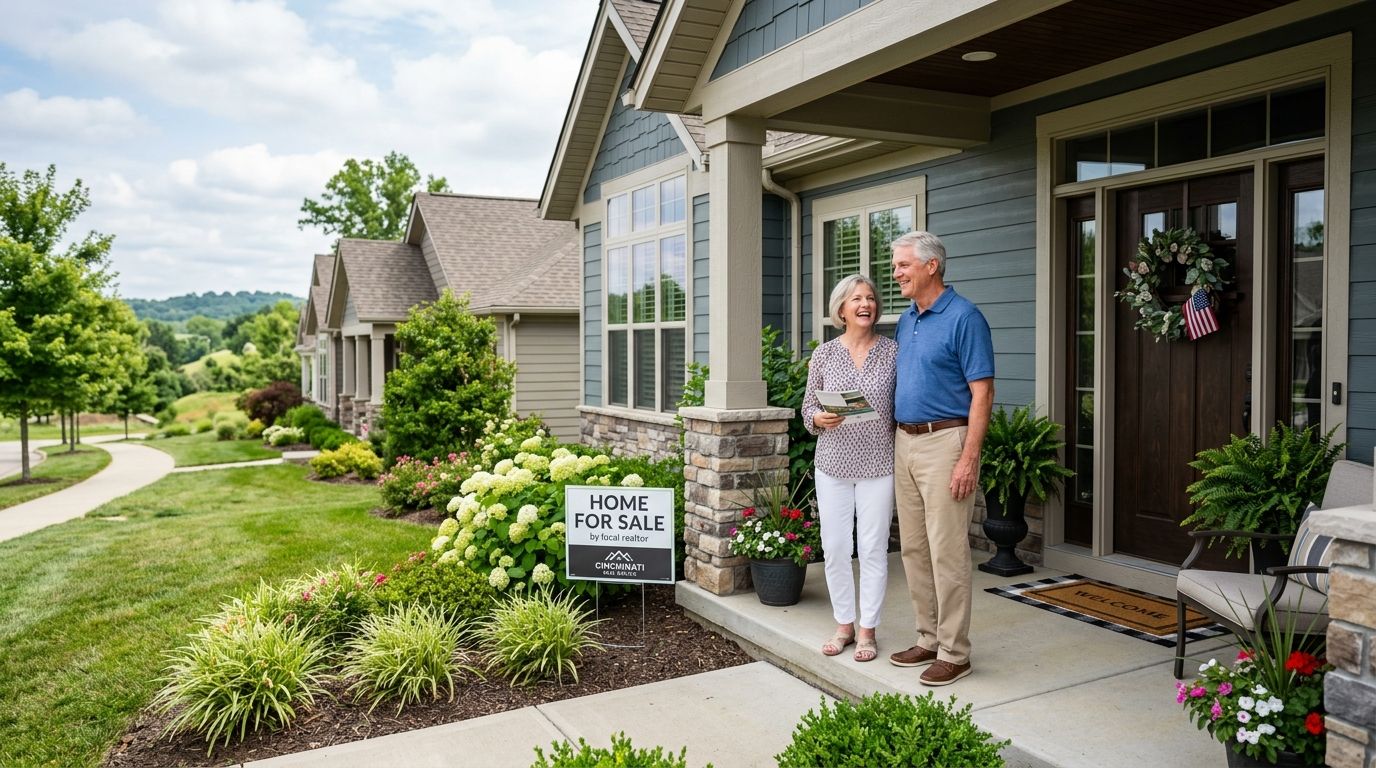
Buying in a 55+ community near Cincinnati in 2026 means confirming the development's actual age-restriction status, budgeting for HOA dues on top of your mortgage, and working with a real estate team that has closed this exact kind of transaction before. The process follows the same timeline as any home purchase — pre-approval, tour, offer, inspection, closing — with two extra checkpoints: age-verification paperwork and HOA document review. Sandlin Realtors walks Southern Ohio buyers through both of those checkpoints before an offer ever goes out.
- A 55+ community can legally enforce its age rule only if 80% of occupied units have a resident 55 or older, per federal fair housing law.
- HOA dues, not the mortgage, are the cost buyers underestimate most when buying a home in a 55+ community near Cincinnati.
- Condos, gated developments, and ranch-style homes are the three common 55+ formats near Cincinnati in 2026, each with different HOA structures.
- Sandlin Realtors reviews HOA reserve funds and HOPA compliance before clients write an offer.
Why this matters
Age-restricted communities near Cincinnati and across Southern Ohio operate under the Housing for Older Persons Act (HOPA), a federal exemption to the Fair Housing Act. A development can legally enforce a 55+ minimum only if at least 80% of its occupied units have one resident age 55 or older. Buyers who skip this check sometimes learn, after closing in 2026, that the "55+ community" they bought into is loosely enforced or trending below that threshold — which changes resale expectations and neighbor turnover.
Sandlin Realtors, the Southern Ohio real estate team led by Joey Sandlin, has guided buyers through this exact question for over 20 years, and the answer usually changes the offer strategy more than buyers expect walking in.
How do you buy a home in a 55+ community near Cincinnati?
Buying in a 55+ community runs through six steps, in this order:
- Confirm HOPA status in writing. Ask the HOA or management company for the community's occupancy survey, not just a verbal "yes, it's 55+."
- Get pre-approved before you tour. FHA loans require a minimum 3.5% down payment in 2026; conventional loans commonly start lower for qualified buyers, though some age-restricted condo associations carry stricter lender overlays.
- Tour with HOA questions ready. Ask about reserve fund balances, monthly dues, and whether dues have trended up over the last three years.
- Review the HOA governing documents before you write an offer, not after — bylaws, CC&Rs, and the last two years of meeting minutes.
- Order the inspection and appraisal the same way you would for any resale home; 55+ communities aren't exempt from standard closing steps.
- Close and register with the HOA so age-verification paperwork is on file before move-in.
Comparison: the three common 55+ formats near Cincinnati
| Format | Typical structure | Best for |
|---|---|---|
| Age-restricted condos | Attached units, HOA covers exterior maintenance | Buyers who want to travel without upkeep worries |
| Gated 55+ developments | Single-family homes, shared amenities, HOA-controlled entry | Buyers who want privacy and a maintained shared entrance |
| Ranch-style 55+ homes | Single-story, often HOA-lite or no HOA | Buyers prioritizing single-level living over amenities |
Age-restricted condos: what actually changes about the numbers
Condos built for downsizing buyers price differently than a standalone ranch because condos for sale in Cincinnati for empty nesters downsizing carry HOA dues that fund building-wide maintenance, not just landscaping. That monthly due is the number buyers underestimate — not the mortgage payment. Ask for the reserve study before making an offer; a poorly funded reserve means a special assessment is likely within a few years of closing.
Gated 55+ communities near Cincinnati
Gated developments add a layer of cost most buyers don't budget for: entry-gate maintenance, private road upkeep, and sometimes a separate capital fund on top of standard dues. Gated community homes for sale near Cincinnati tend to hold resale value better than non-gated 55+ stock in the same price range in 2026, largely because age-restriction enforcement is stricter and turnover is lower.
Ranch-style homes inside 55+ developments
Single-story living is the feature most 55+ buyers ask for first, ahead of amenities or gate access. Ranch-style homes for sale in Cincinnati for accessibility needs often carry lighter HOA structures than condos or gated developments, since exterior upkeep falls to the owner rather than a shared expense. That trade-off means a lower monthly due but more of the maintenance workload lands on you.
Why HOA fees and rules vary this much
No two 55+ developments near Cincinnati price or govern themselves the same way. The differences come down to a short list of factors:
- Amenity load — a clubhouse, pool, and fitness center cost more to maintain than a gated entrance alone.
- Reserve fund health — a well-funded reserve means fewer surprise assessments; an underfunded one means the opposite.
- Self-managed vs. professionally managed — professional management typically raises monthly dues but improves enforcement consistency.
- Development age — older communities often carry higher deferred-maintenance costs than developments built in the last decade.
- Condo vs. single-family structure — condo dues typically cover more (roofs, siding, sometimes windows) than single-family HOA dues, which usually cover only common areas.
Talk to Sandlin Realtors before you tour
Get HOA and HOPA documents reviewed before you write an offer.
Related questions buyers ask
Can someone under 55 live in a 55+ community?
Yes — HOPA only requires that 80% of occupied units have one resident 55 or older, which means the remaining units can legally house younger residents, including a spouse or caregiver under 55.
Is a 55+ community the same thing as an HOA?
No. An HOA governs shared maintenance and rules for any development, age-restricted or not; a 55+ designation is a separate legal status under federal fair housing law layered on top of whatever HOA structure already exists.
Do 55+ communities cost more than a comparable non-restricted home in 2026?
The purchase price is often comparable to similar homes nearby, but the added monthly HOA due — covering shared amenities or exterior maintenance — is the real cost difference buyers need to weigh against their mortgage payment.
FAQ
How do you buy a home in a 55+ community near Cincinnati?
You confirm the community's HOPA status, get pre-approved, review HOA governing documents before writing an offer, then close like any other resale purchase. Sandlin Realtors checks the occupancy survey and reserve fund health before clients tour in 2026.
What is the 80% rule for 55+ communities?
Federal fair housing law (HOPA) allows a community to enforce a 55+ age minimum only if at least 80% of occupied units have one resident 55 or older. Communities below that threshold risk losing their exemption.
Can you get an FHA loan for a home in a 55+ community?
Yes, FHA loans work in 55+ communities with a minimum 3.5% down payment in 2026, though the condo or HOA must meet standard lender approval requirements first.
Are HOA fees higher in 55+ communities than regular neighborhoods?
HOA fees in 55+ communities are often higher than a standard subdivision because dues typically fund amenities like clubhouses and pools that non-restricted developments don't carry.
Is a gated 55+ community worth the extra HOA cost?
A gated 55+ community near Cincinnati often holds resale value better due to stricter enforcement and lower turnover, but the added gate and road maintenance cost should be weighed against a non-gated option with similar amenities.
Do you need an agent to buy in a 55+ community?
You don't legally need one, but an agent who reviews HOA minutes and reserve studies before you write an offer catches issues a standard home inspection won't cover.
What's the difference between a 55+ condo and a 55+ ranch home?
A 55+ condo carries higher HOA dues that cover building maintenance, while a ranch-style 55+ home usually has lighter HOA obligations but puts more upkeep responsibility on the owner.
One last thing
Most buyers assume the 80% HOPA threshold makes a community airtight on enforcement — it doesn't. A development can dip below 80% occupancy by residents 55 or older for a period and still keep its exemption if it's actively working to restore compliance, which is exactly the kind of detail that shows up in HOA meeting minutes but never in a listing description. Read the last two years of minutes before you write an offer heading into 2026, not after you're under contract.