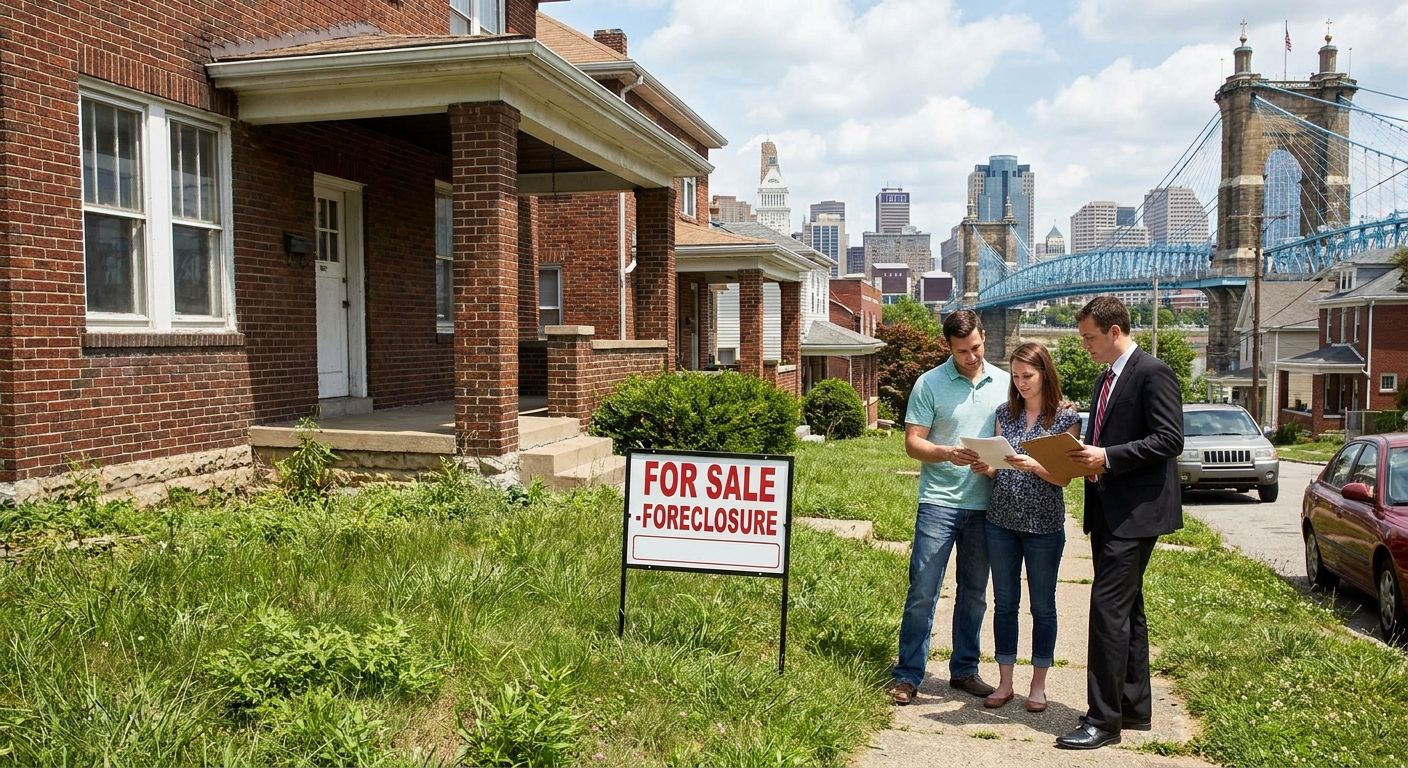
Buying a foreclosure home in Cincinnati means bidding at sheriff sales, clearing title problems banks won't mention up front, and moving on cash timelines that catch most retail buyers off guard — here's the step-by-step process for the 2026 market.
- Cincinnati foreclosure homes sell three ways in 2026: sheriff sale auctions, bank-owned REO listings, and pre-foreclosure short sales.
- Ohio runs a judicial foreclosure process, so owners keep a redemption right until the court confirms the sale.
- Cash or a pre-approved hard-money loan wins at the courthouse steps — most sheriff sales require funds the same day.
- Buy: financeable bank-owned REO listings for a smoother 2026 close. Skip: any sheriff sale property you haven't walked or researched at the county recorder's office.
Why this matters
Hamilton County moves a steady stream of foreclosures through sheriff sale every year, and Cincinnati's price growth has made distressed inventory more competitive than it was a few years back. A property that looks like a discount can turn into a lien-clearing project that erases the savings, and buyers who skip the courthouse paperwork often find out about a second mortgage or a mechanic's lien after they've already wired money.
Sandlin Realtors built its practice on high-touch representation across Southern Ohio, and Joey Sandlin's 20+ years of experience covers exactly this kind of complicated transaction — the kind where the contract is only half the job. Foreclosure buying rewards buyers who prepare before they bid, not after.
What you'll need
- Proof of funds or a pre-approval letter — sheriff sales don't wait on a mortgage underwriter
- A title search on the specific parcel, not just the neighborhood
- A cashier's check or certified funds for the deposit due the day you win
- A property inspection plan that works from the curb if the home is occupied
- A real estate agent who has closed foreclosure or REO deals, ideally one who knows the local court schedule
- A contingency budget of at least 10-15% above your max bid for repairs and liens you can't see from the sidewalk
If you're still deciding who to work with on the agent side, this breakdown of choosing a Cincinnati real estate agent covers the questions to ask before you sign anything.
The steps
1. Get financing confirmed before you shop
Sheriff sales and most REO listings move fast, and a buyer without confirmed funds gets passed over. Conventional loans work for bank-owned listings but rarely for courthouse auctions, where cash or certified funds is the norm. FHA financing typically requires 3.5% down and works fine on REO purchases; veterans buying through the VA program can put 0% down, which matters if a foreclosure purchase is stretching your budget. Skipping this step is the single most common reason first-time foreclosure buyers lose a property they were qualified to win.
2. Pull the sheriff sale list and county records
Hamilton County publishes its upcoming sheriff sale properties on a regular schedule, and each listing links back to the underlying case file. Read the case number, not just the address — it tells you whether the sale is a straightforward mortgage default or something more tangled, like a tax foreclosure with multiple defendants. Cross-reference the parcel against the county auditor's site for tax history before you get attached to a price.
3. Inspect from the outside, then dig into the title
Most sheriff sale properties are sold without interior access, so your inspection happens from the curb and the public record. Look for signs of long-term vacancy, boarded windows, or code violation notices posted on the door. Then run a full title search: second mortgages, mechanic's liens, and unpaid HOA dues survive a sheriff sale in ways that surprise buyers who assumed the auction wiped the slate clean.
4. Confirm what the sale actually clears
A sheriff sale extinguishes the foreclosing lender's mortgage, but it doesn't automatically clear every junior lien or back tax bill — some of those can attach to the new owner. This is where a title company earns its fee before you ever bid. Southern Ohio buyers ask this same question on land and home purchases outside Cincinnati, and the logic in this guide on how to choose a title company applies just as directly to a foreclosure closing.
5. Set your max bid and stick to it
Write your ceiling down before you're standing in the room, because auction adrenaline pushes people past their number every single time. Base the ceiling on comparable sold prices, subtract your repair and lien contingency, and treat that figure as final. If the bidding passes it, walk. Another property comes up the following week.
6. Fund the winning bid on the county's timeline
Each county sets its own deposit rules and payment deadline, and Hamilton County enforces them strictly — miss the window and you forfeit the sale. Have certified funds ready before the auction starts, not after you win, because there's no grace period for a buyer scrambling to move money.
7. Get through confirmation and take possession
Ohio's judicial foreclosure process gives the former owner a redemption right that runs until the court formally confirms the sale, which adds real weeks to your timeline after the auction closes. Budget for that delay when you plan a move-in or renovation date, and don't sign contractors or lease agreements until confirmation is final.
Get local guidance before you bid
Talk through Cincinnati foreclosure options with a Southern Ohio real estate team.
Troubleshooting
- You won the bid but the property is occupied. Eviction after a sheriff sale confirmation is a legal process with its own timeline — budget weeks, not days, and don't attempt a lockout yourself.
- A title search turns up a second lien. Get a title company's written payoff estimate before closing; some liens negotiate down, others don't survive the sale at all.
- Your financing falls through mid-process. This is why cash or certified funds beats a loan contingency at auction — line up backup funds before bid day, not after.
- The house needs more repair than the curb inspection showed. Build your contingency at 10-15% of purchase price minimum on any foreclosure; interior damage is the norm, not the exception.
- Another bidder keeps pushing past your ceiling. Let it go. Chasing a property past your number turns a discount into full retail with extra paperwork.
Tools and resources
- Hamilton County Clerk of Courts sheriff sale listings and case files
- Hamilton County Auditor property and tax records
- A local title company for lien searches and payoff estimates — see how to choose a title company
- A real estate agent experienced in Cincinnati foreclosure and REO transactions
- Certified funds or a hard-money lender relationship set up before bid day
What to do next
Once you understand the foreclosure process, compare it against retail inventory before committing your cash to an auction. Browse current Cincinnati homes for first-time buyers to see whether a traditional listing gets you the same value with far less risk.
FAQ
What is the cheapest way to buy a foreclosure home in Cincinnati?
Sheriff sale auctions typically offer the lowest entry price on Cincinnati foreclosure homes in 2026, but they require cash or certified funds and carry the highest risk of hidden liens. Bank-owned REO listings cost more but usually allow financing and an interior inspection.
Can you get a mortgage on a foreclosure home in Cincinnati?
Yes, but only on bank-owned REO listings, not courthouse sheriff sale auctions. FHA loans require around 3.5% down and VA loans allow 0% down for qualifying veterans, both usable on an REO purchase.
How long does the Ohio foreclosure redemption period last?
Ohio's redemption right runs until the court confirms the sheriff sale, which typically adds several weeks after the auction before a buyer gets clear possession. The exact timeline depends on the county court's docket.
Do liens get wiped out when you buy a foreclosure at sheriff sale?
The foreclosing lender's mortgage gets cleared, but junior liens like second mortgages, mechanic's liens, and some HOA debts can survive the sale. A full title search before bidding is the only way to know what you're actually buying.
Is buying a foreclosure home in Cincinnati riskier than buying a regular listing?
Yes, foreclosure purchases carry more risk than a standard listing because most sell without interior access and without seller disclosures. That risk comes with a lower entry price, which is the trade-off buyers are making.
How much cash do you need to bid at a Hamilton County sheriff sale?
Hamilton County sets its own deposit and payment deadline for each sale, and the funds must be certified and ready before the auction starts. Check the specific case listing for the exact deposit requirement before bid day.
What's the difference between a foreclosure and a short sale in Cincinnati?
A foreclosure is a bank-forced sale after the owner defaults, usually through a sheriff sale auction or an REO listing. A short sale happens before foreclosure, when the owner sells with lender approval for less than the mortgage balance owed.
One last thing
The buyers who do well with Cincinnati foreclosure homes in 2026 aren't the ones who move fastest — they're the ones who ran the title search before falling in love with the price. A discount that comes with a hidden lien isn't a discount at all.