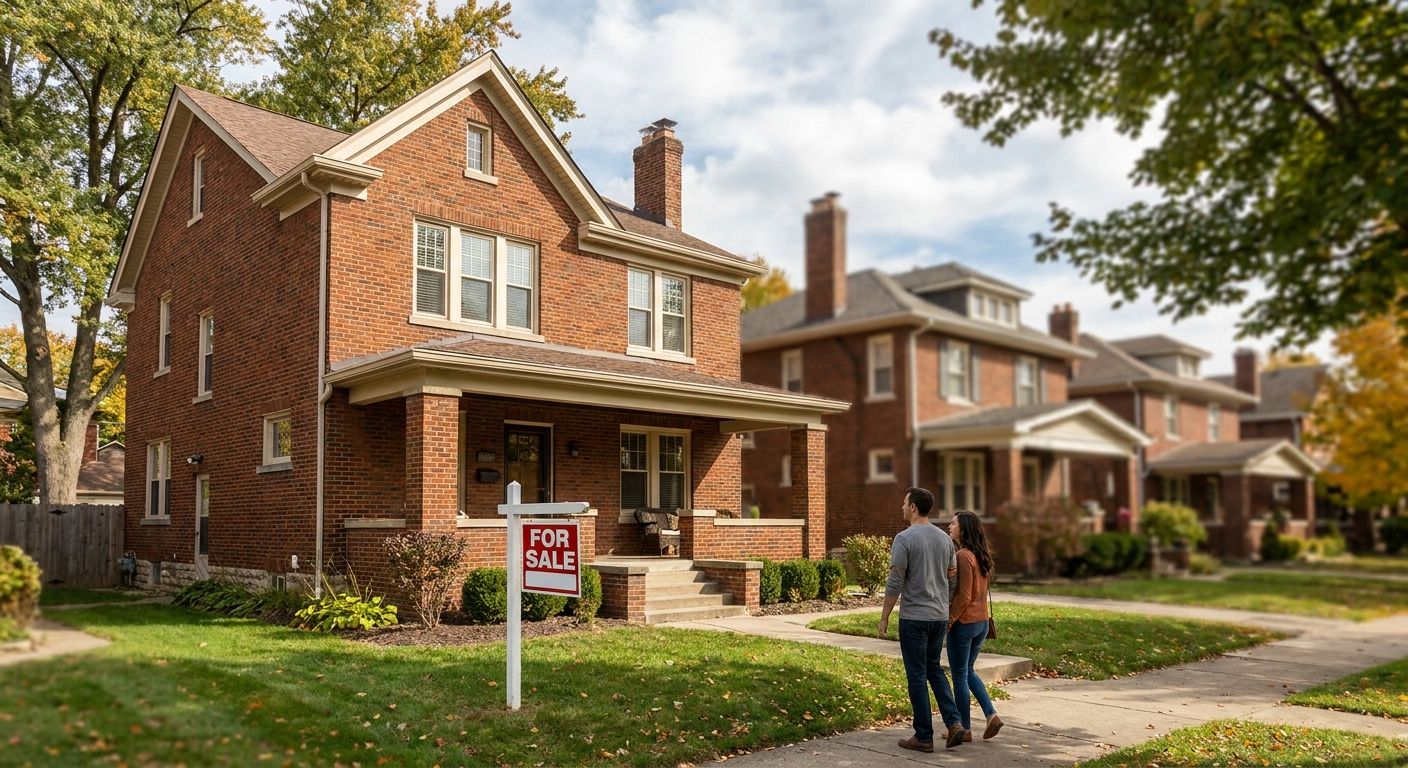
Cincinnati homes for sale sit in a strange sweet spot right now: prices are still lower than most coastal metros, but competition for the entry-level range has tightened in neighborhoods like Northside and Oakley. This guide breaks down what a first-time buyer actually needs to check before writing an offer in 2026.
- Cincinnati homes for sale in Price Hill, College Hill, and Bond Hill still work with FHA's 3.5% down payment minimum in 2026.
- Northside and Oakley have tighter inventory and faster offer timelines than the city average this year.
- Sandlin Realtors recommends a pre-approval letter before touring anything listed under $250,000 in 2026 -- these move fast.
- Skip homes with unpermitted basement finishes or knob-and-tube wiring unless the price already reflects a rewire.
Why this matters
A first mortgage is not a normal purchase decision -- it's a 30-year contract most buyers sign without ever having done it before. Cincinnati's older housing stock (a lot of it pre-1950) adds inspection variables that buyers in newer-build metros never have to think about.
Getting the neighborhood and the loan program wrong in year one costs real money: a buyer who skips FHA eligibility research can lose weeks of shopping time on homes they can't actually finance. Cincinnati homes for sale move on different timelines depending on the zip code, so the criteria below matter more here than in a flat, uniform market.
Who this is for
This guide is built for someone buying their first home in the Cincinnati metro with a household income that puts them in starter-home territory -- likely financing with FHA, conventional 5% down, or a first-time buyer assistance program through the Ohio Housing Finance Agency. If you're relocating for a job, renting nearby and ready to stop, or just tired of watching rent increases eat your savings, the criteria and neighborhood picks below are written for you specifically, not for move-up buyers or investors.
Sandlin Realtors works with first-time buyers across the Cincinnati metro and can walk you through financing eligibility before you tour a single listing.
What to look for in Cincinnati homes for first-time buyers
Loan program fit before house hunting
FHA loans require a minimum 3.5% down payment with a credit score of 580 or higher, while conventional loans typically require a 620 minimum and 3-5% down for first-time buyers using standard programs. Knowing which bucket you fall into before you tour anything filters out half the listings that will waste your time.
Commute reality, not commute on paper
Cincinnati's hills and river crossings make a 7-mile drive take longer than it looks on a map. Check actual drive times at 8 a.m. on a weekday from any home you're serious about, not the Google Maps estimate generated at noon on a Sunday.
Age and condition of major systems
A lot of Cincinnati's starter-home inventory was built before 1960, which means roof, furnace, and electrical panel age matter more than curb appeal. A home with a 20-year-old roof and original knob-and-tube wiring is a renovation project wearing a for-sale sign, not a move-in-ready starter home.
Property taxes by township and school district
Hamilton County property tax rates vary significantly by township and school district, and that difference can add hundreds of dollars a month to your actual housing cost beyond the mortgage payment. Pull the actual tax bill for any home you're considering -- don't estimate from a countywide average.
Flood zone and grading on hillside lots
Cincinnati's terrain means some lots near Mill Creek and the Ohio River floodplain carry flood insurance requirements that first-time buyers don't budget for. Check the FEMA flood zone designation before you fall for a view.
Inventory pace in your target zip code
Some Cincinnati neighborhoods have listings that go under contract in days; others sit for months. Knowing which category your target zip falls into determines how aggressive your offer needs to be and how fast you need to move once you're pre-approved.
Neighborhoods worth touring first
Price Hill -- the safe pick. Larger lot sizes and an older housing stock built mostly before 1940 keep entry prices accessible relative to the rest of the city, and inventory turns over steadily rather than in sudden sprints. First-time buyers who need room to negotiate on price and timeline do well here. Buy.
College Hill -- the value play. A walkable business district, established tree cover, and a mix of early-1900s housing stock make this one of the more livable starter-home zones in the metro without Oakley-level competition. Inspect roofs and panels closely given the housing age. Buy.
Northside -- the wildcard. Popularity has pushed this neighborhood's competition up fast, and homes here can see multiple offers within the first week of listing in 2026. Great fit if you're pre-approved and ready to move the day something hits the market; a poor fit if you need weeks to decide. Consider.
Bond Hill -- the overlooked one. Central location, straightforward commute to downtown and the interstate, and less bidding pressure than the trendier east-side neighborhoods. Worth a serious look if walkability isn't your top priority. Buy.
Oakley -- the stretch pick. Strong walkability and a built-out retail corridor drive prices above true starter-home range for most first-time buyers in 2026, and inventory is thin enough that competition is steep even for smaller homes. Only pursue this one if your pre-approval comfortably clears the higher price band. Consider.
Talk to a Cincinnati buyer's agent
Get neighborhood-specific guidance before you tour your first listing.
What to avoid
- Unpermitted basement or attic conversions. These add square footage on paper but can trigger insurance and resale problems later -- confirm permits with the county before counting that space as usable.
- Homes priced right at the edge of your FHA appraisal ceiling. If the seller won't budge and the appraisal comes in low, you're stuck renegotiating or bringing extra cash to closing.
- Handyman-special listings with no inspection contingency built into the offer strategy. A first-time buyer without renovation experience or a contractor relationship should not waive inspection to win a bidding war.
Verdict comparison
| Neighborhood | Affordability for first-time buyers | Commute to downtown | Inventory pace (2026) | Verdict |
|---|---|---|---|---|
| Price Hill | Strong | Moderate | Steady | Buy |
| College Hill | Strong | Moderate | Steady | Buy |
| Northside | Moderate | Short | Fast, competitive | Consider |
| Bond Hill | Strong | Short | Steady | Buy |
| Oakley | Weak for starter budgets | Short | Fast, thin | Consider |
If you're weighing land purchases outside the metro core as an alternative path to homeownership, this guide on buying land for sale in Portsmouth Ohio covers a very different buying process worth understanding before you commit either way.
FAQ
What is a good starter neighborhood for Cincinnati homes for sale in 2026?
Price Hill, College Hill, and Bond Hill offer the strongest combination of affordability and steady inventory for first-time buyers in 2026. Northside and Oakley are livable but carry higher competition and price pressure.
How much down payment do I need for a first home in Cincinnati?
FHA loans require a minimum 3.5% down payment with a 580 credit score, while conventional first-time buyer programs typically require 3-5% down with a 620 minimum credit score. The right program depends on your credit profile and how much cash you have available at closing.
Is Cincinnati a good market for first-time home buyers right now?
Cincinnati remains more accessible than most major metros for first-time buyers, though inventory in popular neighborhoods like Northside and Oakley has tightened in 2026. Less competitive areas like Price Hill and Bond Hill still offer reasonable negotiating room.
How fast do homes sell in Cincinnati neighborhoods popular with first-time buyers?
Pace varies sharply by zip code -- Northside listings can see multiple offers within the first week, while Price Hill and Bond Hill tend to sit longer and allow more negotiating time. Check the specific neighborhood's recent pace before setting your offer strategy.
Do I need a home inspection on an older Cincinnati house?
Yes -- a large share of Cincinnati's starter-home inventory predates 1960, and issues like knob-and-tube wiring or aging roofs are common enough that skipping inspection is a real financial risk. Waiving inspection to win a bidding war is not advisable for a first-time buyer.
What closing costs should a first-time buyer in Cincinnati budget for?
Closing costs typically run 2-5% of the purchase price on top of your down payment. Ask your lender for a loan estimate early so this number isn't a surprise a week before closing.
Should I buy in a flood zone near the Ohio River for a lower price?
Only if you've confirmed the FEMA flood zone designation and budgeted for flood insurance, since some hillside and riverside lots in the Cincinnati area carry mandatory coverage requirements. A lower list price can disappear fast once insurance costs are added in.
One last thing
The biggest mistake first-time buyers make in this market isn't picking the wrong neighborhood -- it's shopping before the pre-approval letter is in hand. Sellers in competitive Cincinnati zip codes are increasingly requiring proof of financing before they'll even schedule a showing in 2026, so get that letter first and the neighborhood decision gets a lot easier.