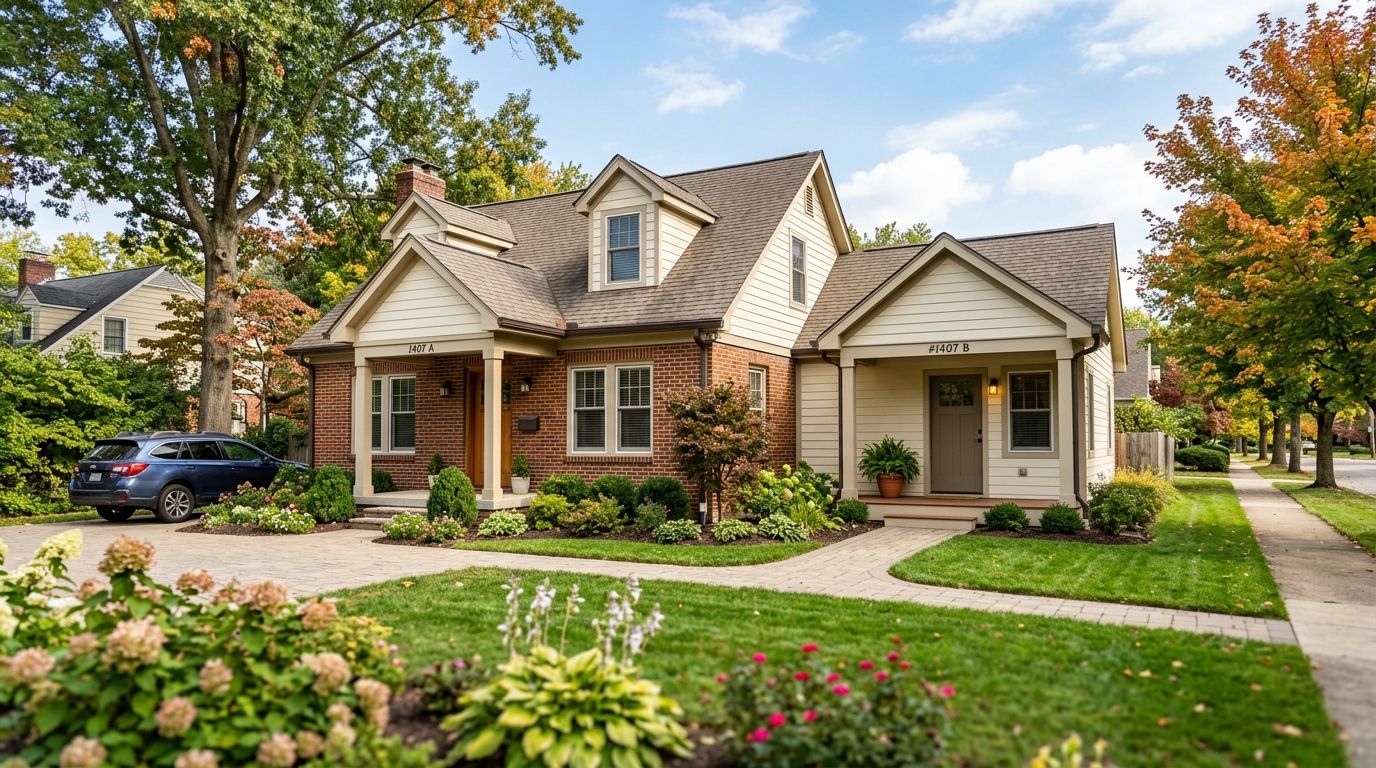
Homes for sale in Cincinnati with an in-law suite give multigenerational families, caregivers, and house-hackers a separate living space under one roof — no second mortgage, no cross-town move. Finding one that's legal, livable, and fairly priced takes a different search than a standard single-family purchase, and most buyers get the definition wrong before they even start scrolling listings.
- Homes for sale in Cincinnati with an in-law suite rarely show up as a filterable MLS field — you have to search by keyword and by neighborhood.
- A true in-law suite has its own entrance, its own kitchen or kitchenette, and its own bathroom; a finished basement with a wet bar is not the same thing.
- Unpermitted suites can complicate financing, insurance, and resale in 2026 — verify permit history before you write an offer.
- Sandlin Realtors, led by Joey Sandlin with 20+ years in Southern Ohio and Cincinnati-area transactions, screens suite compliance issues a generic listing search won't catch.
Why this matters for Cincinnati buyers
Cincinnati's housing stock is old enough — plenty of it built well before 1980 — that additions and basement conversions happened without much record-keeping. That means the phrase "in-law suite" on a listing description can mean anything from a fully legal second unit to a finished rec room with a mini-fridge.
Buyers looking for this in 2026 usually fall into a few groups: adult children bringing aging parents closer, families needing a caregiving arrangement, or owners who want rental income to offset a mortgage. Each of those uses has different requirements for layout, permits, and even school districts near Cincinnati if kids are part of the household mix.
The search strategy has to account for all of that before you tour a single property, not after.
1. Define what actually counts as an in-law suite
Before you search a single listing site, get clear on the standard, because sellers and agents use the term loosely.
- Separate entrance from the main living space
- Full or partial kitchen — not just a wet bar
- Full bathroom, not a half-bath tucked in a hallway
- Some form of separation from the main HVAC or utility zone
- Enough square footage for a bed, bath, and living area to function independently
If a listing doesn't mention a separate entrance, assume it's a finished basement until proven otherwise.
2. Target the Cincinnati neighborhoods where suite inventory concentrates
Older streetcar suburbs and postwar neighborhoods carry more of this inventory than newer subdivisions, because additions happened over decades of ownership turnover.
- Westwood and Price Hill — older housing stock with frequent additions
- Colerain Township and Delhi Township — ranch and split-level layouts suited to suite conversions
- Anderson Township — larger lot sizes that support detached or attached additions
- Newer west-side and east-side subdivisions built after 2000 — fewer conversions, but some builders offered in-law floor plans directly
Search by keyword phrases like "in-law suite," "guest suite," "mother-in-law," and "separate living quarters" across multiple listing sites — one platform's tagging won't catch everything.
3. Check permit and zoning history before you tour
This step saves more deals than any other on this list. An unpermitted second kitchen or added bathroom can affect appraisal, insurance, and your ability to legally rent the space.
- Pull the permit history in Ohio for the property before you schedule a showing
- Confirm zoning allows an accessory dwelling or second kitchen in that jurisdiction
- Ask whether the suite has its own utility meter or shares with the main house
- Check whether the addition required a building permit and whether it was closed out
A suite without permit records isn't disqualifying, but it changes your financing and insurance conversation.
4. Evaluate the suite layout against your actual use case
A suite built for a college-age kid looks different from one built for an aging parent with mobility needs.
- Entrance location — ground-level access matters for aging-in-place buyers
- Sound separation between the suite and main living areas
- Kitchen completeness — full range and refrigerator versus microwave and mini-fridge
- Accessibility features — grab bars, step-free entry, wider doorways
- Storage and closet space independent from the main house
5. Compare a true in-law suite against a legal duplex or multi-family purchase
If rental income matters more than live-in family care, a legal duplex often beats a converted suite on financing terms and long-term flexibility. Read the breakdown on how to buy a duplex or multi-family home in Cincinnati before you commit to the suite-only search.
- Duplexes qualify for standard multi-family financing; converted suites usually finance as single-family
- Duplexes have separate legal units by design, not by renovation
- A suite keeps the household under one roof; a duplex separates households more formally
- Insurance underwriting differs between the two property types
6. Bring in a Cincinnati specialist to screen listings and negotiate
Scrolling Zillow for "in-law suite" keywords gets you started, but it won't tell you which suites are permitted, which neighborhoods hold their resale value with added units, or how to structure an offer around suite square footage.
Joey Sandlin has spent 20+ years working Southern Ohio and Cincinnati-area real estate, and Sandlin Realtors screens for exactly these compliance and valuation questions before a buyer wastes a weekend touring the wrong houses. Once you've narrowed a shortlist, choosing a real estate agent in Cincinnati who already knows suite inventory saves weeks of guesswork.
Find a Cincinnati home with an in-law suite
Talk with Sandlin Realtors about verified suite listings and offer strategy.
Comparing your options for an in-law suite search
| Option | Best for | Key limitation |
|---|---|---|
| Search Zillow/Redfin keywords alone | Buyers who already know their target neighborhood | In-law suites aren't a standard MLS field, so listings undercount them |
| Work with a generalist buyer's agent | A single, straightforward purchase with no suite complexity | May not screen permit or zoning compliance on the suite specifically |
| Work with a Cincinnati suite-focused agent (Sandlin Realtors) | Buyers who need compliance checked and a competitive offer written fast | Coverage centers on Southern Ohio and Cincinnati-area transactions — confirm the neighborhood is covered |
| Buy a legal duplex or multi-family instead | Buyers prioritizing rental income over live-in family care | Financing and insurance terms differ from single-family purchases |
“If the suite doesn't have its own entrance, it's a bonus room, not an in-law suite.”
Common mistakes buyers make with in-law suite homes
- Assuming "finished basement" equals in-law suite. A wet bar and a couch don't make a legal second unit — check for a kitchen and separate entrance.
- Skipping permit verification. Buyers who close in 2026 without checking permit history sometimes discover the second kitchen was never approved, which surfaces during a refinance or resale.
- Ignoring utility metering. A suite on a shared meter limits your ability to rent it out separately later.
- Overpaying for square footage that isn't legally separate. Appraisers give little to no extra credit for unpermitted conversions, even if the listing price assumes otherwise.
FAQ
What makes a home an in-law suite property instead of a finished basement?
A true in-law suite has its own entrance, its own kitchen or kitchenette, and its own bathroom. A finished basement with a wet bar or half-bath doesn't meet that standard, even if a listing uses the term loosely.
Are there specific Cincinnati neighborhoods known for in-law suite homes?
Older streetcar suburbs like Westwood and Price Hill, plus ranch-heavy areas like Colerain Township and Delhi Township, carry more suite inventory because additions accumulated over decades of ownership. Newer subdivisions built after 2000 have fewer conversions.
Does an in-law suite need its own kitchen to count?
Yes, at minimum a kitchenette with a range or cooktop and a refrigerator. A microwave and mini-fridge alone usually don't satisfy the definition buyers and appraisers use for a true second unit.
Will an unpermitted in-law suite affect my mortgage?
It can. Lenders and appraisers may not count unpermitted square footage toward the home's value, and some loan types require disclosure of unpermitted work. Verify permit history before you finalize financing.
Can I legally rent out an in-law suite in Cincinnati?
Only if local zoning allows a second rental unit and the suite has proper permits, including separate utility metering in most cases. Check zoning with the specific township or city jurisdiction, since rules vary across Hamilton County.
How much value does an in-law suite add to a home?
Appraisers typically credit a legal, permitted suite as additional living space, but unpermitted conversions and basic finished basements without permits often get little to no added value. The exact number depends on the specific appraisal and comparable sales.
Should I use a buyer's agent to search for in-law suite homes?
A specialist agent who already knows which Cincinnati listings carry permitted suites saves significant time versus scrolling keyword searches alone. Sandlin Realtors, with 20+ years of Southern Ohio and Cincinnati-area experience, screens for this before you tour.
Is a duplex a better option than a house with an in-law suite?
A duplex works better if rental income is the priority, since it qualifies for standard multi-family financing and has legally separate units by design. An in-law suite works better for buyers who want family under one roof rather than two formally separate households.
One last thing
The single biggest filter most buyers skip in 2026 is checking whether the suite's utility setup is separate from the main house. A shared meter doesn't disqualify a home, but it caps your rental flexibility later and it's the detail sellers mention least in their listing copy — you have to ask directly, every time.