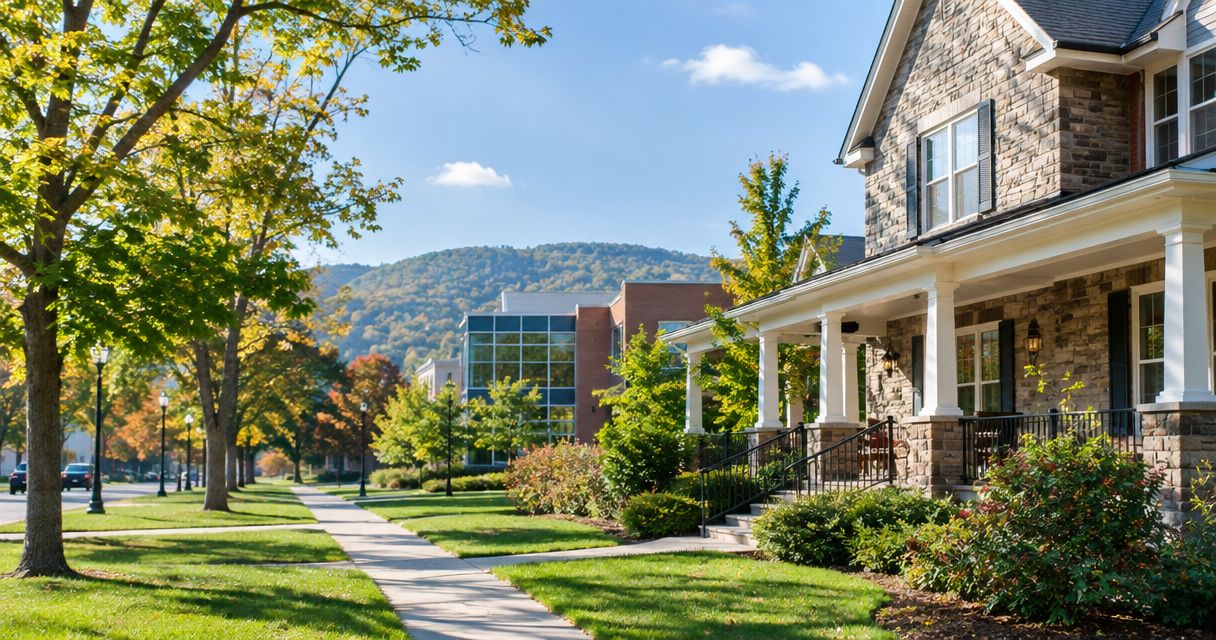
University staff relocating to Cincinnati need homes that cut commute time to campus, fit a two-income or single-academic-salary budget, and hold value in walkable neighborhoods near the University of Cincinnati, Xavier University, and the city's teaching hospitals. Faculty, adjunct instructors, lab staff, and administrative employees weigh different priorities than the average buyer: a short drive for evening classes, rental upside during sabbatical years, and a street where colleagues already live.
- Homes for sale in Cincinnati near universities for staff cluster in Clifton, Corryville, Northside, Mount Auburn and Oakley.
- Clifton sits roughly 3 miles from downtown Cincinnati and borders the University of Cincinnati campus directly.
- Rental-friendly duplexes near UC and Xavier let staff offset a mortgage during summer breaks or sabbaticals.
- Sandlin Realtors has guided Southern Ohio and Cincinnati-area buyers for 20+ years under Joey Sandlin.
- Pre-approval before the spring hiring cycle keeps university staff competitive against cash offers in 2026.
Why this matters for university staff
Cincinnati's university corridor runs a tighter market than most suburbs because demand comes from three directions at once: students renting, staff buying, and investors chasing both. A house two blocks from Xavier University's campus draws interest from a landlord and a professor on the same weekend.
Staff also buy on a different calendar than most households. Contracts renew in spring, appointments start in August, and a slow closing can mean commuting from a short-term rental through an entire semester. Timing the search around the academic year, not the general spring homebuying rush, matters more here than in most Cincinnati suburbs.
Sandlin Realtors works Southern Ohio and the greater Cincinnati market, and the same discipline that guides negotiations in Portsmouth, Scioto County, Wheelersburg, Lucasville, Otway, Rarden, and South Webster applies to a staff buyer picking between Clifton and Oakley.
Map your commute radius from campus
Start with drive time and bus access, not a zip code list. Cincinnati Metro's routes and the UC shuttle system change which neighborhoods count as "close" from year to year.
- Draw a 15-minute drive radius from your building, not the campus gate
- Check whether your department allows remote days, which widens the radius
- Test the commute at your actual start time, not midday
- Confirm street parking or permit rules if you'll drive some days and bike others
- Note which neighborhoods sit on a direct bus line to campus
Compare neighborhoods for staff-specific fit
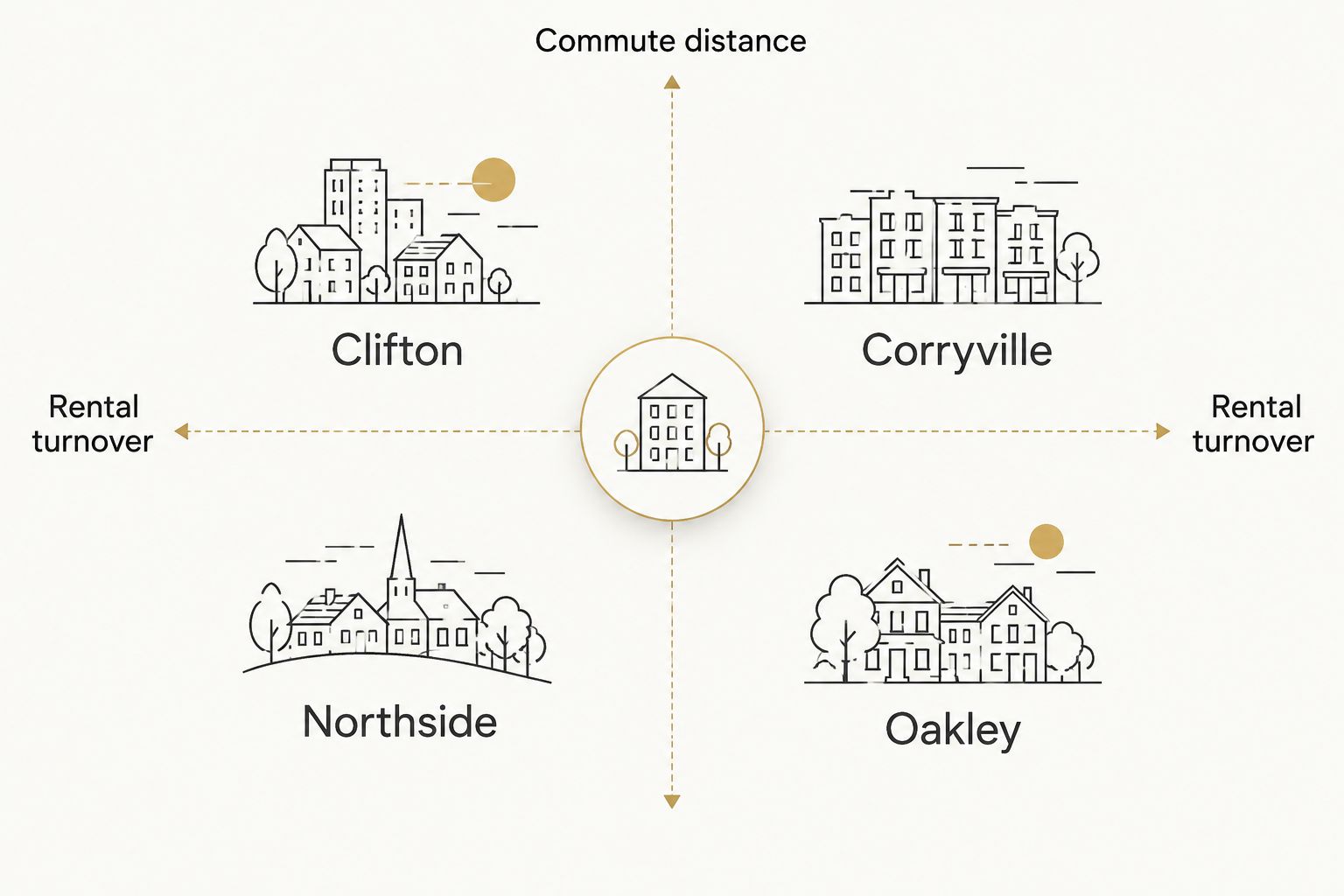
Clifton, Corryville, and Mount Auburn sit closest to UC. Evanston, Norwood, and O'Bryonville ring Xavier University. Northside and Oakley pull staff who want distance from the student rental turnover but still want a short drive.
- Rank neighborhoods by resale demand from other staff and faculty, not just students
- Ask how many rental conversions are on the block already
- Check noise patterns around football season and finals week
- Weigh walkability if you plan to skip a second car
- Confirm the neighborhood isn't zoned in a way that blocks owner-occupancy incentives
Check school district boundaries before you fall for a house
Staff with kids often assume proximity to campus means proximity to a strong district. That's not always true inside Cincinnati proper, where district lines cut through neighborhoods block by block.
- Pull the exact district assignment for the address, not the neighborhood name
- Compare open-enrollment options if the assigned school isn't the target
- Check whether the district runs a preschool or before-care program you'd need
- Review the best school districts for homebuyers near Cincinnati before writing an offer
- Confirm bus routes actually serve the street, not just the zip code
Look into buying programs tied to your role
Some lenders and local programs treat education-sector employees as a distinct buyer category, similar to how they treat teachers and healthcare staff. It's worth checking eligibility before assuming you fall outside every assistance program just because you work for a university rather than a K-12 district.
- Ask your HR benefits office if the university partners with any homebuyer assistance lender
- Review the home buying programs for teachers in Cincinnati for structure, since several education-sector programs share similar eligibility rules
- Check conventional loan options with down payments as low as 3% for first-time buyers
- Ask a local lender whether staff status at a university qualifies for any employer-assisted housing benefit
- Confirm any program restricts resale or requires owner-occupancy for a set number of years
Get pre-approved before the academic hiring cycle peaks
Most university job offers land in spring for an August start, which means staff buyers hit the Cincinnati market at the same time as everyone else chasing the school-year move. Pre-approval before that rush gives you a faster close and a stronger offer.
- Lock pre-approval at least 60 days before your intended move-in date
- Ask your lender how a new contract or grant-funded position affects underwriting
- Get a written pre-approval letter, not just a verbal estimate, before touring
- Budget for Ohio property tax timing, since bills can land mid-lease if you're closing in fall
- Review how property taxes work when buying a home in Butler County if you're looking at that side of the metro
Time your move around the academic calendar, not the general market
Cincinnati's broader housing market slows in winter, but the university sublet cycle runs on a different clock. Buying in May or June puts you ahead of the August student turnover and gives you first pick before rental investors move in.
- Close by mid-July if you want to avoid the student-move chaos in August
- Avoid touring during finals week, when parking and access near campus tighten
- Ask sellers directly if the home was a student rental, since renovation needs differ
- Check whether the seller is also university-affiliated and needs a matched closing date
- Confirm moving companies have availability, since the best moving companies for relocating to Cincinnati book up fast in late summer
“A commute that eats your office hours during the semester will eat your resale value at the next sale too.”
Comparing neighborhood options for Cincinnati university staff
| Neighborhood | Best For | Housing Stock | Key Limitation |
|---|---|---|---|
| Clifton | Staff who want to walk to UC | Century-old singles and duplexes | Highest competition from rental investors |
| Corryville | Staff wanting shortest drive to UC Medical Center | Mixed condos and small multi-family | Heavy student rental turnover nearby |
| Northside | Staff wanting distance from campus noise | Bungalows, some renovated | Longer drive during peak traffic |
| Oakley | Staff with families wanting stronger schools | Larger single-family homes | Fewer starter-priced options |
| Mount Auburn | Staff at UC Medical Center or hospital campuses | Historic homes, some fixer-uppers | Older systems need inspection scrutiny |
Each option carries a trade-off between distance and quiet. Clifton wins on walkability, Oakley wins on school quality, and Northside wins on resale stability outside the student cycle.
Talk to Sandlin Realtors about your move
Get local guidance on Cincinnati neighborhoods before you tour.
Common mistakes university staff make
- Chasing the closest zip code without checking the district line. Two homes a block apart can sit in different school districts.
- Skipping the rental history check. A former student rental often needs deferred maintenance a normal inspection misses.
- Timing the close for August instead of July. Staff routinely lose their preferred closing date to the student turnover rush.
- Assuming every education-sector program applies. University staff don't automatically qualify for K-12 teacher programs; eligibility has to be confirmed directly.
- Ignoring parking permit rules near campus. Some university-area streets require a resident permit that isn't obvious during a daytime tour.
FAQ
What's the best Cincinnati neighborhood for University of Cincinnati staff?
Clifton sits closest to the University of Cincinnati campus, roughly 3 miles from downtown Cincinnati, and offers the shortest commute for staff who want to walk or bike to work.
Is it better to rent or buy near campus as university staff?
Buying makes sense for staff planning to stay 3+ years, since it builds equity and avoids competing with student renters each August. Short-term appointments or visiting positions often favor renting first.
Do Cincinnati universities offer home buying assistance for staff?
Some universities partner with specific lenders for staff home buying benefits; check with your HR benefits office directly, since this varies by employer and isn't standardized citywide.
What school districts serve neighborhoods near UC and Xavier?
District assignment depends on the exact address, not the neighborhood name, since Cincinnati Public Schools boundaries cut through several university-area neighborhoods block by block.
How far is Clifton from downtown Cincinnati?
Clifton is roughly 3 miles from downtown Cincinnati, making it one of the shortest commutes available to staff working at the University of Cincinnati or nearby medical campuses.
Should university staff buy a home during summer break?
Closing by mid-July avoids the August student rental turnover and gives staff first access to inventory before investor competition peaks for the fall semester.
What loan programs help staff buy near Cincinnati universities?
Conventional loans with down payments as low as 3% are available to eligible first-time buyers; some education-sector employer programs offer additional assistance, so ask your HR office directly.
Are homes near Xavier University good rental investments for staff?
Homes near Xavier University often carry strong rental demand from students, which makes them useful for staff planning a future move or sabbatical, though owner-occupancy rules can limit this in some programs.
One last thing
The biggest edge for university staff in 2026 isn't finding the closest house to campus — it's closing before the August turnover locks up inventory to student-focused investors. Staff who lock pre-approval in spring and close by July consistently get first look at owner-occupied listings that never reach the fall rental scramble.