
Snowbirds relocating from the south to Cincinnati buy homes on a different timeline than local move-up buyers: they compress house hunting into a single trip, close many deals without ever walking the property, and weigh Ohio's four real seasons against the taxes and insurance bills they're leaving behind in Florida, Georgia, or the Carolinas. The right Cincinnati suburb for this buyer is rarely the one with the biggest lot — it's the one with a low-maintenance HOA, a short driveway, and a furnace that doesn't need explaining over the phone in January.
- Homes for sale in Cincinnati for snowbirds relocating from the south perform best in single-story suburbs with low-maintenance HOAs, not raw acreage.
- Joey Sandlin, with 20+ years in Southern Ohio real estate, recommends starting the search 90 days before your return-south departure date.
- Ohio's average effective property tax rate runs near 1.5%, well above Florida's roughly 0.8%, and belongs in the budget before you tour a single listing.
- Site-unseen closings are common for this buyer group in 2026, but only work with a Realtor willing to do a live video walkthrough of every room.
Why the Cincinnati market matters for snowbirds relocating from the south
This buyer group isn't shopping for a forever home the way a local family is — they're shopping for a summer base that survives an empty winter and a fast spring turnaround. Homes for sale in Cincinnati for out-of-state relocators tend to cluster in the same handful of Butler and Hamilton County suburbs precisely because those areas offer shorter drive times to the airport, established snow-plow contracts, and HOAs that already handle exterior maintenance for owners who leave for four to six months at a stretch.
Joey Sandlin has worked Southern Ohio real estate for over 20 years, covering territory that stretches from Cincinnati's suburbs down through Portsmouth, Scioto County, Wheelersburg, Lucasville, Otway, Rarden, and South Webster. That range matters for snowbirds because the same buyer who wants proximity to Cincinnati's airport and hospitals sometimes ends up happier — and pays less — in a river town an hour south, with the same access to I-75 corridor cities.
The practical difference for this buyer: a house that sits empty from November through March needs different due diligence than a house occupied year-round. A cracked supply line, a dead sump pump battery, or an unmonitored thermostat can turn into a five-figure repair before anyone notices in 2026's colder-than-average Ohio winters.
The 7-step search for snowbirds relocating from the south
Set your search radius by season, not city limits
Most snowbird buyers start with "close to downtown Cincinnati" and end up somewhere entirely different once winter driving enters the equation. Map the radius around real winter conditions, not summer convenience.
- Check drive time to the nearest hospital and pharmacy, not just downtown
- Pull county flood zone maps before falling in love with a river view
- Compare snow-route priority streets — main roads get plowed first, cul-de-sacs last
- Look at elevation and driveway grade on any listing photos showing an incline
- Cross-reference school district maps only if grandkids visit for extended stays
Compare your southern tax bill to Ohio's before you fall for a listing
Do this math before touring, not after making an offer. Ohio's average effective property tax rate runs near 1.5%, compared with roughly 0.8% in Florida and similarly low rates across much of the Carolinas and Georgia. That gap changes the real monthly cost of a Cincinnati home more than the sticker price does.
- Pull the county auditor's site for the actual tax rate on any specific address
- Ask whether the home qualifies for Ohio's homestead exemption if you're 65 or older
- Factor in Ohio's state income tax if you'll spend more than half the year in-state
- Compare homeowners insurance quotes — Ohio premiums are typically lower than hurricane-zone states, but not always
- Run the total carrying cost against what you're saving by leaving a higher-tax southern property
Run a winter-conditions check before you sign
This is where a snowbird buyer's needs diverge hardest from a local buyer's, and it's the step Joey Sandlin's team gets called in on most often. A summer listing photo tells you nothing about ice buildup on a north-facing driveway or how loud a furnace runs at 2 a.m.
- Ask the seller for actual winter utility bills, not a summer average
- Verify the furnace's age and last service date in writing
- Check attic insulation depth — thin insulation shows up fast in an Ohio February
- Confirm whether the HOA covers snow removal or leaves it to the homeowner
- Request a live video walkthrough during an actual cold snap if you can't visit in person
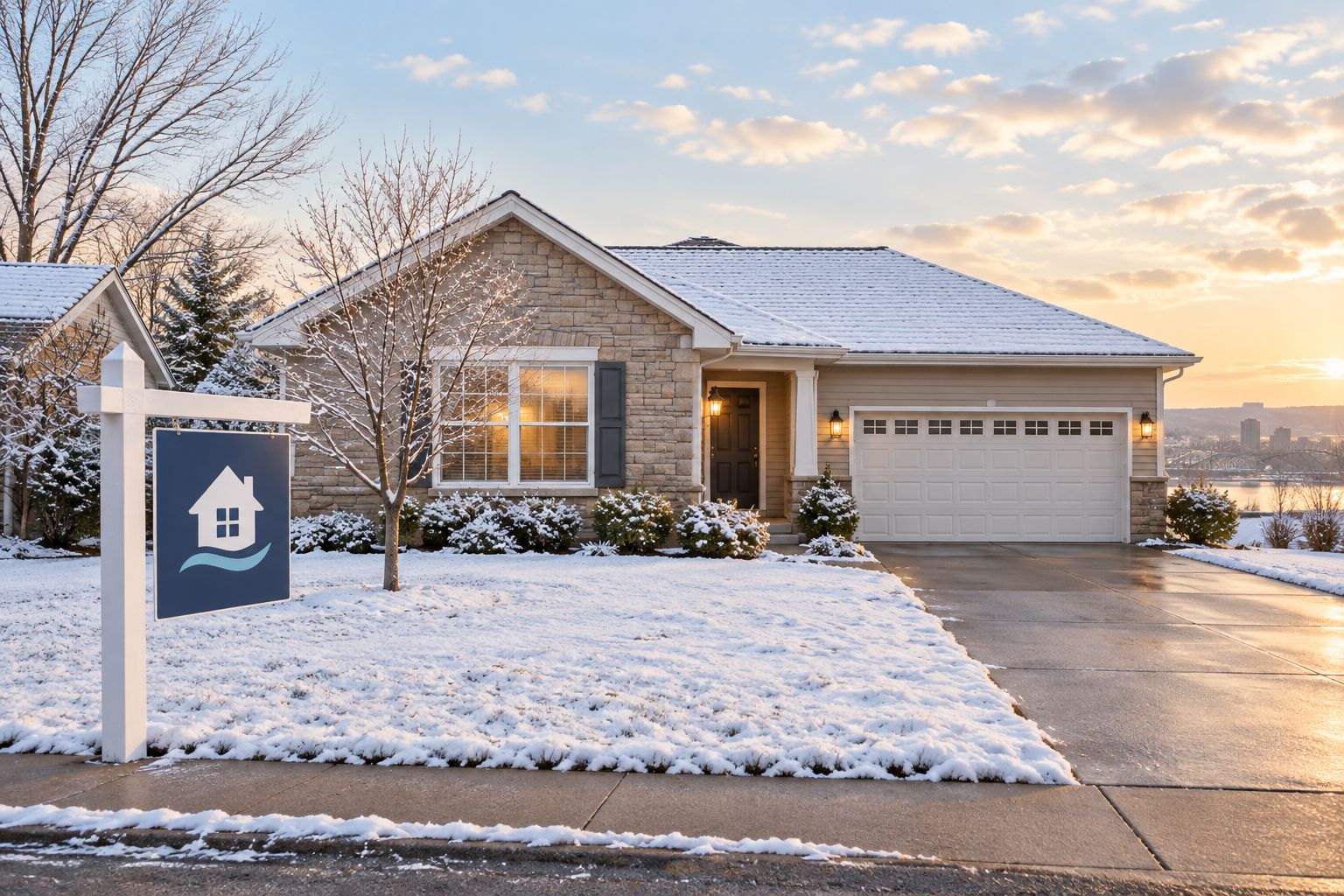
Line up remote closing logistics before you write an offer
Many snowbird buyers close on a site-unseen purchase because their travel window doesn't line up with the seller's timeline. That only works with the right paperwork sequence lined up in advance.
- Get a local power of attorney set up before you leave the south
- Confirm the title company can handle a remote or mail-away closing
- Schedule the home inspection for a date you can join by video call
- Arrange a local contact — Realtor, property manager, or neighbor — to receive keys and confirm condition
- Ask the lender in writing whether remote notarization is accepted for your loan type
Decide between a low-maintenance community and full acreage
Snowbirds who plan to lock the door and leave for months at a time do better in a managed community than on five acres with a well and a septic system that needs winterizing every year. Active adult and 55+ communities near Cincinnati draw a heavy share of this buyer group specifically because exterior upkeep, landscaping, and often snow removal are handled under the HOA.
- Confirm HOA dues cover exterior maintenance, not just amenities
- Ask if the community allows extended vacancy without violating occupancy rules
- Check whether mail and package holds are available on-site
- Verify the community's winterization checklist for owners who leave seasonally
- Compare age restrictions — some communities require one resident to be 55 or older
Look south of the city for the same river lifestyle at a lower cost
Buyers fixated on Cincinnati proper sometimes miss towns along the Ohio River corridor in Southern Ohio that offer the same water views, a quieter pace, and easier winter maintenance, still within reach of Cincinnati's airport and hospital systems.
- Compare commute time from river towns against Cincinnati suburbs you're already considering
- Ask about flood insurance requirements for any riverfront or near-river address
- Check whether the property sits in a FEMA-mapped flood zone before making an offer
- Weigh a smaller river-town lot against a larger Cincinnati-suburb lot at a similar price point
Coordinate the two-way move on a fixed calendar
A move that has to work in both directions — south in the fall, north in the spring — needs a tighter schedule than a one-way relocation. Build the calendar backward from your departure date, not forward from your closing date.
- Book movers who specialize in long-distance, two-state relocations at least 60 days out
- Confirm utility transfer dates line up with your actual move-in, not your closing date
- Set a mail-forwarding and change-of-address schedule tied to both properties
- Plan a buffer week between closing and your travel date for unexpected repairs
Talk through your Cincinnati timeline
Get a Southern Ohio agent's read on your search window and budget.
Housing options for Cincinnati snowbirds compared
| Option | Best for | Key limitation |
|---|---|---|
| 55+ active adult community | Buyers who want exterior maintenance handled while away | Age restrictions and HOA rules limit resale pool |
| Single-family suburb home | Buyers who want full control and no HOA fees | Snow removal and winterization fall entirely on the owner |
| Riverfront property, Southern Ohio | Buyers who want a quieter pace at a lower price point | Flood insurance and flood-zone checks are mandatory |
| Condo or townhome | Buyers downsizing from a larger southern property | Less storage space for seasonal belongings |
Common mistakes snowbirds relocating from the south make
- Buying off summer photos. A listing shot in June says nothing about how the driveway handles ice in 2026's colder winter forecasts.
- Underestimating heating costs. A buyer coming from a state with no winter heating bill often budgets for cooling costs only, then gets surprised by a January gas bill.
- Skipping the HOA snow-removal question. Assuming a community handles snow removal, then finding out only exterior landscaping is covered.
- Trying to time two closings without a bridge plan. Selling south and buying north on the same week rarely goes smoothly without a rent-back agreement or short-term lease built in.
- Forgetting Ohio's state income tax. Buyers leaving a zero-income-tax state sometimes assume that benefit carries over; it doesn't once you establish Ohio residency.
FAQ
What's the best area for snowbirds buying homes for sale in Cincinnati?
Single-story homes in low-maintenance HOA communities across Butler and Hamilton County suburbs work best for snowbirds relocating from the south, since exterior upkeep and snow removal are typically handled by the association.
Is it better to buy a 55+ community home or a standalone house near Cincinnati?
A 55+ active adult community is better for snowbirds who leave for months at a time, since HOA dues usually cover exterior maintenance; a standalone house gives more control but puts winterization entirely on the owner.
How much higher are Ohio property taxes than Florida's?
Ohio's average effective property tax rate runs near 1.5%, compared with roughly 0.8% in Florida, so the same-priced home carries a noticeably higher annual tax bill in Ohio.
Can I buy a Cincinnati home without visiting in person?
Yes, site-unseen purchases are common among snowbird buyers in 2026, but they require a trusted local inspector, a live video walkthrough, and a title company set up to handle remote or mail-away closings.
What should I check before buying a home that sits empty in winter?
Verify the furnace's age and service history, confirm attic insulation depth, and ask whether the HOA or the homeowner is responsible for snow removal before making an offer.
Are towns south of Cincinnati along the Ohio River worth considering?
Yes, river towns in Southern Ohio often offer similar water views at lower prices than Cincinnati suburbs, though flood insurance and flood-zone checks become mandatory closer to the river.
How far in advance should snowbirds start house hunting in Cincinnati?
Start the search roughly 90 days before your return-south departure date to leave room for inspection delays, financing timelines, and remote closing logistics.
Do I need a local power of attorney to close remotely in Ohio?
A local power of attorney makes a remote closing far smoother, since it lets a designated person sign documents and handle logistics on your behalf if your travel schedule doesn't line up with closing day.
One last thing
Ask any seller for their actual winter gas and electric bills before you write an offer — not a summer average, not an estimate. A furnace running efficiently in July tells you nothing about what it costs to keep a Cincinnati home at 68 degrees in February 2026, and that single document has talked more than one snowbird buyer out of a house that looked perfect in the listing photos.