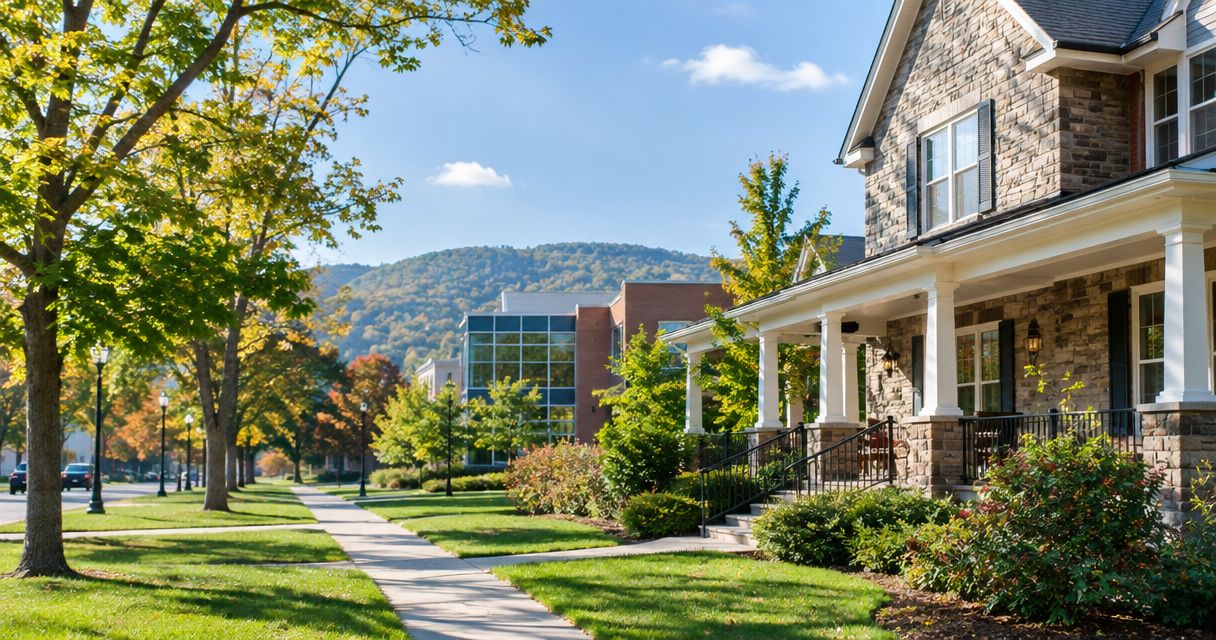
55+ active adult communities near Cincinnati are age-restricted neighborhoods built for buyers 55 and older who want single-story living, lower maintenance, and neighbors in the same life stage, and inventory across Butler, Warren, Clermont, and Hamilton counties has grown steadily heading into 2026. The segment isn't one product — it ranges from gated single-family neighborhoods to attached condo communities, and the right fit depends on how much yard work, HOA involvement, and social structure you actually want.
- 55+ active adult communities near Cincinnati must keep at least 80% of homes occupied by someone 55 or older under federal housing law.
- Gated single-family neighborhoods and 55+ condo communities are both active in the Cincinnati suburbs heading into 2026.
- Sandlin Realtors tracks age-restricted inventory across Southern Ohio and the Cincinnati metro before it hits public portals.
- HOA dues in 55+ communities typically bundle lawn care and exterior maintenance — verify exactly what is covered before you offer.
- Sequence your sale and purchase carefully; carrying two properties is the most common mistake retirees make in this segment.
Why this matters for 55+ buyers near Cincinnati
Buyers in this segment aren't shopping the way a first-time buyer or growing family does. You're not chasing school districts — you're weighing single-floor layouts, HOA-covered maintenance, and how close you are to adult children without giving up your own space. A gated community home near Cincinnati solves for privacy and controlled access in a way a standard subdivision doesn't, and that distinction matters more the longer you plan to stay put.
The Cincinnati metro's 55+ stock skews toward established pockets in West Chester, Mason, Liberty Township, and Anderson Township, with occasional new construction filling in gaps. Southern Ohio buyers looking at Portsmouth, Scioto County, Wheelersburg, Lucasville, Otway, Rarden, or South Webster have a thinner but real market — smaller-scale age-targeted subdivisions rather than large master-planned communities. Joey Sandlin has spent 20+ years working both markets, which is the difference between finding a listing on a portal and hearing about a unit before it goes public.
Find the right 55+ community: a step-by-step approach
1. Define your non-negotiables before you tour anything
Most retirees waste weekends touring communities that never fit. Write your list down first.
- Single-story floor plan, no exceptions if mobility is a concern
- Minimum garage size (two-car is standard in most 55+ builds)
- Maximum acceptable HOA dues as a monthly ceiling
- Distance from adult children or grandchildren, in drive-time minutes
- Walkability to a clubhouse or common area, not just proximity by address
2. Map Cincinnati-area communities against your county preference
Butler, Warren, Clermont, and Hamilton counties each have different tax structures and different concentrations of 55+ stock. Southern Ohio buyers should widen the search to include Scioto County towns where inventory turns over less often.
- Pull active and pending 55+ listings by county, not just by school district
- Cross-check HOA-governed neighborhoods against standalone age-targeted subdivisions
- Note which communities are gated versus open-access
- Flag new construction phases still selling in 2026 versus fully built-out communities
3. Confirm the community meets legal age-restriction rules
A community that markets itself as 55+ isn't automatically exempt from fair housing law. The federal Housing for Older Persons Act requires at least 80% of occupied units to have a resident 55 or older for a community to legally restrict by age — verify this before you assume the rule is enforced consistently.
- Ask for the HOA's written age-verification policy
- Confirm how the community handles a surviving spouse under 55
- Check visitor and extended-stay limits for family members
- Review whether the 80% threshold is currently being met, not just claimed
4. Work with an agent who tracks 55+ inventory before it's public
This is where the manual search hits its ceiling. Portal alerts catch listings after they go live, and in a tight 55+ segment, the best units often move through agent networks first. Sandlin Realtors works this exact lane for Cincinnati-area and Southern Ohio buyers, flagging age-restricted inventory as it comes to market rather than after it's already under contract.
- Get on a targeted alert list for 55+ and gated communities specifically
- Ask your agent for off-market or coming-soon 55+ listings
- Have your agent verify HOA compliance and reserve fund health before you tour
- Use an agent who can pull comparable 55+ sales, not general neighborhood comps
5. Compare HOA fees, amenities, and what's actually covered
HOA dues in 55+ communities vary widely in what they include, and assuming coverage is the single biggest source of buyer regret in this segment.
- Get the HOA's covenants, conditions, and reserve study in writing
- Confirm whether lawn care, snow removal, and exterior paint are included
- Ask about special assessment history over the last three to five years
- Check clubhouse, pool, and fitness access — some communities charge separate user fees
6. Sequence your sale and purchase so you're not carrying two homes
Retirees selling a long-held home to buy into a 55+ community face a timing problem more than a pricing problem.
- Get your current home's value assessed before you start touring
- Decide whether a contingent offer or a bridge plan fits your finances
- Time closings so you're not paying two mortgages or two sets of dues
- Confirm moving logistics before you're under a hard closing deadline
Comparison: 55+ community types near Cincinnati
| Community type | Best for | Key limitation |
|---|---|---|
| Age-restricted single-family neighborhood | Buyers who want a yard and full ownership control | HOA fees plus maintenance responsibilities still fall on the owner |
| 55+ condo or townhome community | Empty nesters who want maintenance handled entirely | Less privacy, shared walls, and HOA rules on modifications |
| Gated active adult neighborhood | Buyers prioritizing security and controlled access | Fewer inventory choices and often heavier HOA involvement |
| Age-targeted (not legally restricted) subdivision | Buyers who want an older-skewing area without formal rules | No enforceable age requirement, so demographics can shift over time |
Verdict: a legally age-restricted single-family neighborhood is the strongest fit for 2026 buyers who want yard ownership without demographic uncertainty — a condo for empty nesters downsizing is the better call for anyone who wants maintenance fully off their plate.
Common mistakes 55+ buyers make near Cincinnati
- Skipping the HOPA verification step. Buyers assume 55+ branding means the community is legally compliant without ever asking for the occupancy data.
- Underestimating stacked costs. HOA dues plus Ohio property taxes plus utilities can exceed what a buyer budgeted based on the mortgage payment alone.
- Ignoring resale restrictions for heirs. Age-restricted deeds can complicate a sale if an estate needs to move the property quickly.
- Not testing walkability in person. A community that looks compact on a site plan can still mean a ten-minute walk to the clubhouse in practice.
- Assuming a ranch-style home built for accessibility carries the same protections. It doesn't — age restriction is a legal HOA status, not a floor plan feature.
Talk to a 55+ specialist agent
Get matched to age-restricted Cincinnati and Southern Ohio inventory before it goes public.
FAQ
What counts as a 55+ active adult community?
A 55+ active adult community is a neighborhood or condo complex where at least 80% of occupied units must have a resident 55 or older under the federal Housing for Older Persons Act. Communities that fail to meet this threshold can lose their legal right to restrict by age.
Are 55+ communities near Cincinnati legally age-restricted?
Most communities marketed as 55+ near Cincinnati are legally age-restricted under HOPA, but enforcement varies by HOA. Ask for the community's current occupancy data before assuming the restriction is actively maintained.
Can my adult children stay overnight in a 55+ community?
Most HOAs allow temporary family visits but cap total guest-stay days per year. Check the specific community's covenants, since limits differ from one neighborhood to the next.
Is a 55+ condo cheaper to maintain than a single-family ranch?
A 55+ condo typically bundles lawn care and exterior maintenance into HOA dues, which lowers your out-of-pocket upkeep versus owning a standalone ranch. You trade that convenience for less control over exterior changes and shared-wall living.
Do 55+ communities allow renters?
Many age-restricted HOAs cap the percentage of rented units to protect the owner-occupancy ratio required under HOPA. Confirm the current rental cap and whether it is already full before buying with rental intentions.
What is the difference between age-restricted and age-targeted communities?
Age-restricted communities have an enforceable legal requirement tied to HOPA's 80% occupancy rule. Age-targeted communities market toward older buyers without any enforceable restriction, so the demographic mix can shift over time.
How do I find 55+ active adult communities for sale near Cincinnati?
Search by county-specific 55+ inventory rather than relying on general portal filters, since many listings are tagged inconsistently. An agent tracking age-restricted inventory directly, like Sandlin Realtors, typically surfaces listings before they are widely marketed.
Should I buy in a 55+ community or a regular ranch home?
Choose a 55+ community if you want a structured, maintenance-light environment with neighbors in a similar life stage. Choose a standalone ranch if you want full control over the property without HOA restrictions.
One last thing
The detail most buyers skip: a community's 55+ status isn't permanent. If occupancy drifts below the 80% threshold required under HOPA, the legal age restriction can lapse, and the demographic character you bought into in 2026 can change within a few years. Ask any HOA you're seriously considering for their current occupancy percentage in writing, not a verbal assurance — it's a five-minute question that prevents an expensive surprise.