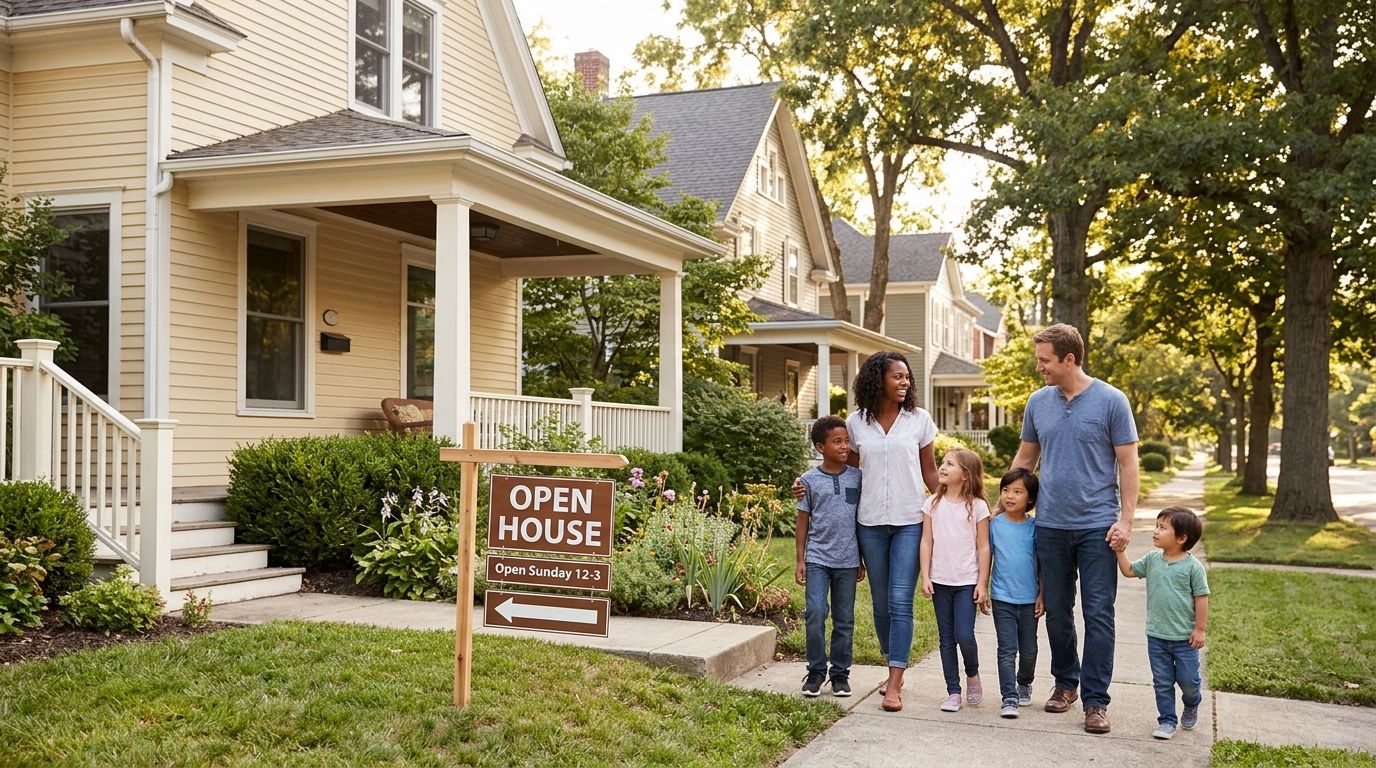
Adoptive and foster families searching for homes for sale in Cincinnati need a floor plan that will pass a home study, not just a kitchen they like. The right property has the bedroom count, egress windows, and flexible space to hold up through changing placements, while staying close to the schools your kids already know.
- Homes for sale in Cincinnati for adoptive and foster families need extra legal bedrooms, egress windows, and safe storage before a home study passes.
- Finished basements and bonus rooms add flexible space for kinship placements without a full remodel in 2026.
- FHA financing requires just 3.5% down, useful when required bedroom count changes faster than your savings.
- Sandlin Realtors, led by Joey Sandlin with 20+ years across Southern Ohio and Cincinnati, screens listings against licensing needs first.
Why home buying looks different for foster and adoptive families
A standard buyer picks a home based on style and price. A foster or adoptive family also has to satisfy a caseworker, a home study, and rules that can change the required bedroom count with little warning.
That changes what "move-in ready" means. A home that looks finished on a walkthrough can still fail a licensing inspection over a missing egress window, an unfenced pool, or a bedroom that's technically a den. Buyers who skip this step end up renovating a home they just closed on, in the middle of trying to complete paperwork in 2026.
School stability matters more here too. A child already navigating a placement change doesn't need a district change on top of it, which is why checking school district boundaries before you write an offer belongs early in the search, not after you fall in love with a house.
How to buy a home in Cincinnati as an adoptive or foster family
Confirm your bedroom and space requirements before you tour anything
Get the specifics from your caseworker or licensing agency before you set a search radius. Ohio's foster licensing rules govern minimum bedroom space and sleeping arrangements, and those requirements should shape your must-have list, not your Zillow filters.
- Ask your agency for the current bedroom and egress window requirements in writing
- Confirm age and gender separation rules for shared bedrooms
- Plan for one "swing" bedroom that can flex between office, guest room, and placement space
- Check whether below-grade bedrooms need a certified egress window to count toward your total
- Rule out homes where you'd need a permit and inspection just to legalize a bedroom
Map your search to school stability, not just school ratings
A highly rated district that requires a long bus ride or a mid-year enrollment change can undo the stability you're trying to build. Confirming school district boundaries near Cincinnati before you tour homes keeps you from falling for a listing that puts your kids in a different district than the one they started the year in.
- Verify district boundaries against the exact address, not the zip code
- Ask the district about enrollment paperwork for guardianship or foster placements
- Check bus route timing if the home sits near a boundary line
- Confirm whether the district has counseling staff experienced with trauma-informed care
Prioritize homes with flexible bonus space
A finished basement, bonus room, or in-law suite gives you room to add a bed, a desk, or a second caregiver without a renovation loan. This is the single feature that separates a home that works for one placement from one that works for three.
- Finished basement with a certified egress window in at least one bedroom
- Bonus room over the garage for a home office that converts to a bedroom
- First-floor bedroom and full bath for an aging kinship caregiver
- Extra closet and mudroom storage for multiple kids' belongings arriving at once
- Fenced yard for supervised outdoor time without a shared-space conflict
Time your purchase around your home study, not the market calendar
A home study can take several weeks to finalize, and closing on a house before that paperwork clears leaves you carrying a mortgage payment without approval to receive a placement. Sequence the two processes deliberately.
- Get fully pre-approved before your home study starts, not after
- Ask your caseworker for the exact inspection checklist before you make an offer
- Build inspection contingencies around fire safety items: smoke detectors, stair rails, pool fencing
- Avoid new construction with a delivery date that runs past your license renewal window
- Confirm the home's utilities and water source (well or municipal) meet your agency's standards
Work with a lender and an agent who understand irregular household income
Adoption subsidies and foster care stipends don't always fit a lender's standard income documentation, and a loan officer unfamiliar with those payments can slow your file down. Sandlin Realtors works directly with lenders across Southern Ohio and Cincinnati who know how to document this income correctly the first time.
- Ask lenders directly how they document adoption subsidy or foster stipend income
- Compare FHA financing, which requires as little as 3.5% down, against conventional options
- Check Hamilton County down payment assistance eligibility before ruling out a purchase
- Confirm your homeowners insurance policy covers the actual number of occupants in the house
- Have your agent flag any HOA rules restricting home-based child care or occupant counts
Plan for kinship and multigenerational support space
Many foster and adoptive placements involve a grandparent, aunt, or family friend helping with care. A home with a dual primary suite or a separate entrance gives that caregiver privacy while keeping everyone under one roof.
- Dual primary suites or a first-floor bedroom with a private bath
- Separate entrance option for a kinship caregiver who needs independence
- Storage space for medical equipment if a placement requires it
- Enough parking for two adult drivers plus visiting caseworkers
Negotiate with your licensing deadline in mind
A bidding war favors buyers who waive contingencies, but a foster or adoptive family can't afford to skip the inspection that catches a missing smoke detector or an unfenced pool. Negotiate for repairs, not credits, on anything tied to your safety checklist.
- Request repair-before-close on any item that would fail a licensing inspection
- Ask for early occupancy once inspection and repairs clear, if the seller's timeline allows
- Keep a buffer for re-inspection after any negotiated repair work
- Don't trade away the inspection contingency to win on price alone
Talk to Joey Sandlin About Your Search
20+ years matching Southern Ohio and Cincinnati buyers to homes that fit real family needs.
Comparing your options
| Option | Best for | Key limitation |
|---|---|---|
| Existing single-family home in an established neighborhood | Families needing a fast licensing turnaround | May need a bedroom or egress window retrofit before inspection |
| New construction with a bonus room | Families expecting to add placements over time | Build timeline can outlast a home study deadline |
| Home with a finished basement or in-law suite | Kinship caregivers or multigenerational households | Basement bedrooms need a certified egress window to count legally |
| Home zoned for a stable, top-rated school district | Families prioritizing continuity for kids already in placement | Typically priced higher per square foot |
“If a below-grade bedroom doesn't have a code-compliant egress window, it doesn't count as a bedroom to your caseworker or your appraiser.”
Common mistakes adoptive and foster families make
- Waiving the inspection to win a bidding war. Safety items like stair rails, smoke detectors, and pool fencing that fail inspection later stall the licensing process, not just the closing.
- Buying to fit current family size only. Placements can add one or two children with little notice, so buying at the minimum bedroom count boxes you in within a year.
- Ignoring HOA rules on occupants and home-based care. Some HOAs cap the number of unrelated occupants or restrict in-home child care, which conflicts directly with kinship placements.
- Letting the mortgage timeline outrun the home study. Closing before licensing paperwork clears means carrying a payment without approval to receive a placement.
- Skipping the egress window check on basement bedrooms. A finished basement that looks like extra bedrooms can end up counting as zero if the windows don't meet code.
FAQ
What's the best type of home in Cincinnati for a foster family?
An existing single-family home with a certified egress window in every bedroom and a stable school district assignment tends to work best, since it clears licensing inspection faster than new construction or a basement conversion that still needs code work.
How many bedrooms does a foster home need in Ohio?
Ohio's licensing rules set minimum bedroom space and separation requirements per child, and the exact count depends on your household composition, so your caseworker confirms the specific number during your home study.
Can a finished basement bedroom count toward foster licensing?
Only if it has a certified egress window that meets code; a finished basement room without one is treated as a den or bonus room, not a legal bedroom, during inspection.
Is it better to buy a home before or after starting a foster care home study?
Get fully pre-approved before your home study begins, then time closing to land after the study clears, so you're not carrying a mortgage payment without approval to receive a placement.
Do adoptive families qualify for down payment assistance in Hamilton County?
Eligibility depends on income and program rules that change year to year, so check current Hamilton County down payment assistance guidelines directly before assuming you qualify.
What Cincinnati neighborhoods work well for foster and adoptive families?
Neighborhoods zoned for stable, well-regarded school districts with low boundary turnover reduce the risk of a mid-year school change during a placement, which matters more here than general walkability or downtown proximity.
How long does it take to buy a home while completing a home study?
A typical Cincinnati home purchase closes in about 30 to 45 days from accepted offer, which often overlaps with a home study timeline, so sequencing pre-approval early keeps the two processes from colliding.
Should foster families work with a real estate agent who understands licensing rules?
Yes, an agent who screens listings against bedroom count, egress requirements, and school boundary lines before you tour saves you from falling for a home that later fails inspection.
One last thing
The detail that trips up the most buyers isn't the bedroom count, it's the egress window. A basement with three finished rooms and no code-compliant window on at least one of them still counts as one legal bedroom on your appraisal and your licensing paperwork. Ask for egress window documentation before you write an offer, not after your caseworker flags it during the home study.
Sandlin Realtors, led by Joey Sandlin with more than 20 years of real estate experience across Southern Ohio and Cincinnati, works through this exact checklist with adoptive and foster families before a single showing gets scheduled. That's the difference between touring ten homes and touring three that actually clear licensing in 2026.