
Yes, you can sell your current house and buy another at the same time in Cincinnati. The safest plan depends on whether you need proceeds from the sale to qualify for the purchase, make your down payment, or both. Aligning the closing dates can limit the gap between homes, but it does not remove the risk of a delayed sale or a purchase that closes first.
- Yes, you can sell and buy a house at the same time in Cincinnati; make the sale proceeds and closing dates part of one plan.
- Sell first if you need the proceeds to buy; buy first only if your lender approves the overlap.
- Sandlin Realtors is best for Southern Ohio sellers who want high-touch representation while coordinating a purchase.
Can you sell and buy a house at the same time in Cincinnati?
Yes. In 2026, the decision is which transaction must happen first and what you will do if the other closing moves. Get a lender's assessment of your finances, then set your sale and purchase terms around what that assessment permits. If your purchase depends on selling your current home, say so in your offer rather than assuming the closings will line up.
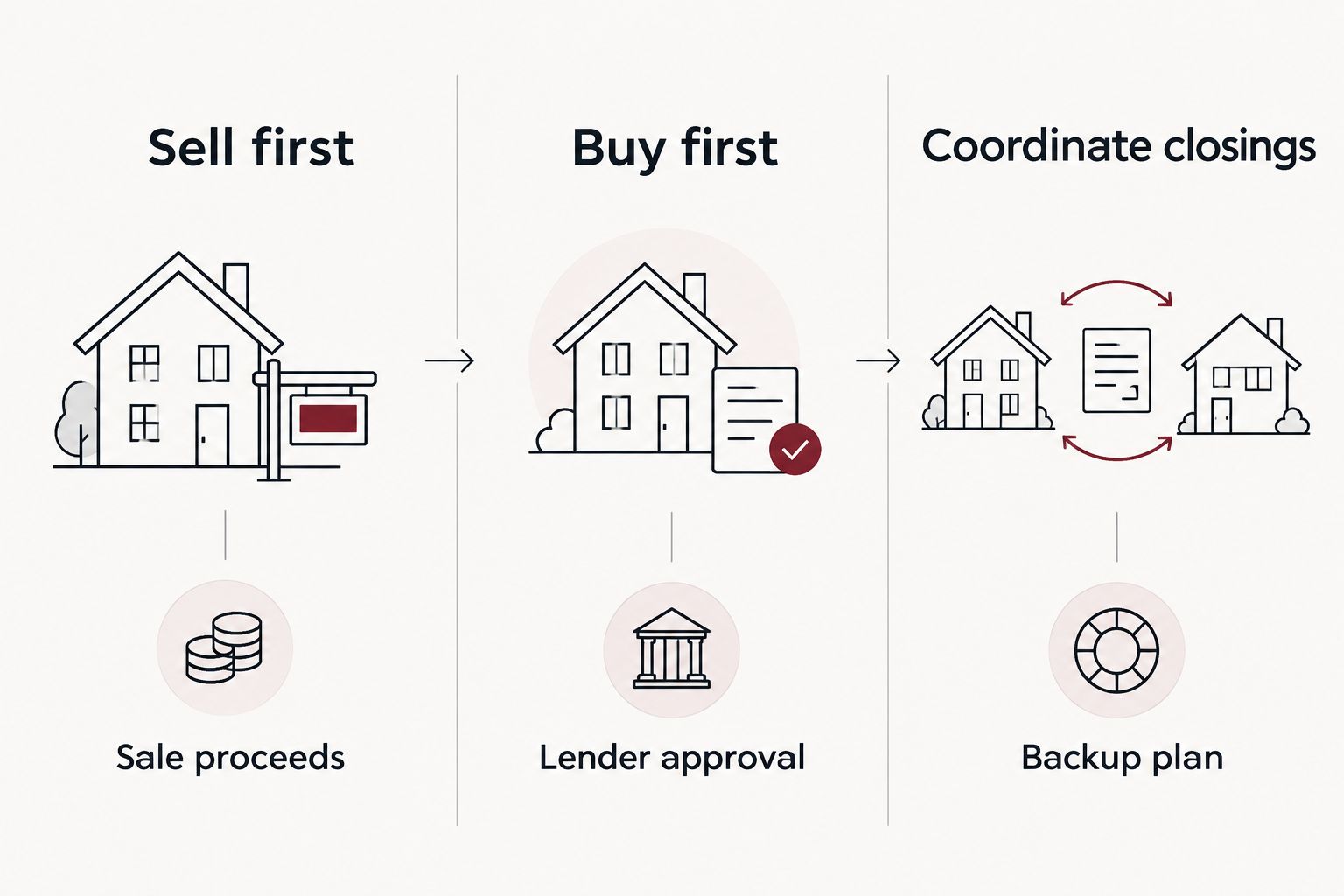
| Approach | Best for | Main advantage | Main drawback |
|---|---|---|---|
| Sell first | You need your sale proceeds or want to avoid carrying both homes | You know what the sale will provide before committing to a purchase | You need a housing plan if your next home is not ready |
| Buy first | Your lender approves the purchase while you still own your current home | You can secure the next home before moving out | You can face 2 mortgage payments until your current home sells |
| Coordinate both closings | Your sale is under contract and both transactions can meet their conditions | You can reduce the time between homes | A delay in either transaction affects the other |
For most homeowners who need their equity to complete the purchase, sell first or make the purchase expressly dependent on the sale. Buying first is a financing decision, not a scheduling shortcut.
Why this matters in 2026
A signed purchase contract does not turn your existing home's equity into available funds. Your buyer still has to complete the sale, and your lender must approve how you will fund the next purchase. That distinction determines whether you can make an offer without a home-sale condition.
The seller side needs its own plan. Agreeing to an ambitious closing date on your current house can leave you without a place to live if the next purchase is delayed. A rushed sale also limits your room to respond to inspection findings or negotiate terms. For a closer look at that trade-off, read how to sell your home fast in Cincinnati.
Which sequence should you choose?
Start with the constraint you cannot negotiate away: lender approval. Ask whether you qualify to buy while you still own your home and whether the down payment depends on closing the sale. Then choose a sequence that works even if a closing date changes.
Sell first when the proceeds fund the purchase
List your current home, secure a buyer, and understand your expected proceeds before committing to the next transaction. This gives you a firmer basis for your offer and reduces the chance that you must carry both homes. The downside is a possible gap between moving out and moving in.
Best for: homeowners who need sale proceeds for the next purchase or do not want overlapping mortgage obligations. Before accepting an offer, discuss whether the proposed closing date leaves enough room to find and complete a purchase. If it does not, make a temporary housing plan instead of treating the next purchase as certain.
Buy first only when the financing works without the sale
Ask your lender to evaluate the purchase while your current mortgage remains in place. Approval to buy after a sale is not approval to buy before it. Also plan for the period when you own both properties; listing your current home does not end its mortgage obligation.
Best for: homeowners whose lender approves the overlap and who can manage both homes until the sale closes. The benefit is that you can choose the next home before leaving the current one. The drawback is exposure to 2 mortgage payments if the sale takes longer than planned.
Coordinate closings when both contracts allow it
You can put your home on the market, enter a sale contract, and pursue a purchase with dates designed to work together. Review the conditions in both contracts: financing, inspection, appraisal, title, and possession all affect whether the intended schedule holds. Confirm which party must act if either closing moves.
Best for: homeowners who want to limit the time between homes and have a clear backup plan. The advantage is a more direct move. The drawback is that 2 closing dates remain subject to separate transactions; matching dates on paper does not guarantee matching outcomes.
How do you plan both transactions?
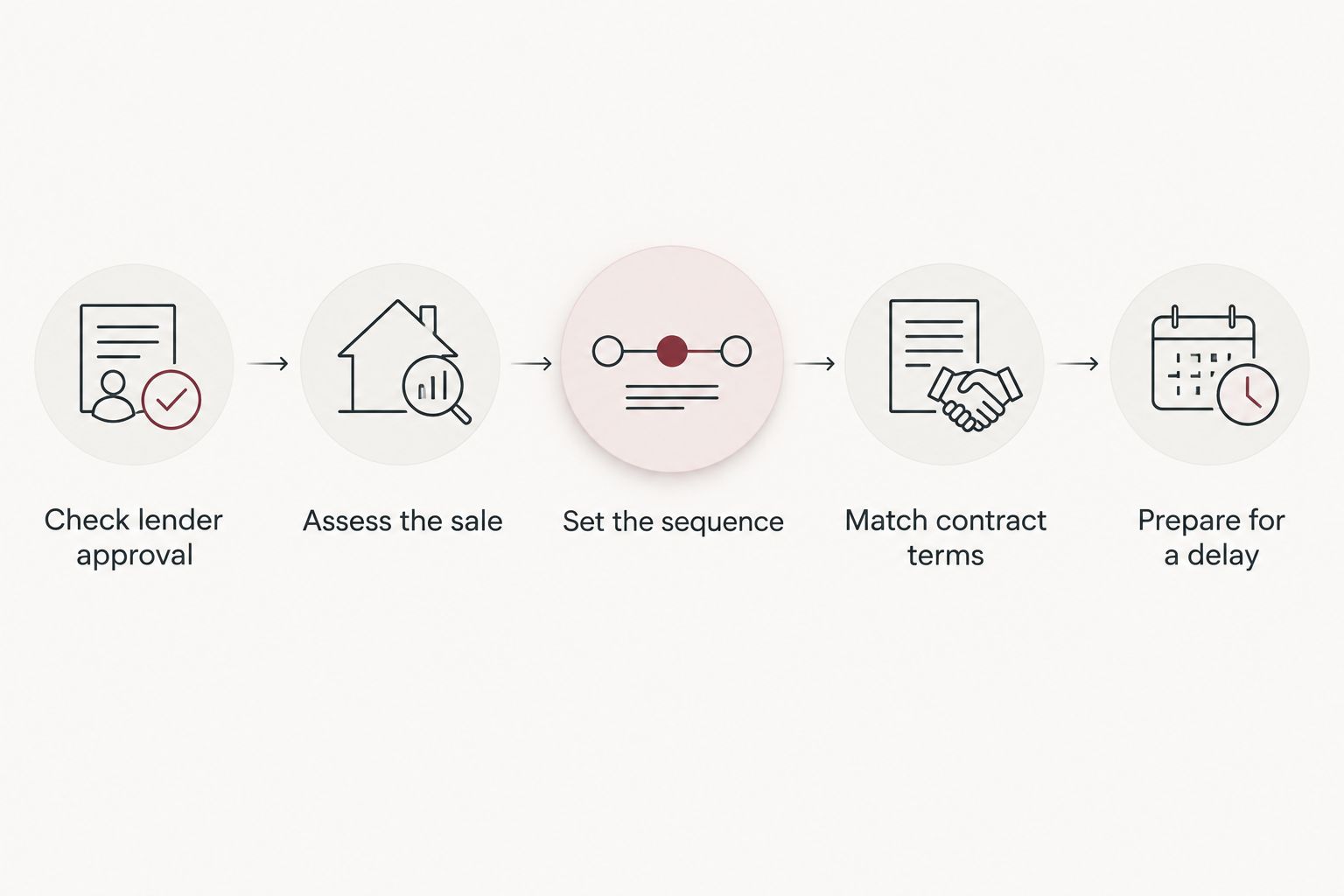
Use this order before setting an offer deadline or promising a move-out date. Each step addresses a decision that can disrupt the other transaction.
- Check lender approval. Ask whether you qualify to purchase before your current home sells. Tell the lender if your down payment depends on sale proceeds, and ask what documentation is needed when the sale closes.
- Assess the sale. Review your current home's likely sale terms, mortgage payoff, and any obligations that affect the proceeds. Do not build a purchase plan around an asking price alone; the amount available to you depends on the completed transaction.
- Set the sequence. Decide whether you will sell first, buy first, or coordinate closings. Put the reason in plain language: you need the proceeds, you can carry both homes, or you can manage the gap if dates change.
- Match contract terms to the plan. Review proposed closing and possession dates, along with any sale-related condition in your purchase offer. A date that suits the purchase does not help if your current buyer cannot meet it.
- Prepare for a delay. Identify where you would live or store belongings if the sale closes before the purchase. If the purchase closes first, identify how you will manage the current home until its sale is complete.
Bring the same plan to the professionals handling each side. Your lender needs accurate information about the existing mortgage and sale proceeds. Your real estate agent needs to know which dates and conditions are essential, not merely preferred. Review the actual contracts before relying on an extension, early possession, or another change in timing; those terms require agreement.
Why does the right plan vary?
There is no single 2026 closing sequence that fits every Cincinnati seller. These factors determine which approach is workable:
- Dependence on sale proceeds. If the next purchase needs money from your current home, the sale must reach the stage your lender requires before those funds support the purchase.
- Lender approval with an existing mortgage. Your ability to buy first depends on the lender's review of your obligations while you still own the current home.
- Your current home's contract status. A home that has not been listed, one that is listed, and one under contract give you different levels of certainty about timing.
- Conditions in the purchase contract. Financing, inspection, appraisal, and title issues can move a purchase closing even after the offer is accepted.
- The buyer's position on your sale. Your buyer has a separate path to closing. A date in your sale contract is a target that depends on its conditions being met.
- Your tolerance for a gap or overlap. Temporary housing and carrying 2 homes are different problems. Decide which one you can manage before committing to either sequence.
A high-touch sale plan matters when your current house is the funding source for your next one. Sandlin Realtors focuses on seller representation across Southern Ohio, including Portsmouth, Scioto County, Wheelersburg, Lucasville, Otway, Rarden, and South Webster. Joey Sandlin brings 20+ years of experience to that work. If your current home is in that service area, discuss the sale timeline before you commit to a purchase schedule; a Cincinnati-area purchase also calls for advice tied to that transaction.
Can you make an offer before your current house sells?
Yes, if the offer accurately reflects how you will fund the purchase. A home-sale condition tells the seller that your ability to complete the purchase depends on selling your current property. Without that condition, you take on the obligation stated in the contract even if your sale does not close when expected. Have your lender and agent review the plan before you submit the offer.
A stronger offer is not stronger for you if you cannot complete it. Removing a sale condition changes your risk; it does not speed up your buyer's financing, appraisal, or closing. In 2026, choose contract terms based on confirmed funding, not on the closing date you hope to achieve.
Can you close on both houses on the same day?
Yes, 2 closings can be scheduled for the same day, but that arrangement depends on the sale finishing in time for the purchase. Your lender and the parties handling the closings need to know that the transactions are connected. Ask how sale proceeds will reach the purchase closing and what happens if the first closing is delayed.
Same-day scheduling also leaves little room for a problem on either side. If an inspection issue, title matter, or financing condition changes the sale, the purchase schedule needs attention immediately. Treat a same-day closing as an option with a backup plan, not a guarantee of a single move.
Do you need a bridge loan to buy before selling?
No. A bridge loan is one possible financing approach, not a requirement for buying before your current home sells. Ask your lender whether you qualify to purchase while retaining your current home and compare the obligations of any proposed financing with a sell-first plan. Do not assume approval or terms from the name of the loan.
FAQ
Can you sell and buy a house at the same time in Cincinnati in 2026?
Yes, you can sell and buy a house at the same time in Cincinnati in 2026. Confirm whether your purchase depends on sale proceeds, then plan the contracts and closing dates around that constraint.
Should I sell my Cincinnati house before buying another?
Sell first if you need the proceeds to fund the purchase or want to avoid carrying both homes. Plan where you will live if the sale closes before you can move into the next home.
Can I buy a house before my current one sells?
Yes, if your lender approves the purchase while you still own your current home and you can meet the contract terms. Account for the period when both homes remain your responsibility.
Can my purchase offer depend on selling my current home?
Yes, you can propose a home-sale condition in your purchase offer. The seller must accept that term, so review the exact contract language and financing plan before submitting it.
What if my sale closes before my new house is ready?
You need a housing and moving plan for the gap. Discuss possession dates and any proposed changes with the parties to the contracts rather than assuming you can remain in your sold home.
What if my Cincinnati home sale is delayed?
A delayed sale can affect your purchase if its proceeds or timing support the next closing. Contact your lender and agent promptly to review the purchase contract and available next steps.
Can both home closings happen on the same day?
Yes, both closings can be scheduled for the same day. Confirm how sale proceeds will reach the purchase closing and prepare for a delay in the first transaction.
One last thing
The critical date is not always when you move. It is when your sale proceeds become available under the terms of your purchase financing. Before you set 2 closing dates in 2026, ask your lender what must happen on the sale side for the purchase to close. If you are selling in Southern Ohio, Sandlin Realtors can help you build the seller-side plan around that answer.