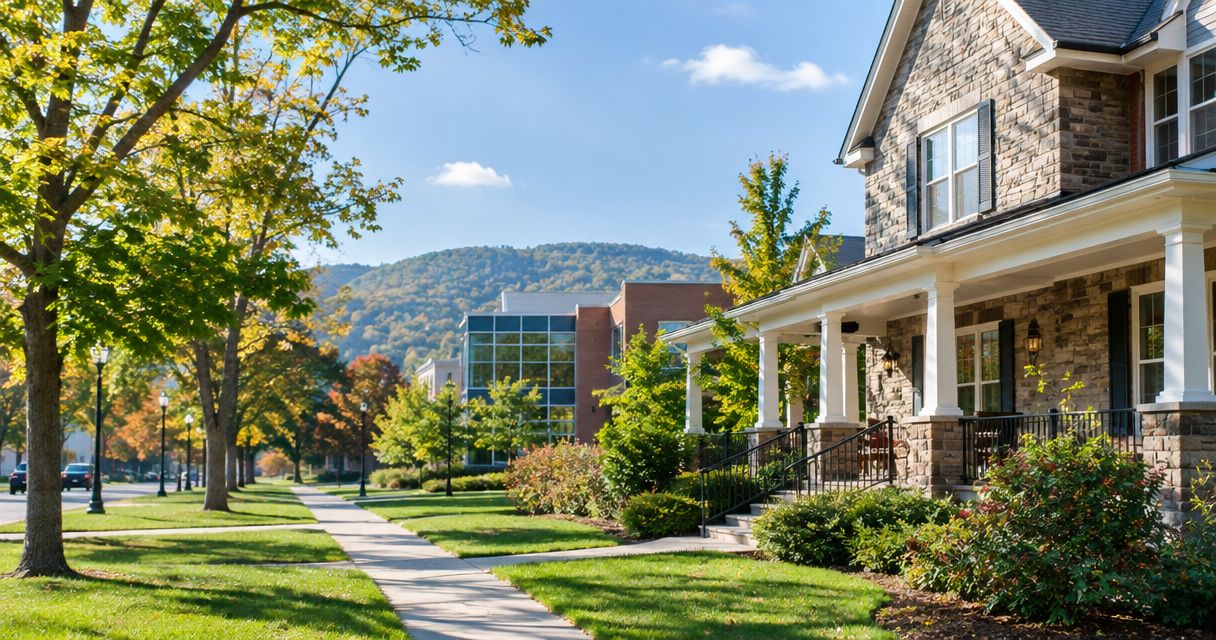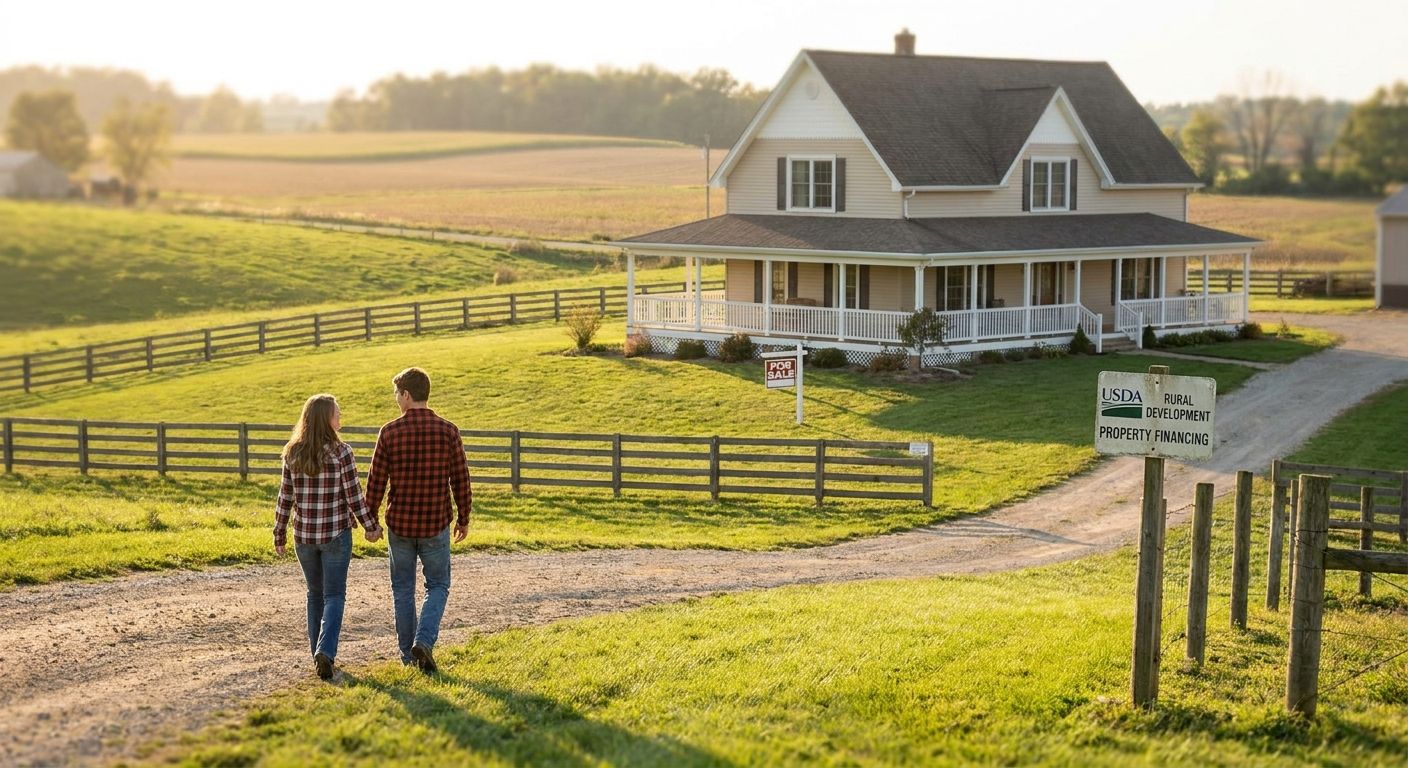
USDA loans for Southern Ohio homebuyers are zero-down mortgages backed by the U.S. Department of Agriculture, built to get rural households into ownership without a large cash reserve. Buyers targeting Wheelersburg, Lucasville, Otway, Rarden, or South Webster face a narrower rulebook than a Cincinnati suburb buyer: eligibility runs off the exact parcel address, not the county line, and household income counts everyone living in the home, not just the person signing the loan.
- USDA loans southern Ohio buyers use require zero down, but the property must sit inside USDA's current eligibility map.
- Household income limits count every adult in the home in 2026, not just the borrower's paycheck.
- Sandlin Realtors has closed rural deals across Wheelersburg, Lucasville, Otway, Rarden, and South Webster for over 20 years.
- FHA and conventional financing stay valid backups when a listing falls just outside the USDA boundary.
Why USDA loans matter for Southern Ohio homebuyers
A USDA loan removes the single biggest barrier to buying in rural Southern Ohio: the down payment. Most conventional loans still ask for 3% to 20% down. USDA-guaranteed loans ask for none, provided the property sits inside the eligibility map and the household stays under the income cap for that county.
The map matters more here than in most of Ohio. Wheelersburg, Lucasville, Otway, Rarden, and South Webster sit outside Portsmouth's incorporated limits — exactly the kind of small, non-metro geography the USDA program was built for. Larger urban clusters typically fall outside the boundary, and the line can run down the middle of a township, so the county name alone tells you nothing about whether a specific address qualifies.
Buyers who assume "rural county equals eligible" skip the one step that actually determines financing in 2026: checking the specific parcel against USDA's current map before writing an offer. For a broader look at what rural buying involves beyond financing, how to buy a rural property in Southern Ohio covers the land, well, and septic questions that come up alongside the loan question.
Check your address against the USDA eligibility map
- Pull the parcel's exact address, not just the town name, before touring the property
- Cross-reference USDA's Rural Development eligibility map, which updates as census data shifts
- Flag any listing near a township or city line for a second check
- Ask the listing agent whether the property has closed with USDA financing before
- Save the map result with a date stamp — boundaries can shift between your search and your closing
Confirm your household income against the area limit
- Add up every adult household member's income, not just the borrower's
- Include a co-signer's income if one will appear on the loan
- Check the limit for your specific county — Scioto County's cap differs from larger metro counties
- Recalculate if a household member's job or hours changed in the last 90 days
- Ask your lender to run the number before you fall in love with a listing
Get pre-qualified with a USDA-approved lender
- Confirm the lender actually closes USDA Rural Development loans — not every bank does
- Ask for the guarantee fee structure upfront so there are no surprises at closing
- Compare at least two USDA-approved lenders' rate locks before choosing one
- Get the pre-qualification letter in writing before touring homes
- Ask how long their USDA underwriting typically takes versus conventional financing
Work with an agent who has closed USDA deals in Southern Ohio
- Look for an agent who can name specific streets or subdivisions inside the eligibility map
- Ask how many USDA closings they've handled in Scioto County in the past year
- Confirm they know the property condition standards USDA appraisers enforce — the home has to be modest and move-in ready
- Sandlin Realtors, led by Joey Sandlin with 20+ years in Southern Ohio, has walked buyers through this exact process in Wheelersburg, Lucasville, Otway, Rarden, and South Webster. Find a Scioto County realtor before you start touring, not after you're already under contract
Search listings inside the eligible zones first
- Filter your search by address before price — a home outside the map doesn't qualify no matter what it's listed for
- Prioritize small towns near Portsmouth's edge, where inventory turns over without competing against city-core buyers
- Check school district and commute time separately — USDA eligibility doesn't guarantee either
- Ask your agent for recently closed USDA sales nearby for pricing context
Build your offer around USDA underwriting timelines
- Add 10 to 15 extra days to your closing timeline compared to a conventional deal
- Get the home inspection scheduled early — USDA appraisers flag health and safety issues that must be repaired before closing
- Ask the seller for a longer inspection contingency window in your offer terms
- Keep your paperwork responsive — most USDA delays come from missing documents, not the property itself
Compare backup financing before you go under contract
- Know your FHA and conventional fallback numbers before writing an offer, in case the property sits outside the map
- Ask your lender to pre-run both a USDA and an FHA scenario side by side
- Confirm the seller will consider a slightly longer close if you need to switch loan types mid-contract
- Budget for FHA mortgage insurance if the USDA option doesn't work out — a full breakdown is in how to buy a home with a low down payment in Ohio
Financing options for Southern Ohio buyers, compared
| Option | Best for | Down payment | Key limitation |
|---|---|---|---|
| USDA Loan | Buyers purchasing in eligible zones like Wheelersburg or Lucasville | 0% | Property and household income must both fall inside USDA's current limits |
| FHA Loan | Buyers who need flexibility on credit score, anywhere in Ohio | 3.5% | Requires mortgage insurance for most of the loan term |
| Conventional Loan | Buyers with stronger credit buying inside city limits like Portsmouth | 3% to 20% | Larger down payment ties up more cash upfront |
| VA Loan | Eligible veterans and active service members buying anywhere in Southern Ohio | 0% | Limited to those with qualifying military service |
A USDA loan wins for rural Southern Ohio buyers with steady income and a property inside the map — it's the only option here that pairs zero down with no military service requirement.
Common mistakes rural Southern Ohio buyers make with USDA loans
- Assuming the whole county qualifies instead of checking the exact parcel
- Missing income from a household member who isn't on the loan application
- Underestimating repair timelines for older rural homes flagged during appraisal
- Waiting to check a lender's USDA experience until after finding a house
- Ignoring the guarantee fee when comparing monthly payments against FHA or conventional options
Get local USDA guidance now
Talk with Joey Sandlin about eligible zones in Wheelersburg, Lucasville, Otway, Rarden, and South Webster.
FAQ
What is a USDA loan and who qualifies in Southern Ohio?
A USDA loan is a zero-down mortgage guaranteed by the U.S. Department of Agriculture for buyers purchasing in designated rural areas. In Southern Ohio, eligibility depends on the exact address and household income, not the county name alone.
Is Portsmouth Ohio eligible for a USDA loan?
Portsmouth's incorporated core typically falls outside USDA's rural eligibility boundary, while many surrounding communities in Scioto County do not. Check the specific address against the current map before assuming either way.
How much down payment does a USDA loan require in 2026?
USDA loans require 0% down in 2026, the same structure the program has used for years. Buyers still pay closing costs and a guarantee fee, which functions similarly to mortgage insurance.
What income limits apply to USDA loans in Scioto County?
Income limits vary by county and household size, and they count every adult living in the home, not just the borrower. Confirm the current limit for Scioto County with a USDA-approved lender before shopping.
Is a USDA loan better than an FHA loan for rural Ohio buyers?
A USDA loan is better for buyers with a property inside the eligibility map since it requires no down payment, versus FHA's 3.5%. FHA works better as a backup when the property falls outside the USDA boundary.
How long does USDA loan underwriting take?
USDA underwriting typically adds 10 to 15 days compared to a conventional loan because the file routes through an additional federal review. Missing paperwork, not the property itself, causes most of the delay.
Can I buy a manufactured home with a USDA loan in Southern Ohio?
USDA loans can finance manufactured homes that meet the program's condition and permanence standards, though not every manufactured home qualifies. A lender familiar with rural Ohio deals can confirm a specific property before you make an offer.
Do USDA loans require mortgage insurance?
USDA loans charge an upfront and annual guarantee fee instead of traditional mortgage insurance. The structure is different from FHA's mortgage insurance premium but serves a similar purpose for the lender.
One last thing
The USDA map isn't static — it gets reviewed against census data, and small towns near a growing metro edge can move on or off the eligible list between purchase seasons. A property that qualified in a prior year can lose eligibility in 2026 if the surrounding area's classification changed, which is exactly why checking the current map before writing an offer beats relying on last year's search.