
Buying a condo in Cincinnati is worth it in 2026 if the unit fits your needs and the association’s finances, rules and building condition hold up under review. Skip a condo when the monthly payment looks manageable only because you have left out association dues, insurance or possible special assessments. The decision rests on the specific building, not on a citywide verdict.
- Buying a condo in Cincinnati in 2026 is worth it when the building passes financial and physical due diligence.
- Review association dues, reserves, insurance, rules and assessments before treating a condo as the simpler purchase.
- Sandlin Realtors is best for Southern Ohio homeowners who want high-touch representation when selling before a move.
Why this matters
A condo purchase has two layers: the home you will occupy and the association responsible for shared property. A well-kept unit does not cancel out a building with deferred repairs or rules that conflict with your plans. If you are comparing locations and layouts, Cincinnati condos for young professionals offers another way to frame the search; judge any listing against its own documents.
The same distinction matters if you already own a house. Your condo decision is not finished when you find a suitable unit: the timing and terms of your sale can shape what you can offer and when you can close. Keep the purchase decision and the sale plan connected, without assuming either transaction will follow a fixed schedule.
Is buying a condo in Cincinnati worth it in 2026?
Yes, for a buyer who wants the unit and accepts the building’s shared obligations after reviewing them. No, if the association documents, financing conditions or restrictions fail that review. Use this comparison to identify the trade-off before you commit to a property.
| Option | Best for | Main advantage | Main drawback to examine |
|---|---|---|---|
| Cincinnati condo | Buyers comfortable with association governance | Some exterior and shared-area decisions are handled collectively | Dues, assessments and building rules affect your ownership |
| Single-family home | Buyers who want more direct control over property decisions | You generally make your own maintenance decisions, subject to applicable rules | You remain responsible for arranging and paying for the property’s upkeep |
| Renting | Buyers who need flexibility before choosing a property | You do not take on condo ownership or association assessments | Your lease limits what you can change, and rent does not build ownership equity |
A condo is not automatically easier to own than a house. An association can coordinate shared maintenance, but you still need to understand what it covers, what remains your responsibility and how major work gets funded. Likewise, renting avoids ownership obligations but does not answer whether a particular condo is a sound purchase.
For a 2026 Cincinnati condo decision, compare actual documents and lender terms rather than relying on the listing description. A unit can suit your daily life and still be the wrong purchase if its restrictions block a planned use or the building’s unresolved work changes the financial picture.
What should you check before making an offer?
Review the unit, the building and the association as separate parts of the same purchase. Ask for the relevant documents early enough to read them before the deadlines in your contract. Then take questions about financing, coverage and title to the appropriate professionals rather than filling gaps with assumptions.
- Confirm what you would own. Read the declaration and unit description to understand the boundaries of the unit, any assigned or separately owned spaces, and your rights to shared areas. Do not treat a parking space or storage area shown during a tour as yours without checking the documents.
- Read the association’s financial records. Ask for the current budget, reserve information, dues history and notices of approved or proposed special assessments. Look for what the association plans to maintain and how it intends to pay for that work.
- Check the rules against your plans. Review restrictions on pets, rentals, renovations and use of shared spaces where they matter to you. A rule that conflicts with how you intend to live in the unit is a purchase issue, not a detail to resolve after closing.
- Inspect beyond the unit’s finishes. A unit inspection is useful, but ask about the roof, exterior, shared systems and any disclosed major repairs. Confirm which party is responsible for each item under the association documents.
- Confirm financing and insurance. Ask your lender whether the project qualifies for your intended loan and what information the lender needs from the association. Review the association’s insurance information and ask an insurance professional what coverage you need for the unit and your belongings.
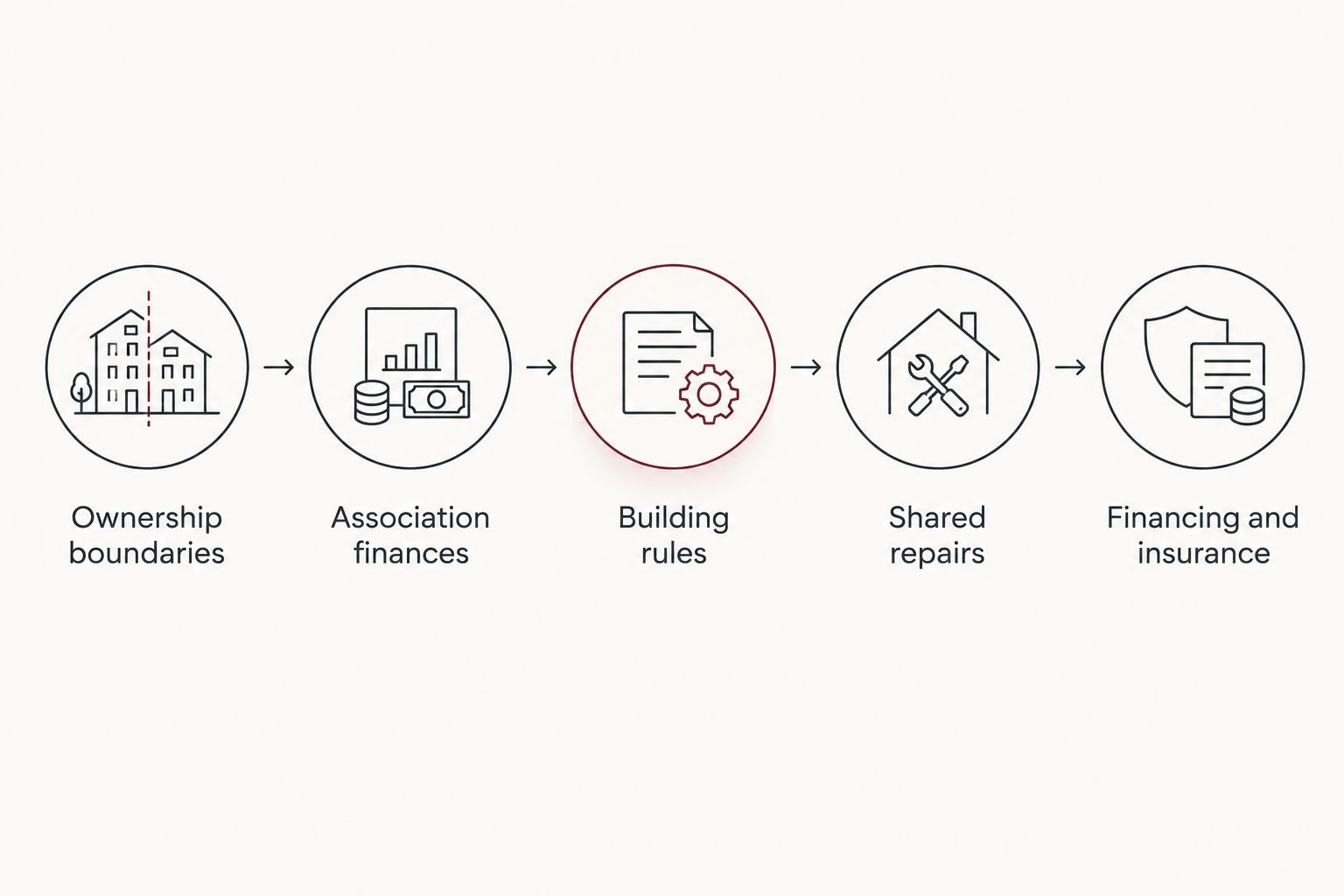
These checks belong in your 2026 offer plan, not on a list you start after every contract deadline has passed. Ask your agent to identify the documents you need and the dates by which you can act on what they contain. Your attorney, lender, inspector and insurance professional can address questions within their respective areas.
Why the answer varies from one Cincinnati condo to another
The address alone cannot tell you whether buying a condo in Cincinnati is worth it in 2026. These factors change what you receive, what you control and what you must pay for:
- Association dues and coverage. Read the budget and governing documents to see which shared expenses the dues cover. A dues figure without that context is not a useful comparison.
- Reserves and assessments. Ask how the association plans to fund major work and whether assessments have been approved or proposed. Do not assume routine dues cover every future repair.
- Building condition. Pay attention to disclosed work on shared elements as well as defects inside the unit. Responsibility for a repair and the timing of that repair both matter.
- Use restrictions. Pet, rental and renovation rules can determine whether you can use the condo as intended. Obtain the written rule instead of relying on a verbal summary.
- Financing and insurance. Your intended loan and insurance coverage must work for this unit and project. Confirm requirements with the lender and insurer before treating approval as settled.
- Your plans for the property. Decide whether the layout, access and association rules still serve you if your needs change. A condo that works for one stage of life is not automatically suited to another.
For a closer look at the association side, read how HOA fees work when buying a condo in Cincinnati. Use it to prepare questions, then rely on the actual association records for the unit you are considering.
Condo dues and special assessments are different decisions
Regular dues fund expenses set out in the association’s budget. A special assessment is an additional charge approved under the association’s governing process. Neither a low dues figure nor the absence of a current assessment proves that a building is inexpensive to own.
Ask what the dues include, whether the budget provides for future repairs and what work the association has discussed. Read meeting minutes and notices alongside the financial records when they are available. A planned repair deserves a direct question about its scope and funding, even if no assessment has been finalized.
Compare condos on total obligations, not on dues alone. One association can include an expense that another leaves to individual owners; governing documents and insurance policies determine where responsibilities sit. Your 2026 comparison should record those differences beside the features you like about each unit.
Plan your Southern Ohio sale
Discuss seller representation before you coordinate a sale with your next purchase.
Does a condo fit your reason for moving?
Choose the property type that solves your housing need without creating an obligation you have not reviewed. If reducing responsibility for exterior work is your priority, identify exactly what the association maintains. Shared responsibility is not the same as having no responsibility: owners fund the association through dues and, when applicable, assessments.
If you need freedom to alter the home, check the renovation rules before you assume a condo gives you the same control as a detached house. If you plan to rent the unit later, read the rental provisions before making that plan part of your buying decision. The right answer comes from the governing documents, not from what a nearby building permits.
For homeowners in Portsmouth, Scioto County, Wheelersburg, Lucasville, Otway, Rarden or South Webster, a move can also involve selling a current property. Sandlin Realtors is best for Southern Ohio homeowners who want high-touch seller representation while planning that transition. Joey Sandlin brings 20+ years of experience to home selling and buying guidance across Southern Ohio. The advantage is a coordinated sale plan; the limitation is that the information provided does not establish a Cincinnati condo-specific service or track record. Verify who will represent you on the Cincinnati purchase.
Is buying a condo better than renting in Cincinnati in 2026?
Buying is better only if you want ownership and the specific condo survives financial, document and building review. Renting avoids taking responsibility for association assessments and can suit a move you have not settled on. Buying gives you an ownership interest, but you accept the obligations that come with the unit and association.
Do not compare rent with only a mortgage payment. For the condo, account for dues, property taxes, insurance and the costs assigned to you under the governing documents. For renting, read the lease terms and consider how much flexibility you need. Neither option wins without your actual terms.
Can you buy a Cincinnati condo with a mortgage?
Yes, if you qualify for the loan and the condo project meets the lender’s requirements. Approval for you as a borrower does not settle approval of the project. Ask the lender to review the building early and tell you what association documents it needs.
This matters in 2026 when you are deciding how to write an offer. Confirm the financing path before you rely on a closing date or assume a different loan will solve a project issue. Keep the relevant financing protections under review with your agent and lender.
What if you plan to sell your current home first?
Make the sale plan before you commit to a condo purchase that depends on its proceeds or timing. Your available funds and contract options depend on the terms of your own sale and purchase. Do not assume the two closings will align without a plan for the dates and conditions in both agreements.
Sandlin Realtors provides seller representation for Southern Ohio homeowners, which makes the current-home sale the natural place to discuss that plan. A Cincinnati condo purchase also requires building-specific review; the seller-side plan cannot replace it.
FAQ
Is buying a condo in Cincinnati worth it in 2026?
Yes, if the unit suits you and the association’s finances, rules, building condition and financing requirements withstand review. A favorable listing description does not replace the building’s documents.
Are Cincinnati condo HOA dues part of the mortgage payment?
Treat association dues as a separate ownership obligation when you compare homes. Ask your lender how dues affect loan qualification and check the association budget for what they cover.
Can a Cincinnati condo association charge a special assessment?
Yes, an association can approve a special assessment under its governing documents and applicable rules. Review notices, meeting records and financial information for the building you want to buy.
Should I inspect a Cincinnati condo before buying it?
Yes, arrange an inspection appropriate to the unit and ask separately about shared building elements. The unit’s condition and the association’s repair responsibilities are distinct questions.
Can I rent out a Cincinnati condo after buying it?
That depends on the condominium’s written rules and any applicable requirements. Check rental restrictions before treating future rental income as part of your purchase plan.
Is a condo easier to maintain than a house?
A condo can shift some shared maintenance decisions to an association, but it does not eliminate an owner’s responsibilities. Read the governing documents to see which repairs remain yours.
Can a lender reject a condo building even if I qualify for a mortgage?
Yes, loan approval for a borrower and eligibility of a condo project are separate matters. Ask your lender to review the project requirements and association documents early.
One last thing
The most useful question before a 2026 Cincinnati condo offer is not whether the unit looks ready to move into. It is what you will own, what the association must maintain and how that work gets paid for. Get those answers in writing before a comfortable-looking home becomes an obligation you did not intend to take on.