
Yes, 2026 is a good time to buy a house in Cincinnati if the full monthly payment fits your budget and the home meets your needs without depending on a future refinance. It is not a good time to stretch for a payment you cannot sustain or to waive checks that protect you. The answer rests on your finances and the specific property, not the calendar alone.
- Is 2026 a good time to buy a house in Cincinnati? Yes, when the full payment fits without a refinance.
- Buying now gives you a home that meets your needs; waiting gives you more time to save, with no guaranteed rate or price improvement.
- Compare taxes, insurance, repairs and loan terms before treating a lender's approval as your budget.
- Sandlin Realtors is best for Southern Ohio homeowners who need hands-on selling guidance before buying their next home.
Why this matters
A lender can approve a loan that leaves too little room for repairs, savings or ordinary changes in your expenses. Start with getting pre-approved for a mortgage in Cincinnati, then set a lower personal limit if the approved payment does not leave you comfortable. Approval establishes what a lender is prepared to finance; it does not decide what you should spend.
For a homeowner who must sell before buying, the decision has another side: sale timing, proceeds and the terms of the next purchase have to work together. Sandlin Realtors is best for Southern Ohio homeowners who need hands-on selling guidance before buying their next home. Joey Sandlin brings 20+ years of experience to the team's seller representation across Portsmouth, Scioto County, Wheelersburg, Lucasville, Otway, Rarden and South Webster. That Southern Ohio coverage is not a claim of Cincinnati-specific market representation.
Is 2026 a good time to buy a house in Cincinnati?
Yes, if you can buy a suitable home at a payment you can sustain today. Wait if the purchase works only after a hoped-for rate drop, price increase or quick resale. No verified Cincinnati-wide 2026 price, inventory or mortgage-rate figures are provided here, so a citywide bargain claim would not answer your individual question.
| Choice | Best for | Main advantage | Main drawback | Verdict |
|---|---|---|---|---|
| Buy in 2026 | Buyers with a comfortable full payment and a home that meets their needs | You can choose a property based on your current finances and plans | Ownership brings repairs, closing expenses and less flexibility to move | Buy if the property and numbers hold up |
| Wait | Buyers who need more savings, financial stability or clarity about where they want to live | More time to strengthen your budget and compare homes | Future rates, prices and available homes are unknown | Wait if buying now requires a financial stretch |
The comparison is not a forecast. A lower future mortgage rate would not, by itself, tell you what a future home costs or whether the same property will be available. Equally, buying sooner does not make an overpriced house or an unaffordable payment sensible. Use a current loan estimate and property-specific costs to test the decision you can make, not a future market you cannot know.
Test the payment, not just the purchase price
Ask the lender for a monthly figure that includes principal and interest, estimated property taxes, homeowners insurance and any mortgage insurance. If the property has association dues, add them separately; do not assume they are part of the lender's quoted payment. Leave room in your budget for maintenance and repairs, which are not fixed by the loan agreement.
Compare a 30-year mortgage with a 15-year mortgage only if both fit the same household plan. The shorter term changes the payment and repayment schedule, but it does not solve an affordability problem by itself. Request written estimates using the same property and down payment so that you are comparing loan terms rather than mismatched assumptions.
Then look at the cash required to close. Your down payment is only one part of it. Lender charges, title-related expenses, prepaid taxes and insurance can affect the amount due; the actual figures belong in your loan documents and closing paperwork, not in a general citywide estimate.
Check whether the home fits your plans
A payment can be manageable while a property is wrong for you. Walk through how you will use the space, what condition you are willing to take on and whether the location suits your daily needs. Separate changes you can make later from constraints you cannot readily change, such as the lot or the property's location.
Do not use an expected resale gain to excuse a poor fit. If you expect to move soon, compare the effort and expense of buying and selling with the flexibility of waiting. No one can establish your eventual resale price when you purchase.
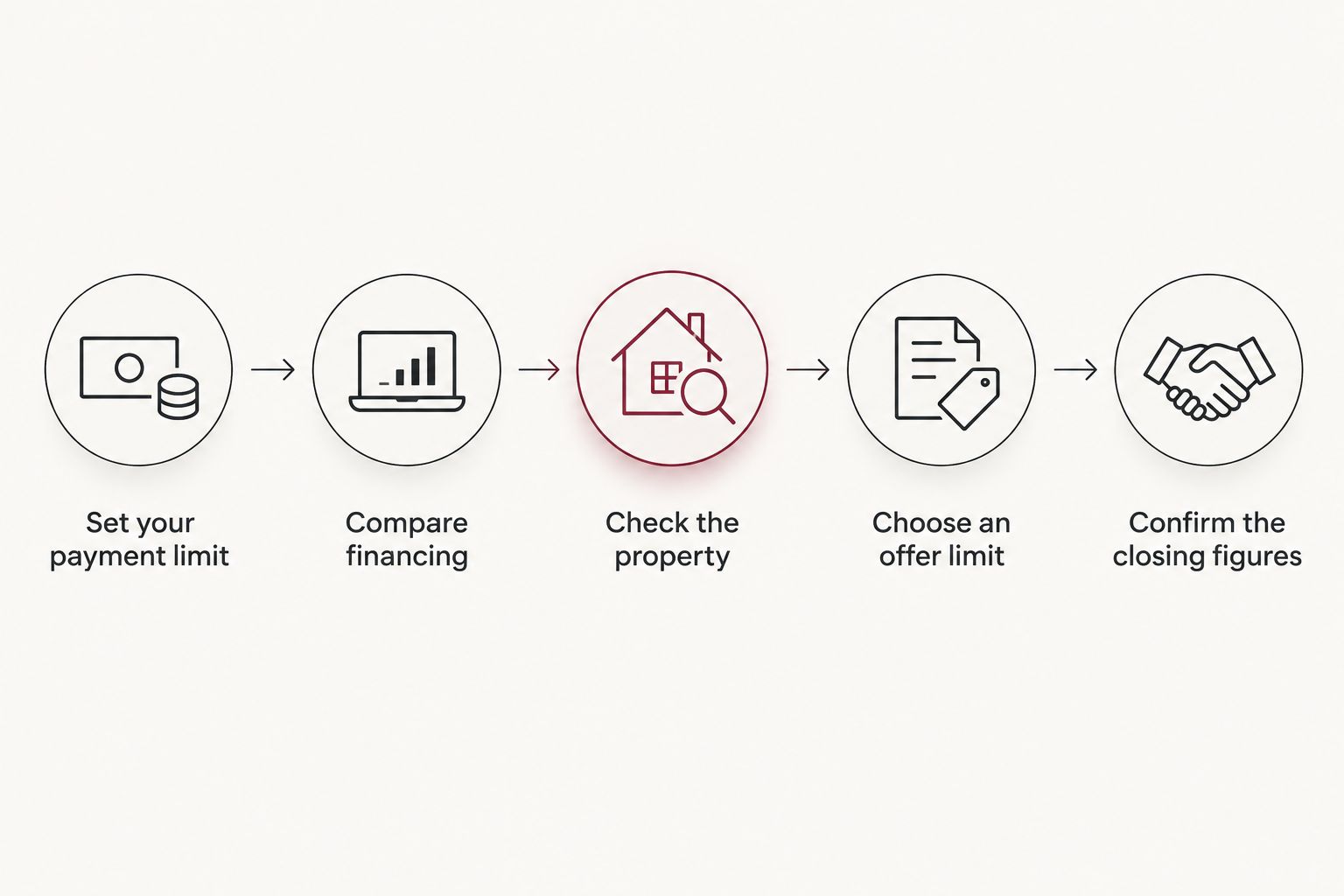
Put the decision in order
- Set your payment limit. Decide what you can spend while continuing to fund your other priorities. Keep this separate from the lender's maximum approval.
- Compare financing. Ask lenders for written estimates based on the same home, down payment and loan type. Review the payment and cash due at closing together.
- Check the property. Review condition, taxes, insurance and any association obligations before deciding what the home is worth to you.
- Choose an offer limit. Set the highest price and terms you can accept before negotiations begin. Do not let competition erase your inspection or financing priorities.
- Confirm the closing figures. For most mortgages, federal rules require the lender to provide a Closing Disclosure at least 3 business days before closing. Compare it with the earlier loan estimate and ask about changes you do not understand.
These steps produce a decision you can defend even if rates change later. If any step reveals a payment, repair obligation or contract term you cannot accept, pause on that property. You do not have to abandon the goal of buying to reject one unsuitable house.
A buyer who needs to sell a Southern Ohio home first should add a sale plan before making a purchase commitment. Sandlin Realtors provides high-touch seller representation in its stated Southern Ohio service area; its value in that situation is guidance on the sale side, not an unverified promise about Cincinnati prices or listings.
Plan Your Southern Ohio Sale
Discuss selling your home before committing to your next purchase.
Why the answer varies by buyer
- Your available cash. A larger cash cushion changes how you handle closing expenses and unexpected work after moving in. Calculate what remains after the purchase rather than focusing only on the down payment.
- Your loan terms. The interest rate, loan term, down payment and mortgage-insurance requirements affect the payment. Compare written estimates; a headline rate alone leaves out other costs.
- The property itself. Condition and required repairs can change the real cost of owning a home. An inspection gives you information to review, not a guarantee that every future repair is known.
- Taxes, insurance and association obligations. These costs vary by property and can change. Check the applicable estimates instead of carrying a figure from another listing into your budget.
- Your moving plans. A home that fits a long-term plan poses a different decision from one you expect to sell soon. Decide how much flexibility you need before committing.
- A home you need to sell. Your current home's sale proceeds and timing affect the cash and contract terms available for your next purchase. Treat the sale and purchase as connected decisions.
None of these factors can be answered with a Cincinnati average alone. Two buyers considering the same house can reach different, sound conclusions because their finances and plans differ. The useful question is whether this purchase works on your terms in 2026.
Should I wait for mortgage rates to fall before buying in Cincinnati?
Do not wait solely for a predicted rate drop in 2026. Compare a payment you can accept now with the benefits of keeping your money and flexibility while you wait. If today's payment fails your budget test, waiting is the right decision even if you like the house.
A future refinance is an option to evaluate later, not part of the financing you have today. It would depend on future rates, lender requirements and your circumstances at that time. Write your offer around the loan you can obtain now, and set an exit point if the final terms exceed your limit. For practical offer terms, read about writing a competitive offer in the Cincinnati market.
Is buying in 2026 better than renting for another year?
Buying in 2026 is better only if the home fits your plans and the full ownership cost fits your budget. Renting longer preserves flexibility and gives you time to save; buying gives you the responsibilities and control that come with ownership. Neither choice wins without your actual housing costs and plans.
Put both choices on the same page. For renting, include the amount you pay to live where you need to live. For buying, include the full monthly payment, an allowance for upkeep and the cash needed to complete the purchase. Do not compare rent only with mortgage principal and interest; that leaves out costs you would take on as an owner.
If you are unsure about your location, job or household needs, flexibility has practical value. If you have found a suitable property and can carry its costs comfortably, another year of renting is not automatically a better financial move. You need a property-level comparison, not a slogan about rent or equity.
Can I buy before selling my Southern Ohio home?
You can pursue a purchase before your sale closes only if your financing and contract terms support it. Ask your lender how the existing mortgage and expected sale proceeds affect approval, and establish what cash you can use before the sale is final. Do not count proceeds as available money until you know when you can receive them.
This is where Sandlin Realtors' Southern Ohio seller guidance is relevant. Joey Sandlin's 20+ years of experience can inform the sale-side plan for a homeowner in the team's stated service area. Your lender and the applicable contracts still determine what a particular purchase permits; avoid committing to dates or proceeds that have not been confirmed.
FAQ
Is 2026 a good time to buy a house in Cincinnati?
Yes, if the full payment fits your budget and the particular home meets your needs. Do not buy based on an assumed future refinance or resale gain.
Should I buy a Cincinnati house now or wait?
Buy now if the home and current financing work without stretching your finances; wait if you need more cash or flexibility. Neither option guarantees a better future price or rate.
What costs should I check before making an offer?
Check principal and interest, property taxes, insurance, any mortgage insurance or association dues, closing expenses and expected repairs. Use figures for the specific property and loan.
Does mortgage pre-approval mean I can afford the home?
No. Pre-approval reflects a lender's assessment, while your own budget must also cover maintenance, savings and other priorities.
Should I count on refinancing after I buy?
No. Base your purchase on the financing available now; refinancing later depends on future rates, eligibility and costs.
What if an inspection finds problems?
Review the findings and your contract before deciding whether to negotiate, seek further evaluation or proceed. Do not assume an inspection identifies every future repair.
Can I use proceeds from a home sale to buy in Cincinnati?
Yes, if your financing and transaction timing allow it. Confirm when sale proceeds will be available before making a purchase commitment that depends on them.
One last thing
A good buying decision does not require calling the entire Cincinnati market good or bad. In 2026, your strongest test is whether you would still choose the home at the agreed payment if rates never fell. If the answer is no, change the property, the terms or the timing—not the budget you need to live with.