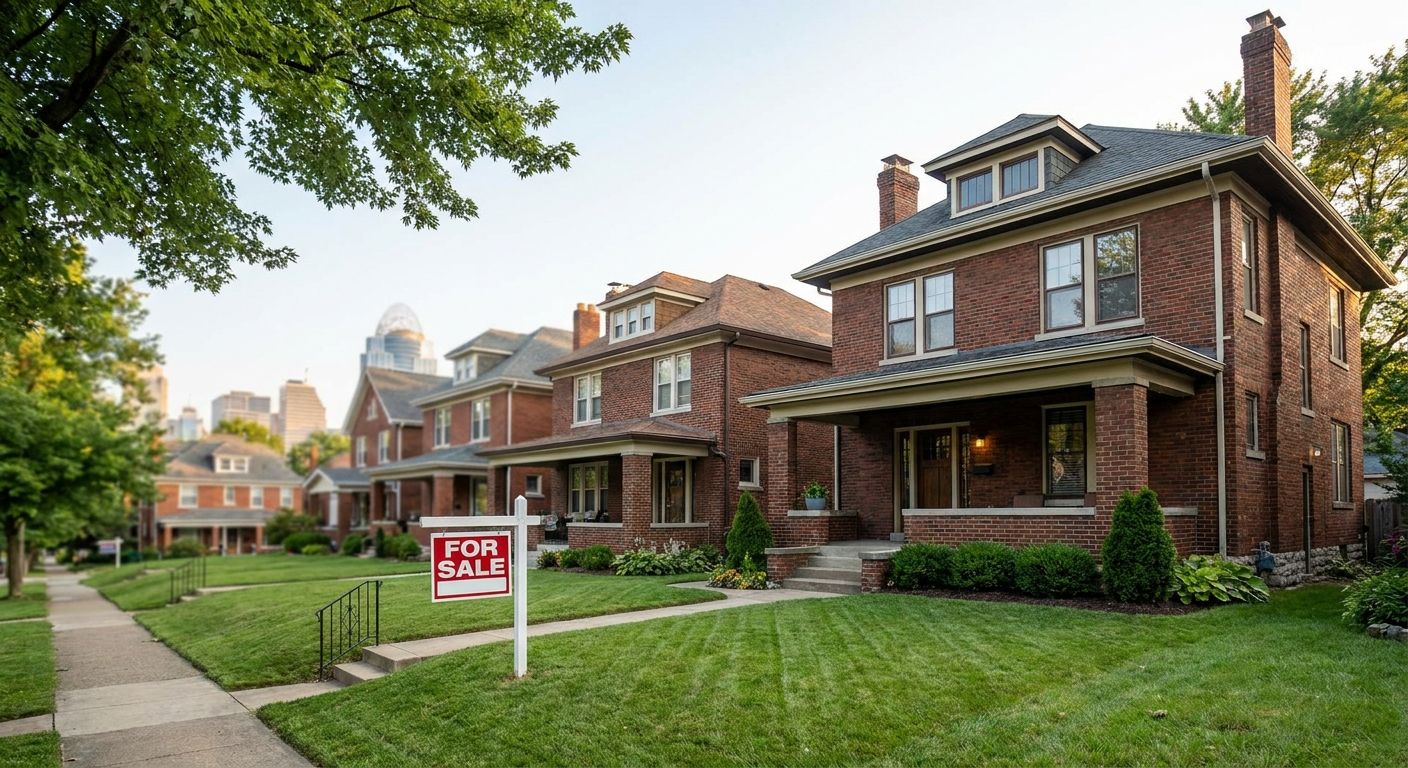
Cincinnati's rental market rewards investors who separate real cash flow from wishful math, not from a hot neighborhood name. Sandlin Realtors applies the same negotiation discipline it built across Southern Ohio to investment property Cincinnati searches in 2026, and the checklist below is the one that keeps a purchase from turning into a slow-motion loss.
- Investment property Cincinnati buyers should chase cash flow over appreciation stories in 2026 -- Buy 2-4 unit multifamily.
- Foreclosure listings carry the highest reward and highest risk in Cincinnati -- Consider only with cash reserves.
- Investment property loans in Cincinnati typically require 15-25% down, well above owner-occupied minimums.
- Sandlin Realtors' 20+ years of Southern Ohio negotiation experience applies directly to Cincinnati investment analysis.
- Commercial mixed-use property in Cincinnati diversifies a portfolio but demands a longer hold -- Hold, don't flip.
Why This Matters
Cincinnati's investment market moved fast through 2025 into 2026, and buyers chasing the wrong metric overpay for properties that look busy on a rent roll but bleed cash after taxes and repairs. Sandlin Realtors built its reputation on high-touch representation for Southern Ohio homeowners in Portsmouth, Scioto County, Wheelersburg, Lucasville, Otway, Rarden, and South Webster, and that same calm, numbers-first negotiation approach applies when evaluating investment property Cincinnati listings.
An investor buying in Cincinnati in 2026 competes with institutional buyers, out-of-state landlords, and first-time house hackers all reading the same MLS feed. The properties that actually cash flow rarely look flashy in photos, and the ones that look flashy are usually priced for someone else's optimism. Knowing which line items to check before writing an offer is what separates a 2026 purchase that pays for itself from one that quietly drains a bank account for three years.
Who This Is For
This guide is for two types of buyers: Southern Ohio investors ready to expand a rental portfolio into a larger metro, and Cincinnati-based buyers who want a second or third property analyzed with the same scrutiny a first-time buyer gets. Neither group needs a hype pitch about "emerging neighborhoods" -- both need a clear-eyed read on which Cincinnati property types perform in 2026 and which ones only look like they perform.
Sandlin Realtors works with buyers who want a straight answer before they sign, not after closing. If your goal is a primary residence, this isn't your guide -- check the first-time buyer resources instead. If your goal is monthly cash flow, a defensible exit in five to seven years, and a purchase you can explain to a lender without flinching, keep reading.
What to Look for in an Investment Property in Cincinnati
Five criteria decide whether a Cincinnati property performs or just looks like it will. Run every listing against all five before you write an offer.
Cash Flow Relative to Purchase Price
Rent divided by purchase price tells you more than any appreciation forecast. A property advertised as a "great investment" because a neighborhood is "up and coming" still has to cover its mortgage, taxes, insurance, and vacancy in 2026 dollars, not in a projected 2030 rent. Run the numbers against actual signed leases or verified comparable rents, never a listing agent's rent estimate.
Neighborhood Trajectory and Permit Activity
Building permit volume and code enforcement activity predict a Cincinnati neighborhood's next five years better than an agent's opinion of it. Areas with steady renovation permits and falling vacant-structure counts tend to hold rents; areas with rising code complaints tend to see turnover spike. Pull permit history before assuming a block is turning around just because one house on it got flipped.
Financing Structure: DSCR vs. Conventional
Conventional investment property loans in 2026 typically require 15% to 25% down, compared with 3% to 5% for an owner-occupied purchase, and lenders weight your personal debt-to-income ratio heavily. DSCR loans skip that personal-income test and qualify the property on its own rent-to-payment ratio instead -- useful once you own three or four rentals already, expensive if the property's coverage ratio is thin from the start.
Local Landlord Rules and Rental Registration
Cincinnati enforces rental registration and inspection requirements that vary by property type and neighborhood, and non-compliance can delay a closing or trigger fines after you already own the property. Confirm registration status and any open code violations before closing, not after the first tenant calls with a complaint.
Exit Liquidity and Resale Demand
A cash-flowing property nobody wants to buy in five years is a liability disguised as an asset. Check how long comparable investment properties actually sat on the market through 2025 and early 2026 before assuming a quick resale. Neighborhoods with strong owner-occupant demand resell faster than pure-rental pockets, even at a lower cap rate today.
Top Picks: Investment Property Types Worth Chasing in Cincinnati
These aren't specific listings -- they're the property types that consistently pencil out for investors working the investment property Cincinnati market in 2026, judged against the five criteria above.
1. Two-to-four-unit multifamily in Price Hill or Westwood -- the safe pick
Multifamily in the two-to-four-unit range qualifies for the same conventional financing as a single-family home, unlike five-plus unit buildings that force commercial lending terms. Price Hill and Westwood both carry lower per-door acquisition costs than the East Side, which keeps the rent-to-price math workable in 2026 even after a rate-driven mortgage payment. Verdict: Buy if the property has a documented rent roll and no deferred roof or mechanical work.
2. Turnkey single-family rental in Oakley or Hyde Park -- the premium hold
These neighborhoods carry higher purchase prices but also the strongest owner-occupant resale demand in the metro, which protects your exit five to seven years out. A turnkey property here won't produce the highest cap rate in Cincinnati, but it produces the most predictable one, and it's the pick least likely to need a special assessment surprise. Verdict: Consider for investors prioritizing appreciation and resale liquidity over maximum monthly cash flow.
3. Foreclosure or distressed listing -- the high-reward gamble
Buying a foreclosure home in Cincinnati can shave a meaningful percentage off market value, but repair scope is often unknown until after closing and financing options narrow to cash or hard money. This pick only works with reserves equal to at least 15% to 20% of purchase price set aside for surprises the inspection didn't catch. Verdict: Consider only with cash on hand and a contractor lined up before you bid; Skip if this would be your only investment property.
4. Commercial or mixed-use property -- the diversification play
Commercial real estate for sale in Cincinnati includes small mixed-use buildings with ground-floor retail and upper-floor apartments, which spread risk across tenant types. Financing terms run longer and stricter than residential loans, and a vacant commercial unit can sit empty for months in 2026's leasing market. Verdict: Hold for experienced investors with residential cash flow already established; Skip as a first Cincinnati purchase.
None of these picks work without someone who knows the Cincinnati comps cold. Choosing a real estate agent in Cincinnati who handles investment deals regularly, not just owner-occupant sales, is the difference between catching a property before it's overbid and hearing about it after. Sandlin Realtors brings that same 20+ year negotiation background to every investment property Cincinnati conversation.
Get a Cincinnati Investment Read
Talk through cash flow, financing fit, and exit risk before you offer.
What to Avoid
Three things look like a deal in Cincinnati in 2026 and aren't:
- Rent comps pulled from listing sites, not signed leases. Advertised asking rents run higher than what a landlord actually collects after concessions and normal vacancy.
- Renovated flips with no permit trail. A fresh kitchen photographed well doesn't mean the electrical or plumbing behind it passed inspection -- pull the permit history before assuming the work was done to code.
- DSCR loans with a coverage ratio near 1.0. A property that barely covers its own mortgage payment has zero cushion for a vacancy month, a special assessment, or a rate reset, and one bad quarter turns it into a monthly loss instead of a monthly gain.
Verdict Comparison
| Pick | Cash Flow | Risk | Financing Fit | 2026 Verdict |
|---|---|---|---|---|
| 2-4 unit multifamily (Price Hill/Westwood) | Strong | Low-Moderate | Conventional | Buy |
| Turnkey single-family (Oakley/Hyde Park) | Moderate | Low | Conventional | Consider |
| Foreclosure/distressed | Variable | High | Cash/Hard Money | Consider with reserves |
| Commercial/mixed-use | Moderate-Strong | Moderate-High | Commercial loan | Hold for experienced buyers |
FAQ
What's the best investment property to buy in Cincinnati in 2026?
A two-to-four-unit multifamily in Price Hill or Westwood is the strongest 2026 pick for cash flow because it qualifies for conventional financing and carries lower per-door acquisition cost than the East Side. Turnkey single-family in Oakley or Hyde Park is the stronger pick for resale liquidity instead.
Is Cincinnati a good market for rental property investment right now?
Cincinnati remains competitive for rental investment in 2026, but pricing has tightened enough that buyers need to verify rent against signed leases, not asking-rent listings. The properties that still cash flow are the ones bought against real numbers, not neighborhood hype.
How much down payment do I need for an investment property in Cincinnati?
Conventional investment property loans typically require 15% to 25% down in 2026, well above the 3% to 5% required for an owner-occupied purchase. DSCR loans qualify the property on its rent-to-payment ratio instead of your personal income, but often carry a higher down payment requirement.
Is a foreclosure a good investment property in Cincinnati?
A foreclosure can shave a meaningful percentage off market value, but repair scope is often unknown until after closing and financing narrows to cash or hard money. It works only with cash reserves equal to at least 15% to 20% of purchase price set aside for surprises.
What neighborhoods in Cincinnati are best for rental cash flow?
Price Hill and Westwood offer the strongest rent-to-price ratio for multifamily in 2026 due to lower acquisition costs. Oakley and Hyde Park trade some cash flow for stronger resale demand and lower vacancy risk.
Do I need a real estate agent to buy investment property in Cincinnati?
Yes -- an agent who handles investment deals regularly catches permit issues, rent-roll inflation, and financing mismatches that a listing description won't disclose. Sandlin Realtors applies the same investigative standard used in Southern Ohio transactions to Cincinnati investment purchases.
How does Cincinnati's rental registration affect investment property owners?
Cincinnati enforces rental registration and inspection requirements that vary by property type and neighborhood, and unresolved violations can delay closing or trigger fines after purchase. Confirm registration status before you're under contract, not after you own the property.
Is commercial real estate a good investment in Cincinnati for a first-time investor?
Commercial and mixed-use property in Cincinnati works better as a diversification move for investors who already have residential cash flow established, not as a first purchase. Financing terms run longer and stricter, and vacancy on a commercial unit can sit open for months in 2026's leasing market.
One Last Thing
Ohio counties run a full property reappraisal every six years with a value update at the three-year mark, and that cycle can push a tax bill up before your next rent increase covers the difference. Budget for that reassessment the day you close on a Cincinnati investment property, not the day the new bill shows up in the mail -- it's the detail that turns a break-even first year into an unplanned cash-flow deficit. Every proforma built on a 2026 tax number should carry a placeholder for that adjustment, not assume the bill stays flat.