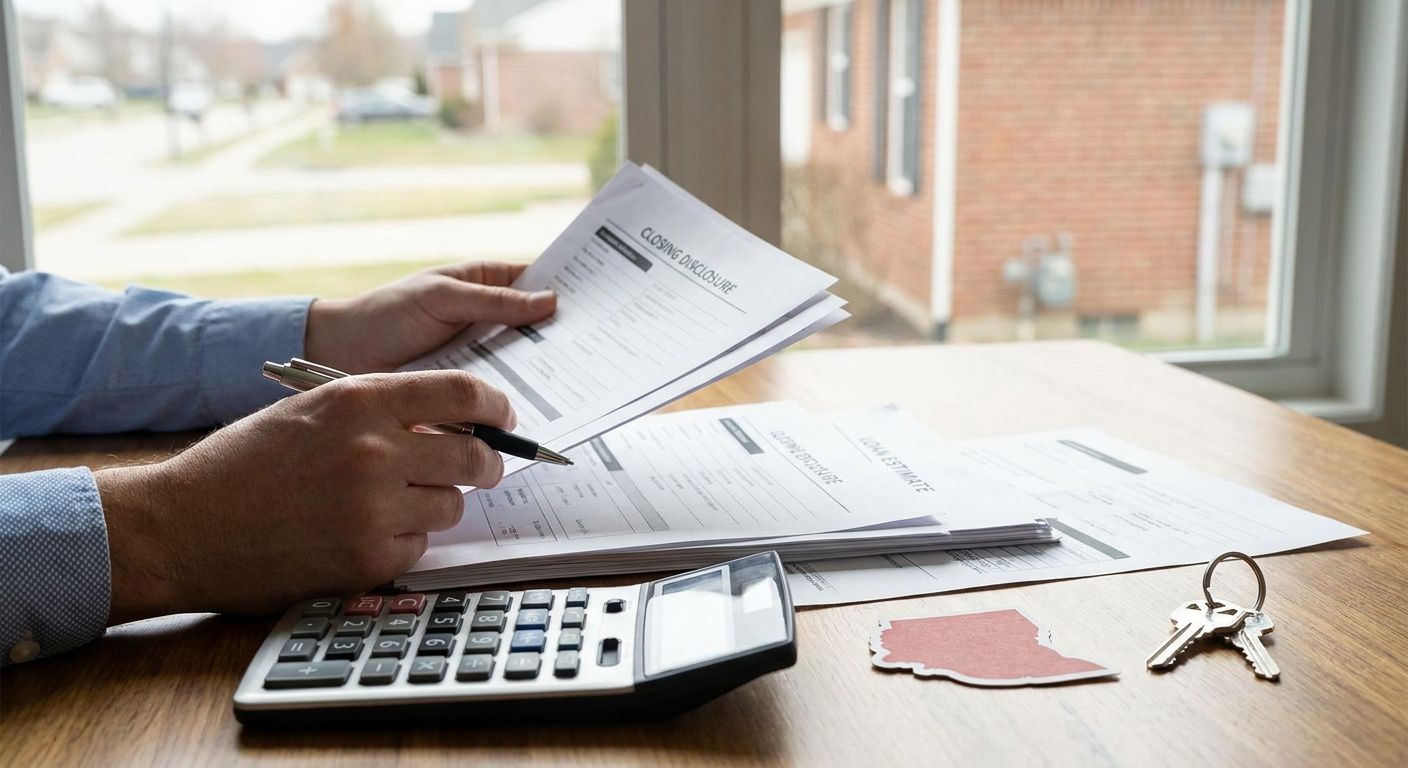
Buying a home in Ohio in 2026 means budgeting for closing costs on top of your down payment, and most buyers don't see the real number until the Closing Disclosure lands three days before signing.
- Closing costs buying a home in Ohio run 2% to 4% of the purchase price, about 3% on average in 2026.
- Ohio's conveyance fee adds $1 to $4 per $1,000 of the sale price on top of lender and title fees.
- Loan origination and title insurance make up the bulk of the bill, so budget for them separately from your down payment.
- Sandlin Realtors helps Southern Ohio buyers negotiate seller-paid closing cost credits before an offer goes in.
Why this matters
A buyer who only budgets for the down payment gets a surprise at the closing table. Closing costs buying a home in Ohio typically add thousands of dollars beyond whatever you're putting down, and the exact figure isn't locked until your lender issues the Closing Disclosure. Getting pre-approved for a mortgage in Cincinnati early gives your lender time to send an accurate Loan Estimate, which is the first real closing cost number you'll see.
Southern Ohio buyers working with an agent who tracks local title and recording fees avoid last-minute scrambling for extra cash at the table. That's the kind of detail Joey Sandlin walks buyers through before they write an offer, not after.
How much are closing costs when buying a home in Ohio?
Closing costs buying a home in Ohio run 2% to 4% of the purchase price, averaging close to 3% in 2026. On a $200,000 home that's $4,000 to $8,000. On a $300,000 home, plan for $6,000 to $12,000.
| Cost category | Typical range | Usually paid by |
|---|---|---|
| Loan origination & lender fees | 1% - 2% of loan amount | Buyer |
| Title insurance & escrow | 0.5% - 1% of purchase price | Buyer (lender's policy required) |
| Ohio conveyance fee | $1 - $4 per $1,000 of price | Seller, by custom |
| Recording fees | Set by county recorder | Buyer |
| Prepaid taxes & insurance | Varies by closing date | Buyer |
The number on your Loan Estimate is a starting point, not the final bill — it can shift 10% by the time the Closing Disclosure arrives.
Loan and lender fees: 1% to 2% of your loan amount
Origination fees, underwriting fees, and points cover the lender's cost of processing your loan. FHA loans carry an upfront mortgage insurance premium of 1.75% of the loan amount, which is usually rolled into the loan rather than paid in cash at closing — a detail that changes how much cash an FHA buyer actually needs on closing day compared to a conventional buyer.
Title insurance and escrow fees: 0.5% to 1% of the purchase price
Lenders require a title policy protecting their interest; owner's title insurance is optional but worth carrying. Escrow and settlement fees cover the closing agent's work coordinating the transaction. Choosing the right title company in Portsmouth affects how fast this part of the process moves and what you pay for it.
Ohio conveyance fee: $1 to $4 per $1,000 of the sale price
Ohio charges a mandatory conveyance fee of $1 per $1,000 of the sale price statewide, plus a permissive fee of up to $3 per $1,000 that individual counties can add. Sellers customarily pay this fee, but it's negotiable in the purchase contract like any other closing cost line item.
Prepaid costs: taxes, insurance, and daily interest
Lenders collect a few months of property taxes and homeowner's insurance upfront to fund your escrow account, plus per-diem interest from closing day to the end of the month. Closing in the first week of the month usually means a bigger prepaid interest charge than closing at month's end.
Why closing costs vary in Ohio
- Loan type — FHA's 1.75% upfront mortgage insurance premium pushes total costs toward the higher end of the 2-4% range
- County permissive fee — some Ohio counties charge the full $3-per-$1,000 add-on, others charge less
- Purchase price — most fees scale with price, so a higher offer means a higher dollar total even at the same percentage
- Lender chosen — origination fees and underwriting costs differ by lender, not just by loan type
- Seller concessions — a seller willing to cover part of your costs lowers what you bring to the table
- Closing date — prepaid interest and escrow reserves shift depending on where in the month you close
Related questions
Do buyers or sellers pay closing costs in Ohio?
Both sides pay closing costs in Ohio, just different line items — buyers typically cover lender fees, title insurance, and recording costs, while sellers customarily pay the conveyance fee and their own agent's commission. Concessions can shift some buyer costs to the seller if negotiated into the offer.
Can you roll closing costs into your mortgage in Ohio?
You can roll some closing costs into your mortgage in Ohio through a higher interest rate (lender credit) or, for FHA loans, by financing the upfront mortgage insurance premium into the loan balance. Rolling costs in reduces cash needed at closing but increases what you pay over the life of the loan.
How much are closing costs on a $250,000 house in Ohio?
Closing costs on a $250,000 house in Ohio run about $5,000 to $10,000, based on the standard 2% to 4% range. The exact number depends on your loan type, lender, and the county's permissive conveyance fee rate.
Buyers stretching for a low down payment purchase in Ohio feel closing costs more acutely since less cash is available after the down payment. Joey Sandlin's team has spent 20+ years helping buyers across Portsmouth, Scioto County, Wheelersburg, Lucasville, Otway, Rarden, and South Webster line up realistic cash-to-close numbers before they ever write an offer.
Get a closing cost estimate for your Ohio purchase
Local guidance from a team that's closed deals across Southern Ohio for 20+ years.
FAQ
What's the average closing cost when buying a home in Ohio in 2026?
Closing costs buying a home in Ohio average close to 3% of the purchase price in 2026, with a typical range of 2% to 4%. The exact figure depends on loan type, lender fees, and the county's conveyance fee rate.
Is closing costs buying a home in Ohio different for FHA vs conventional loans?
FHA closing costs in Ohio tend to run toward the higher end of the 2% to 4% range because of the 1.75% upfront mortgage insurance premium. That premium is usually financed into the loan rather than paid in cash, so upfront cash needed can still come in lower than a conventional loan.
Do buyers or sellers pay closing costs in Ohio?
Both buyers and sellers pay closing costs in Ohio, but on different items. Buyers typically cover lender and title fees while sellers customarily pay the conveyance fee, and either side can negotiate concessions to shift costs.
Can closing costs be rolled into your mortgage in Ohio?
Yes, some closing costs can be rolled into an Ohio mortgage through a lender credit or, on FHA loans, by financing the mortgage insurance premium into the loan balance. This lowers cash due at closing but raises the total paid over the loan term.
How much are closing costs on a $250,000 house in Ohio?
Closing costs on a $250,000 house in Ohio run about $5,000 to $10,000, using the standard 2% to 4% range. Loan type and county fees push the number toward either end of that range.
What is the Ohio conveyance fee?
The Ohio conveyance fee is a transfer tax of $1 to $4 per $1,000 of the sale price, made up of a mandatory $1 statewide fee plus a permissive fee of up to $3 that counties can add. Sellers customarily pay it, though it's negotiable.
Is title insurance required in Ohio?
Lenders in Ohio require a lender's title insurance policy to close a mortgage, while owner's title insurance is optional but commonly recommended. Both are part of the title insurance and escrow line, which runs 0.5% to 1% of the purchase price.
Does Sandlin Realtors help buyers estimate closing costs in Southern Ohio?
Yes, Joey Sandlin and the Sandlin Realtors team walk buyers through realistic closing cost estimates before an offer goes in, drawing on 20+ years of deals across Portsmouth, Scioto County, and surrounding Southern Ohio towns.
One last thing
Most buyers negotiate their offer price and forget the conveyance fee is a seller-paid custom, not state law — which means it's on the table in every negotiation, not fixed. A buyer who asks for a seller-paid conveyance fee or a closing cost credit in a slower Ohio market in 2026 has a real shot at getting it, especially outside Cincinnati's hottest submarkets.