Buying a new construction home in Hamilton, Ohio means working with builder contracts, construction timelines, and lender draws that don't show up in a typical resale purchase — this guide walks through the process from lot selection to final walkthrough.
- New construction homes in Hamilton OH close in 4-9 months depending on build stage, not 30-45 days like resale.
- Bring your own agent before you visit a builder's model home — the builder's on-site rep works for the builder, not you.
- Get pre-approved with a construction-to-permanent loan before signing a purchase agreement; standard mortgages won't cover a spec build mid-construction.
- A pre-drywall inspection catches framing and wiring issues before walls close them in — schedule one even on builder-warranted homes.
- Joey Sandlin's team has represented Southern Ohio and Greater Cincinnati-area buyers for over 20 years and can review builder contracts before you sign.
Why this matters
Hamilton sits in the path of Cincinnati's northward growth, and builders have responded with new subdivisions along the Butler County corridor. That growth is good news for buyers who want a home with no deferred maintenance, but new construction contracts are written by the builder's attorney, not yours. Skipping representation on a new build is the single most common regret buyers report after closing — change orders they didn't understand, upgrade allowances that ran out, or a closing date that slipped twice.
Getting the sequence right — financing, agent, lot, contract, inspections — protects your deposit and your timeline. A buyer's agent doesn't cost you anything extra in most new-build transactions, since the builder typically pays the commission from their marketing budget, but only if your agent is registered with the builder on your first visit.
What you'll need
- Mortgage pre-approval letter, ideally from a lender familiar with construction-to-permanent loans
- A buyer's agent registered with the builder before your first model-home visit
- Earnest money, typically 1-5% of the purchase price depending on the builder
- A list of must-have lot features (grade, sun orientation, backyard depth) before you tour communities
- A third-party inspector willing to do a pre-drywall inspection, not just a final walkthrough
- Time — expect 4 to 9 months from contract to closing on a to-be-built home in 2026, longer if the lot requires site work
If you're weighing new construction against an existing home, the Hamilton growing-family listings show what's currently available on the resale side for comparison.
The steps
1. Get pre-approved before you tour a single model home
A generic pre-approval letter isn't enough for new construction — ask your lender specifically about construction-to-permanent products, since some builders require their preferred lender for incentives to apply. Walking into a sales office without this step means the builder's rep controls the conversation about what you can afford. Common mistake: using a pre-approval that expires before your build finishes; most letters are only valid for 60-90 days.
2. Bring a buyer's agent to your first visit
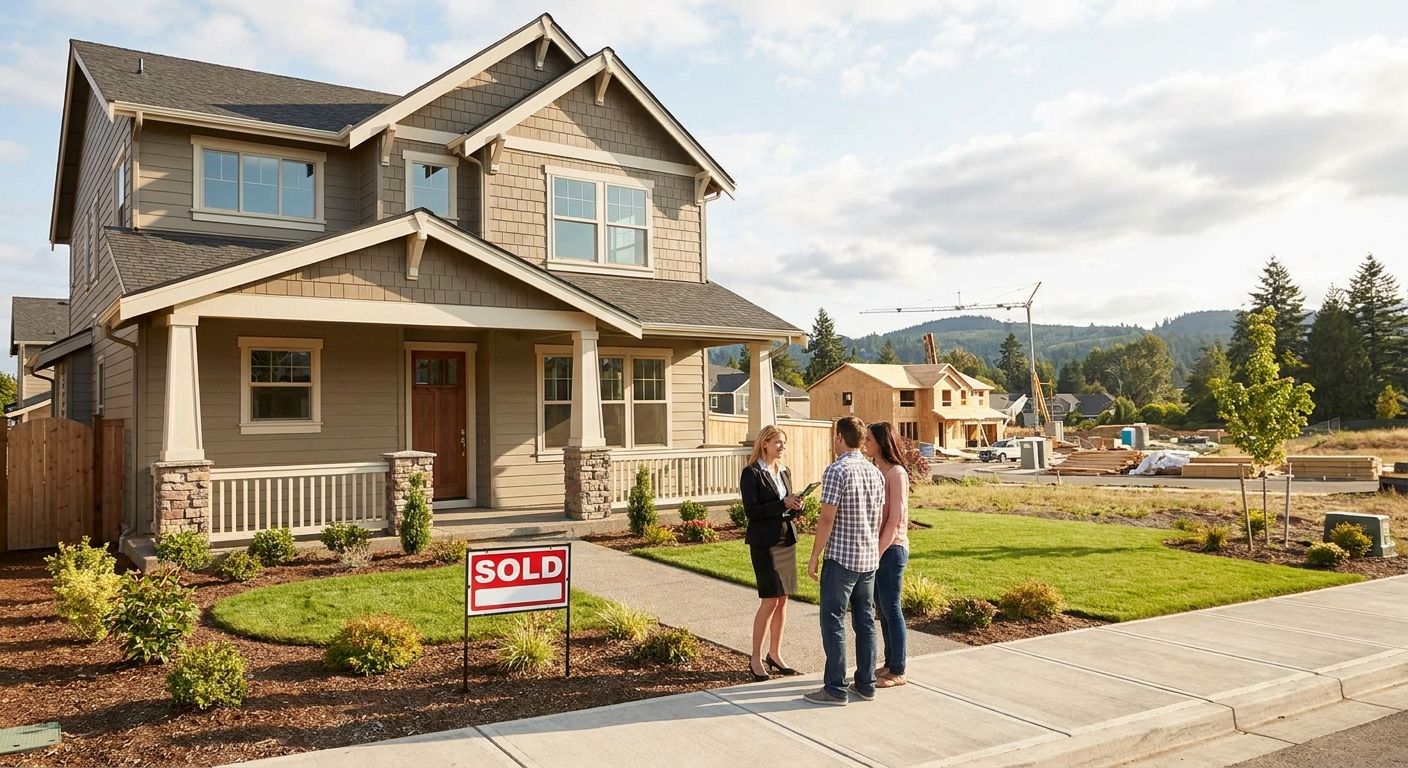
Register with an agent before you set foot in a model home, because most builders won't retroactively recognize representation once you've toured unaccompanied. This single step determines whether anyone reviews your contract for your interests instead of the builder's. A local agent who has closed new-construction deals in Hamilton and the Cincinnati suburbs will already know which builders negotiate on lot premiums and which don't budge. Common mistake: assuming the on-site sales rep is neutral — they represent the builder exclusively, even when they're friendly.
3. Choose the lot with resale in mind, not just the model
Walk the actual lot, not just the floor plan brochure, and check grading, drainage, and what will be built next door before you sign. A premium lot can add $10,000-$40,000 to the base price depending on the community, and that premium rarely comes back dollar-for-dollar at resale if the lot backs to a retention pond or a busy road. Common mistake: picking a lot based on the model home's landscaping, which won't exist on your actual lot for months.
4. Review the purchase agreement line by line before signing
Builder contracts include allowances (fixed dollar amounts for flooring, countertops, fixtures) that run out fast if you upgrade even one selection. Have your agent or a real estate attorney flag change-order pricing, the earnest money forfeiture clause, and the outside completion date before you sign anything. Common mistake: treating the builder's standard contract as non-negotiable — many terms, especially the completion timeline penalty, can be adjusted.
5. Lock your rate at the right moment, not too early
Rate locks on construction loans typically run 60-180 days depending on the lender and build timeline; locking too early risks expiration before closing, and locking too late exposes you to rate movement. Ask your lender about extended or float-down lock options built for new construction specifically. Common mistake: locking a 30-day rate on a home that won't finish for six months.
6. Schedule a pre-drywall inspection
A third-party inspector checking framing, plumbing rough-in, and electrical before drywall goes up catches problems that are cheap to fix now and expensive to fix later. Builder-included inspections are done by the builder's own quality team — pay for an independent one anyway. Common mistake: waiting until the final walkthrough to bring in an inspector, when framing and wiring are already sealed behind drywall.
7. Do a punch-list walkthrough before closing, not after
Walk the finished home with your agent 7-14 days before closing and document every incomplete item — chipped trim, misaligned cabinets, missing caulk — in writing with the builder's project manager present. Get a signed punch list with a completion date for anything not finished at closing. Common mistake: closing on verbal promises that the builder will "come back and fix it" without a dated, written commitment.
8. Understand your warranty coverage at closing
Most production builders offer a one-year workmanship warranty and a longer structural warranty, often ten years, covering load-bearing defects. Read the exclusions closely — cosmetic settling cracks and normal shrinkage are typically not covered even in year one. Common mistake: assuming the warranty covers everything the builder built; most explicitly exclude items like landscaping, sod, and minor drywall cracking from seasonal humidity changes.
Talk to Joey Sandlin before you sign
Contract review and lot guidance for Hamilton-area new construction buyers.
Troubleshooting
- Builder pushes the closing date twice already. Ask for the updated outside completion date in writing and confirm your rate lock extension covers it — most extended locks charge a daily fee past the original window.
- Upgrade allowance ran out mid-selection. Get an itemized change-order estimate before signing off on anything additional; some buyers find it cheaper to install certain upgrades post-closing through an outside contractor.
- Inspector found framing issues at pre-drywall stage. Document with photos, submit the report to the builder's project manager in writing, and get a repair timeline before drywall installation proceeds.
- Appraisal comes in under contract price. This happens more often in newer communities with few comparable closed sales — your agent can push back with recent comps from the same builder or subdivision.
- Lender wants updated pay stubs mid-build. Construction timelines of 6-9 months mean your financial documentation can go stale; expect at least one re-verification before the final loan approval.
Tools and resources
- Homes for sale in Hamilton OH for growing families — compare resale inventory against new-build pricing
- How to price your home to sell in Hamilton OH — useful if you're selling a current home to fund the new build
- How to choose a real estate agent in Cincinnati OH — what to ask before you register with a builder
- Homes for sale in Fairfield OH for first-time buyers — a neighboring market worth comparing lot pricing against
What to do next
If a current home sale needs to fund your new construction down payment, review how to price your home to sell in Hamilton OH before you sign a builder contract, so both timelines line up.
FAQ
How long does it take to build a new construction home in Hamilton OH?
Most production builders in the Hamilton area finish a home in 4 to 9 months from contract signing in 2026, depending on lot readiness and material availability. Custom or semi-custom builds can run longer.
Do I need a real estate agent to buy a new construction home?
You don't need one legally, but the builder's on-site sales rep represents the builder, not you. Registering an independent buyer's agent before your first visit usually costs the buyer nothing since the builder pays the commission.
Is new construction more expensive than resale in Hamilton OH?
New construction typically carries a higher price per square foot than resale, largely because of lot premiums and current material costs, but buyers avoid near-term maintenance and repair expenses that older homes carry.
What is a pre-drywall inspection and do I really need one?
A pre-drywall inspection checks framing, plumbing, and electrical rough-in before walls are closed up, catching issues that are far cheaper to fix at that stage. It's worth the cost even when the builder includes its own quality inspection.
Can I negotiate the price on a new construction home?
Base price negotiation is limited on production builds, but lot premiums, upgrade allowances, and closing cost credits are often negotiable, especially near the end of a builder's fiscal quarter.
What warranty comes with a new construction home?
Most builders offer a one-year workmanship warranty and a structural warranty that can run up to ten years, but cosmetic issues like minor settling cracks are commonly excluded. Read the exclusions before closing.
Should I use the builder's preferred lender?
Builder incentives, like closing cost credits, are often tied to using their preferred lender, but you should still compare rates against an independent lender before deciding. The incentive value needs to outweigh any rate difference.
What happens if the builder misses the completion date?
Your contract should specify an outside completion date and any penalty or extension terms if it's missed. Without that clause in writing, you have little leverage if delays push past your rate lock or lease expiration.
One last thing
The punch list matters more than the model home tour. Buyers who walk away happiest are the ones who documented every unfinished item in writing before closing and got a signed date for the builder to fix it — not the ones who picked the nicest countertop sample.