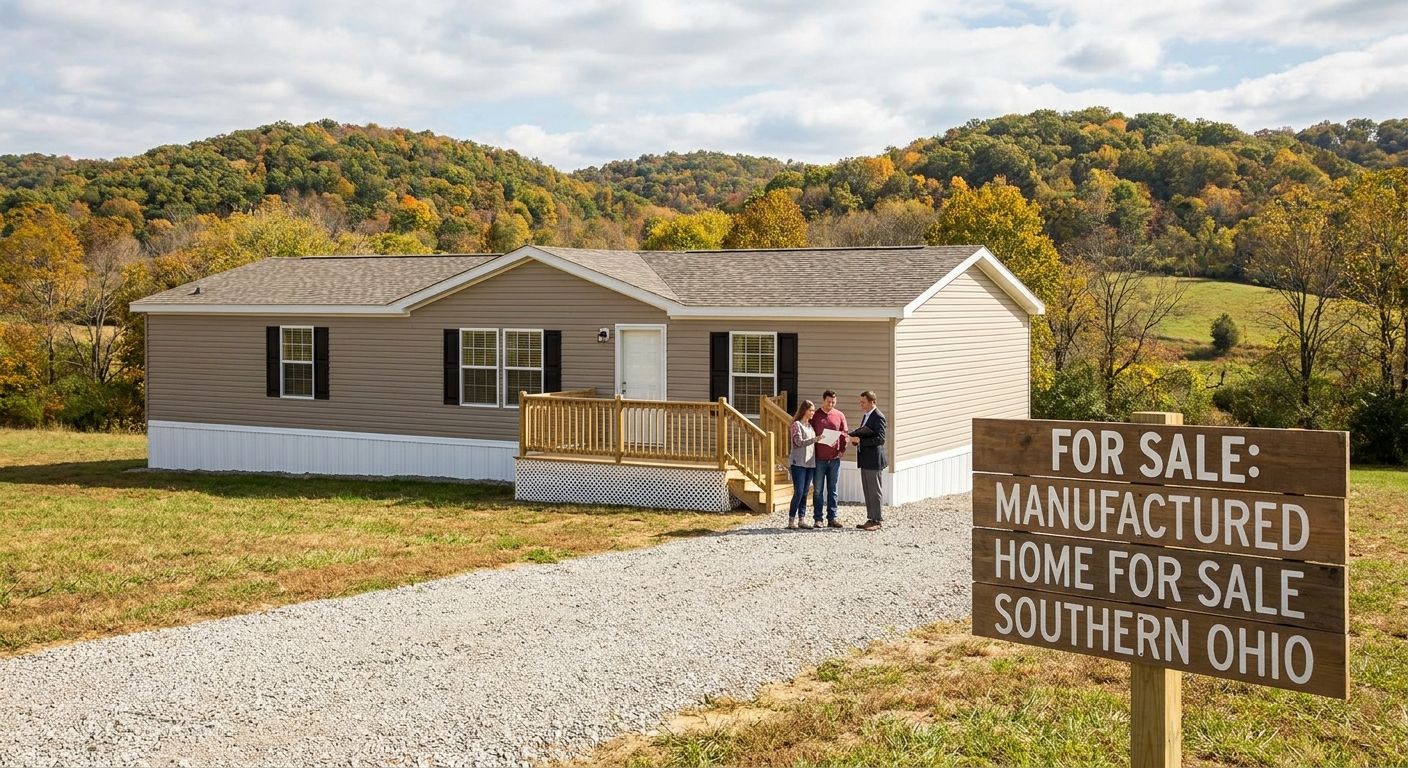
Buying a manufactured home in Southern Ohio works differently than buying a stick-built house, mainly because of how Ohio titles the property and how lenders treat it. The fastest path in 2026 is to decide upfront whether you want the home on owned land or in a leased-lot community, then match your financing to that choice before you start touring listings. Skip that step and you'll waste weeks on homes you can't actually finance.
The hidden cost most buyers miss: a manufactured home on leased land is titled like a vehicle through the Ohio BMV, not like real estate through the county recorder, and that changes your loan options, your resale value, and your property tax bill.
- Land-owned manufactured homes on permanent foundations qualify for conventional and FHA loans in Southern Ohio.
- Leased-lot homes typically need a chattel loan, which carries different terms than a mortgage.
- Ohio titles most manufactured homes through the BMV unless the owner files an affidavit of affixation.
- A local agent who has closed manufactured home deals in Scioto County can flag title issues before you're under contract.
- Search for manufactured home for sale southern ohio listings only after you know your land and financing plan.
Why this matters
Manufactured housing fills a real gap in Southern Ohio's market, especially in Scioto County, Wheelersburg, Lucasville, Otway, Rarden, and South Webster, where rural acreage is affordable but new stick-built construction is scarce. Buyers often assume the purchase process mirrors a traditional home sale. It doesn't, and the paperwork mismatch is the number one reason manufactured home deals fall through at closing in 2026.
Getting the sequence right — land, title status, financing, then the search — saves you from falling in love with a home you can't actually close on.
How to buy a manufactured home in Southern Ohio
Follow these steps in order. Skipping ahead to house-hunting before step 2 is the most common mistake buyers make.
- Decide on land-owned vs. leased-lot. Land-owned means the home sits on a permanent foundation on property you buy outright. Leased-lot means you own the home but pay rent on the ground it sits on, common in manufactured home communities around Portsmouth.
- Get financing pre-qualified for the right loan type. Land-owned homes on permanent foundations can qualify for a conventional or FHA mortgage. Leased-lot and non-affixed homes generally need a chattel loan, which finances the home as personal property rather than real estate.
- Confirm the home's title status. Ohio titles manufactured homes through the Bureau of Motor Vehicles by default. If the seller converted the home to real property with an affidavit of affixation, the county recorder holds title instead — verify which applies before you make an offer.
- Order an inspection and a title search. Manufactured homes built before June 1976 predate the HUD Code and are far harder to finance or insure; confirm the build date on the data plate inside the home.
- Work with an agent who has closed manufactured home sales locally. Title, financing, and foundation requirements trip up agents who mostly handle traditional resales. Finding a realtor in Scioto County who knows this segment shortens your timeline.
- Close the transaction. Land-owned purchases close like a standard real estate sale through a title company. Leased-lot, BMV-titled homes close more like a vehicle sale, with the title transferred separately from any land lease agreement.
| Purchase type | Financing path | Title held by |
|---|---|---|
| Land-owned, permanent foundation | Conventional or FHA mortgage | County recorder |
| Leased-lot or non-affixed | Chattel loan | Ohio BMV |
The verdict: if you want a manufactured home that behaves like real estate at resale, buy the land and convert the title — anything else, budget for a shorter-term chattel loan.
Buying with land you already own
If you're purchasing rural acreage first and placing a manufactured home on it later, the process shifts toward a construction-style loan or a two-step purchase: land now, home installation later. Southern Ohio's rural parcels around Otway and Rarden make this a common route, and buying rural property in Southern Ohio covers zoning and septic considerations that apply directly to manufactured home placement.
Buying in a leased-lot community
Communities near South Webster and Lucasville often price the home separately from the monthly lot rent. Lenders scrutinize the community's lease terms and whether the park allows resale to outside buyers, which affects both approval odds and your exit strategy down the road.
What determines your financing and closing timeline
- Foundation type — permanent foundations open up mortgage financing; non-permanent setups push you toward chattel loans.
- Build date — pre-1976 homes predate HUD Code standards and are harder to insure or finance.
- Title status — BMV-titled vs. county-recorded title changes which loan products even apply.
- Land ownership — owning the underlying land almost always improves your financing options and resale value.
- Park or community rules — leased-lot communities can restrict resale, subletting, or financing types.
- Down payment source — buyers using low down payment options in Ohio need to confirm the program covers manufactured housing before relying on it.
“A manufactured home on owned land with a converted title closes like any other house — everything else closes like a vehicle sale with a lease attached.”
Is a manufactured home a good buy in Southern Ohio right now?
A manufactured home on owned land in Southern Ohio holds value better than a leased-lot home, largely because it's titled and taxed as real estate rather than personal property. Buyers prioritizing long-term equity should weight land ownership heavily in the search; buyers prioritizing lower upfront cost may accept a leased-lot arrangement knowingly.
Can you get a conventional mortgage for a manufactured home in Ohio?
Yes, a conventional or FHA mortgage is available for a manufactured home in Ohio when it sits on a permanent foundation on land the buyer owns and the title has been converted to real property. Without that conversion, the home financing defaults to a chattel loan instead.
What's the difference between manufactured, mobile, and modular homes?
Manufactured homes are built to the federal HUD Code established in 1976 and are labeled with a data plate confirming compliance; mobile home is the older, pre-1976 term for the same general product. Modular homes are built in sections to local and state building codes, then assembled on-site on a permanent foundation, which puts them closer to traditional financing from the start.
Are veterans eligible for VA financing on a manufactured home?
VA loans can cover manufactured homes in Southern Ohio when the home meets permanent foundation and land-ownership requirements similar to conventional guidelines. The home buying guide for veterans in Southern Ohio walks through eligibility specifics before you shop.
Working with an agent who's closed manufactured home sales across Scioto County catches title and foundation issues before they become contract deadline problems — Joey Sandlin's 20-plus years covering Portsmouth, Wheelersburg, Lucasville, Otway, Rarden, and South Webster includes exactly these deals, not just traditional resales. How to choose a real estate agent in Portsmouth, Ohio breaks down what to ask before you sign a buyer's agreement.
Ask Sandlin Realtors about manufactured home listings
Get local guidance on financing, titling, and land options before you tour a home.
FAQ
How do I search for a manufactured home for sale in Southern Ohio?
Start by narrowing your search to land-owned listings if you want mortgage financing, since leased-lot homes require a chattel loan instead. A local agent familiar with Scioto County manufactured home inventory filters out listings with unresolved title issues before you tour them.
Is a manufactured home titled as real estate in Ohio?
Only when the owner files an affidavit of affixation with the county recorder; otherwise Ohio titles manufactured homes through the BMV like a vehicle. Confirm which applies before making an offer, since it determines your financing options.
Can I get an FHA loan for a manufactured home in Ohio?
Yes, FHA financing is available for manufactured homes on permanent foundations on land the buyer owns. Leased-lot or non-affixed homes generally don't qualify and need a chattel loan instead.
What's a chattel loan and when do I need one?
A chattel loan finances a manufactured home as personal property rather than real estate, and it's the standard option for leased-lot or non-affixed homes. Terms and qualification criteria differ from a traditional mortgage.
Do manufactured homes appreciate in value in Southern Ohio?
Land-owned manufactured homes with converted titles tend to hold value closer to traditional homes, since they're taxed and financed as real estate. Leased-lot homes depreciate more like vehicles because of their BMV title status.
What's the difference between a manufactured home and a mobile home?
Manufactured home is the term for homes built after the 1976 HUD Code took effect; mobile home refers to the same type of housing built before that date. The distinction affects financing and insurance eligibility.
Should I buy land first or the home first?
Buying land first gives you more control over foundation type and title conversion, which opens up mortgage financing later. Buying a home already placed in a community locks you into that community's lease terms and financing restrictions.
Can veterans use a VA loan for a manufactured home in Southern Ohio?
Yes, VA financing covers manufactured homes that meet permanent foundation and land-ownership requirements similar to conventional loan guidelines. Confirm eligibility specifics with a lender before shopping listings.
One last thing
The single detail that derails the most manufactured home purchases in Southern Ohio isn't price or condition — it's the data plate. That small metal tag inside the home confirms the build date and HUD Code compliance, and without it, lenders and insurers often won't touch the deal regardless of how good the home looks. Check for it before you write an offer, not after.