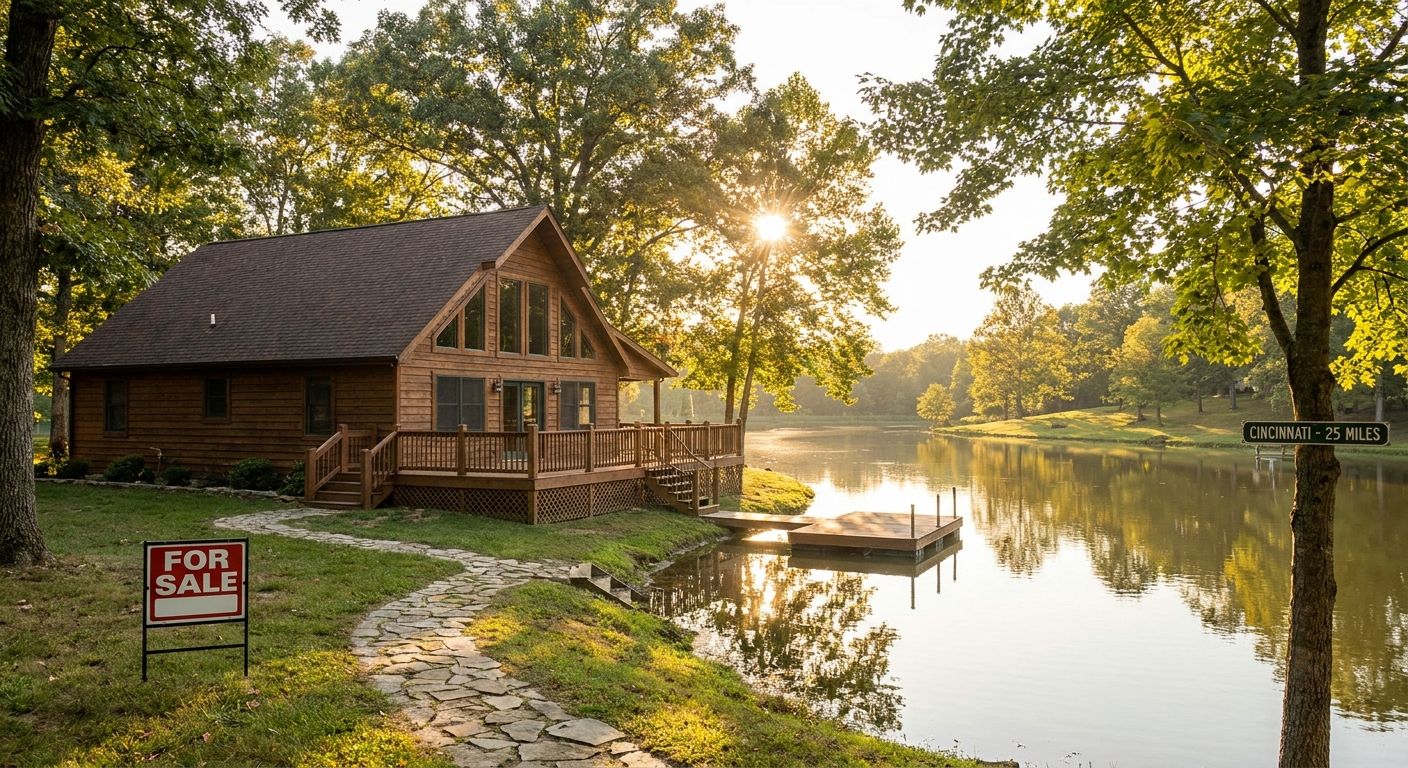
Buying a lake house near Cincinnati means widening your search beyond city limits — the best inventory sits an hour or more outside downtown, around Cowan Lake, Caesar Creek, Grand Lake St. Marys, and the Ohio River corridor toward Portsmouth. Here's the step-by-step process for finding, financing, and closing on one in 2026.
- Most lake house for sale near Cincinnati listings sit 45-90 minutes from downtown, not inside city limits.
- Get pre-approved before you tour waterfront property — lenders treat lake homes differently than standard single-family listings.
- Flood zone and septic inspections matter more here than in a typical Cincinnati suburb purchase.
- Working with an agent who knows Southern Ohio waterfront rules beats a generalist every time.
Why this matters
A lake house is not a bigger version of a suburban home purchase. Financing, insurance, and inspection requirements shift once well, septic, and flood zone status enter the picture. Buyers who skip these steps end up renegotiating mid-contract or losing earnest money on a deal that should never have gone under contract in the first place.
Joey Sandlin has spent over 20 years guiding Southern Ohio buyers and sellers through exactly this kind of transaction, and the process below reflects what actually trips buyers up in 2026 — not generic advice copied from a national buying guide.
What you'll need
- A mortgage pre-approval letter specific to your target price range
- A list of 3-5 target lakes or river-adjacent areas, ranked by drive time to your job
- Cash reserves for a well/septic inspection (separate from a standard home inspection)
- Proof of flood insurance quotes before you write an offer
- An agent who has closed lake or waterfront deals in the last 12 months
The steps
1. Get pre-approved before you start touring
Lenders price lake and waterfront property differently than a standard suburban listing — expect a slightly higher down payment requirement on non-owner-occupied or seasonal-use properties. Getting pre-approved for a mortgage in Cincinnati first tells you your real ceiling before you fall in love with a listing you can't actually finance.
Common mistake: touring $450,000 lake properties with a pre-approval based on a standard primary-residence loan product, then discovering the lender won't finance the specific property type.
2. Define your radius and non-negotiables
Cowan Lake sits roughly 45 minutes northeast of downtown Cincinnati; Grand Lake St. Marys is closer to two hours. Decide upfront whether this is a primary residence, a weekend property, or a future retirement home — that answer changes which lake and which loan product make sense.
Common mistake: buyers chase the prettiest listing photos without checking commute time, then resent the drive within six months.
3. Work with an agent who knows waterfront rules
Septic permits, dock rights, and shoreline easements vary by lake authority and county. Choosing a real estate agent in Cincinnati who has actually closed waterfront deals saves you from discovering a shared-dock dispute after closing.
Common mistake: using the listing agent as your buyer's agent on a lake property — their fiduciary duty is to the seller, not to catching problems that could cost you later.
4. Order a septic and well inspection separately
Most lake properties near Cincinnati run on septic and well systems, not municipal water and sewer. A standard home inspection does not fully test these systems — order a dedicated septic dye test and well flow/quality test, typically $300-$600 combined depending on the county.
Common mistake: relying on the seller's disclosure alone. Septic systems can look fine on paper and still need a $8,000-$15,000 replacement within a few years.
5. Confirm flood zone status and insurance cost
Request a flood zone determination and get an actual insurance quote before you write an offer, not after. Properties in FEMA Zone AE near the Ohio River or lake spillways carry meaningfully higher premiums than a standard homeowner's policy in a Cincinnati suburb.
Common mistake: assuming flood insurance is optional because the lender didn't flag it — some lake lots sit just outside the mapped flood zone but still flood seasonally.
6. Negotiate with contingencies specific to waterfront property
Build in a septic/well contingency and a flood insurance contingency alongside your standard inspection contingency. Negotiating a home offer in Cincinnati on a lake property means protecting yourself on issues a generic purchase agreement doesn't anticipate.
Common mistake: waiving inspection contingencies to win a bidding war on a lake listing — the repair costs on septic and dock systems run higher than on a standard house.
7. Close and confirm dock, easement, and HOA terms in writing
Before closing, get written confirmation of dock rights, lake association fees, and any shoreline easements. Some lake communities charge annual association dues separate from property taxes — know that number before you sign.
Common mistake: discovering a $600-$1,200 annual lake association fee at closing that wasn't disclosed in the listing.
Troubleshooting
- Septic inspection fails: negotiate a credit or repair request before closing — don't assume it's a deal-breaker, but don't absorb the cost either.
- Flood insurance quote comes back higher than expected: re-run your monthly payment math before you waive contingencies; a $2,000+ annual premium changes your real cost of ownership.
- Lender won't finance the property type: ask about portfolio loan products through local credit unions — some lake properties don't qualify for standard conforming loans.
- Dock rights are unclear: request the recorded easement document from the county recorder's office before closing, not a verbal assurance from the seller.
- Appraisal comes in low: lake comps are thinner than suburban comps, so appraisals can lag actual market value — be ready to negotiate or bring cash to close the gap.
Tools and resources
- County auditor's website for flood zone maps and septic permit history
- A lender experienced with non-conforming or portfolio loan products
- How to choose a real estate agent in Portsmouth, Ohio if your search extends toward Southern Ohio's river towns
- Best small towns in Southern Ohio for buying a home for buyers weighing lake access against small-town living
Talk through your lake house search
20+ years guiding Southern Ohio buyers through waterfront purchases.
What to do next
Once financing and area are settled, the next real decision is whether to buy an existing lake property or build. If you're weighing land purchase options in the region, review how land purchases work before you commit to a specific lot.
FAQ
Where do you find a lake house for sale near Cincinnati?
Most lake house for sale near Cincinnati listings sit 45 minutes to two hours outside downtown, around Cowan Lake, Caesar Creek, and Grand Lake St. Marys. Inventory inside city limits is essentially nonexistent since Cincinnati itself has no natural lakes.
Is a lake house harder to finance than a regular home in Ohio?
Yes, in some cases. Properties on septic and well systems, or those in flood zones, may require portfolio loan products instead of standard conforming mortgages, so get pre-approved with a lender who understands the property type.
How much does flood insurance cost on a lake property near Cincinnati?
Cost depends on the FEMA flood zone designation and the property's elevation certificate. Get an actual quote before writing an offer rather than estimating, since premiums vary significantly even between neighboring lots.
Do lake properties near Cincinnati have HOA or association fees?
Many do. Lake communities often charge annual association dues separate from property taxes, covering shared dock maintenance or lake access, and this should be disclosed before you sign a purchase agreement.
Should I waive inspection contingencies to win a lake property bidding war?
No. Septic and well system repairs run higher than standard home repairs, often $8,000 or more, so keep inspection contingencies intact even in a competitive market in 2026.
What's the difference between buying a lake house and a standard Cincinnati suburb home?
Lake properties typically run on septic and well systems, carry flood zone considerations, and may include dock or shoreline easements, none of which apply to a typical suburban purchase.
One last thing
The single biggest cost surprise on lake properties near Cincinnati isn't the purchase price — it's the septic system. A failed system found after closing can run $8,000 to $15,000 to replace, which is why the dye test in step four isn't optional paperwork, it's the difference between a good 2026 purchase and an expensive mistake.