
Assumable mortgages let a Cincinnati buyer take over a seller's existing FHA, VA, or USDA loan instead of originating a brand-new mortgage, and in 2026 that path is drawing buyers who want a rate locked in before the market moved. The process runs through the loan servicer, not a new lender, and the buyer still has to cover the gap between the purchase price and whatever's left on the loan.
- FHA, VA, and USDA loans in Cincinnati are assumable with servicer approval; conventional loans almost never are.
- The buyer covers the equity gap between the sale price and the remaining loan balance, in cash or a second loan.
- Assumption closings run through the loan servicer instead of a new lender and take longer to process than a standard purchase.
- Sandlin Realtors flags which Cincinnati listings carry an assumable mortgage before a buyer writes an offer.
Why this matters
A home with an assumable FHA, VA, or USDA loan carries the seller's original interest rate into the buyer's hands, sidestepping a fresh rate quote entirely. That single feature can change the math on a Cincinnati purchase more than the sale price does, especially in a 2026 rate environment where a locked-in rate from a few years back looks better than anything a new mortgage can offer.
Not every listing has this option, though. The loan type has to qualify, the seller has to agree to structure the sale as an assumption, and the servicer has to approve the new borrower. Joey Sandlin has spent over 20 years working Cincinnati and Southern Ohio real estate, including helping buyers put together a competitive offer in Cincinnati's market, and knows which listings are worth a call to the seller's servicer before an offer goes in.
How to buy a home with an assumable mortgage in Cincinnati
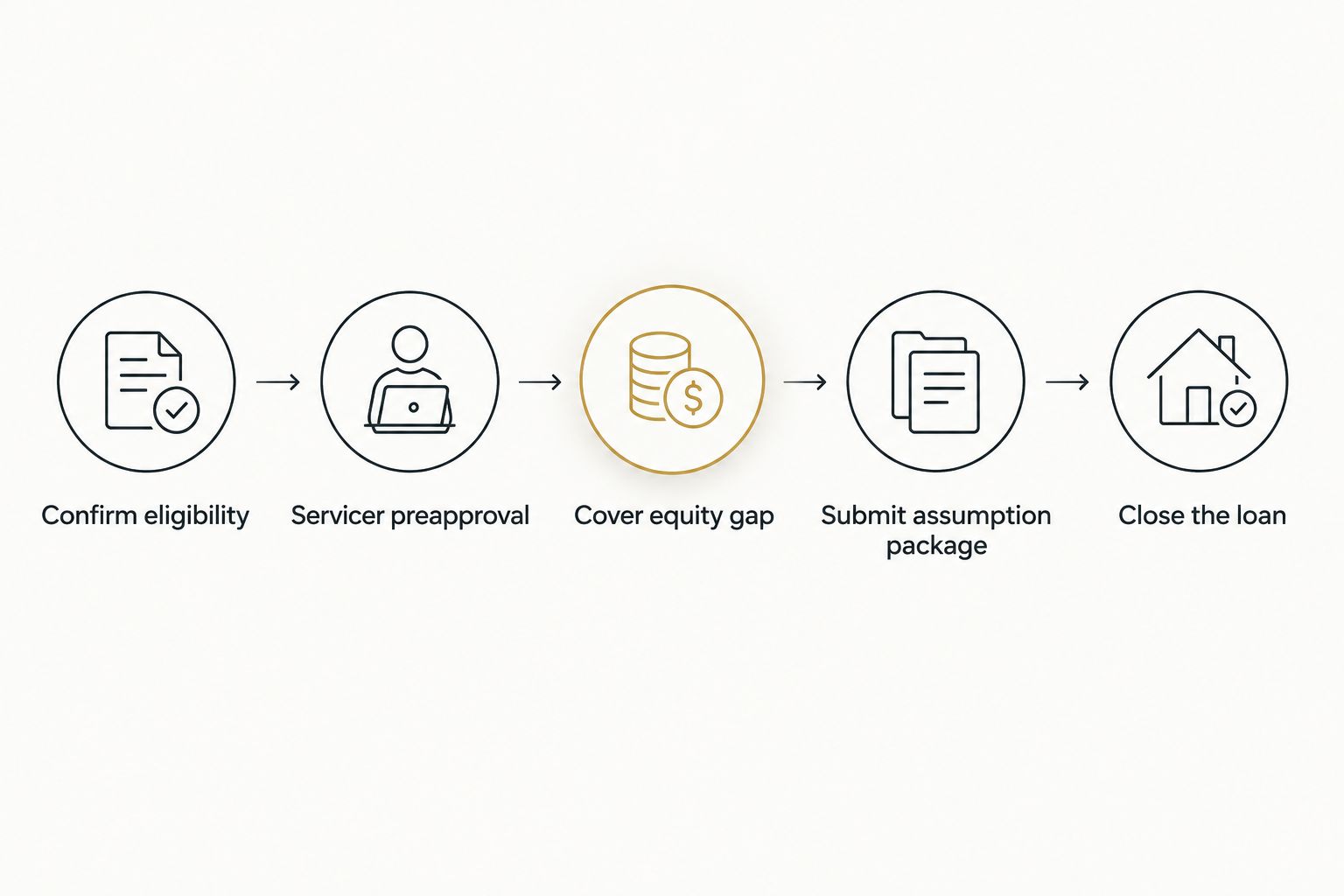
The steps below run in order. Skipping the servicer conversation early is the single most common reason an assumption falls apart mid-contract.
- Confirm the seller's loan type. Ask the listing agent whether the mortgage is FHA, VA, or USDA — the three types that carry assumption clauses. Conventional loans almost always block assumption with a due-on-sale clause.
- Contact the loan servicer, not a new lender. The servicer underwrites you as the new borrower, checking credit and income the same way a lender would for a fresh mortgage.
- Get preapproved by the servicer before writing the offer. Servicer approval, not a lender's preapproval letter, is what makes the assumption real once you're under contract.
- Line up funds for the equity gap. If the seller owes less than the sale price, you cover the difference in cash or with a second loan — that gap is the hidden cost a below-market rate can obscure.
- Submit the assumption package alongside the purchase agreement. Expect income documentation, a credit pull, and, for VA loans, paperwork tied to the seller's entitlement.
- Close as the new loan holder. The closing table looks similar to a standard purchase, but the servicer's sign-off replaces a new mortgage commitment.
| Loan Type | Assumable? | Key Caveat | Best For |
|---|---|---|---|
| FHA | Yes, with servicer approval | Buyer must qualify like a new borrower | Buyers wanting a straightforward assumption path |
| VA | Yes, veterans or non-veterans | Non-veteran assumption ties up seller's entitlement | Veterans preserving VA benefits |
| USDA | Yes, with servicer approval | Property must still meet USDA rural eligibility | Rural or exurban Cincinnati-area buyers |
| Conventional | Rarely | Due-on-sale clause typically blocks assumption | Buyers needing a standard purchase loan |
FHA assumable mortgages in Cincinnati
FHA-backed mortgages originated after December 1, 1986 carry assumption clauses by default, and Cincinnati has plenty of FHA-financed listings sitting on rates set well before today's market. The buyer applies through the servicer, not the seller's original lender, and has to qualify on credit and income like any other FHA borrower.
Best for: buyers who don't need veteran status or rural eligibility and just want the servicer-approval path without extra restrictions. Skip it if the seller's FHA balance is small relative to the sale price — the equity gap can erase the rate advantage fast.
VA assumable mortgages in Cincinnati
VA loans are assumable by veterans and non-veterans alike, which is unusual among government-backed products. A non-veteran assumption ties up the seller's VA entitlement until the loan is paid off or refinanced, so sellers often want that spelled out in writing before agreeing to it. VA loans for Portsmouth homebuyers work the same way on the origination side, worth a read if you're comparing a fresh VA loan against assuming someone else's.
Best for: veterans and non-veterans buying from a seller comfortable trading entitlement flexibility for a faster sale. Skip it if the seller needs full entitlement restored right away.
USDA assumable mortgages in Cincinnati
USDA loans are assumable too, but the property still has to sit inside a USDA-eligible rural area at the time of assumption — a status that can shift as Cincinnati's outer suburbs get reclassified. USDA loans in rural Southern Ohio cover the eligibility basics if you're weighing a USDA assumption against a new USDA loan in 2026.
Best for: buyers already targeting rural or exurban Cincinnati-area properties. Skip it if the address has lost USDA eligibility since the seller closed — the assumption dies with the zoning change.
Why mortgage assumability varies
- Loan type — FHA, VA, and USDA carry assumption clauses; conventional loans backed by Fannie Mae or Freddie Mac almost never do.
- Servicer discretion — some servicers process assumptions faster and with less friction than others, regardless of loan type.
- Buyer qualification — the new borrower still needs credit and income that clears the servicer's underwriting bar, the same as any new mortgage.
- Seller's entitlement (VA only) — a non-veteran assuming a VA loan locks up part of the seller's benefit until it's resolved.
- Property eligibility (USDA only) — the home has to still sit in a qualifying rural zone at closing, not just at origination.
- Size of the equity gap — a seller with little equity makes for an easier assumption; a seller sitting on years of appreciation means a bigger cash requirement for the buyer.
Assumable listings move fast once buyers realize what's on the table. Sandlin Realtors represents buyers across Cincinnati and Southern Ohio — including Portsmouth, Scioto County, Wheelersburg, Lucasville, Otway, Rarden, and South Webster — and can flag which listings carry an assumable FHA, VA, or USDA loan before you tour the property.
Find an assumable mortgage listing
Sandlin Realtors flags Cincinnati listings with FHA, VA, or USDA assumable loans.
Related questions buyers ask
Can you assume a mortgage without a real estate agent in Cincinnati?
You can attempt a mortgage assumption without an agent, but the seller's servicer, the assumption paperwork, and the equity-gap math are easier to navigate with someone who's done it before. Sandlin Realtors handles the servicer conversation and the offer structure so the assumption doesn't stall mid-process.
Does assuming a mortgage require a home appraisal?
An appraisal isn't always required for the assumption itself, though the equity-gap financing used to bridge the difference between price and loan balance may need one. Check with the servicer and whichever lender is financing the gap before assuming it's optional.
Is an assumable mortgage cheaper than getting a new loan in Cincinnati?
An assumable mortgage can be cheaper over the life of the loan if the seller's locked-in rate sits well below current market rates in 2026, but the buyer still pays servicer processing fees and covers the equity gap. Run both scenarios before deciding — the lower rate doesn't always outrun a bigger upfront cash requirement.
FAQ
What is an assumable mortgage?
An assumable mortgage lets a buyer take over the seller's existing loan balance, rate, and terms instead of originating a new mortgage. FHA, VA, and USDA loans in Cincinnati typically qualify; conventional loans usually don't.
Which loans are assumable in Cincinnati?
FHA, VA, and USDA loans are the three types that carry assumption clauses in Cincinnati and across Ohio. Conventional loans backed by Fannie Mae or Freddie Mac almost always include a due-on-sale clause that blocks assumption.
Can a conventional mortgage be assumed?
A conventional mortgage is rarely assumable because most carry a due-on-sale clause requiring payoff when the property sells. A handful of older or specific ARM products are exceptions, so ask the servicer directly if you're unsure.
Who approves a mortgage assumption?
The loan servicer approves a mortgage assumption, not the seller's original lender or the buyer's own bank. The servicer underwrites the buyer's credit and income the same way it would for a new mortgage.
Does the buyer need cash for a mortgage assumption?
The buyer needs cash or a second loan to cover the equity gap, the difference between the purchase price and the remaining loan balance. That gap can be small or substantial depending on how long the seller has owned the home.
How long does a mortgage assumption take to close in Cincinnati?
A mortgage assumption typically takes longer to close than a standard purchase because the servicer, not a new lender, has to process and approve the new borrower. Build extra time into the purchase contract's closing timeline.
Can a non-veteran assume a VA loan?
A non-veteran can assume a VA loan, but doing so ties up the seller's VA entitlement until the loan is paid off or refinanced. Sellers weigh that trade-off before agreeing to a non-veteran assumption.
Does Sandlin Realtors help buyers find assumable mortgage listings in Cincinnati?
Sandlin Realtors works with Cincinnati and Southern Ohio buyers to identify listings with FHA, VA, or USDA loans that qualify for assumption. Joey Sandlin's 20+ years in the market help buyers move quickly once an assumable listing surfaces.
One last thing
An assumable mortgage doesn't assume the seller's home equity — you're buying the house, not inheriting their down payment. A seller who's owned the home for years can have an equity gap larger than a standard 20% down payment would require, which sometimes makes a new conventional loan the cheaper path in 2026 even when the seller's rate looks better on paper. Run the numbers on the gap before you fall for the rate.