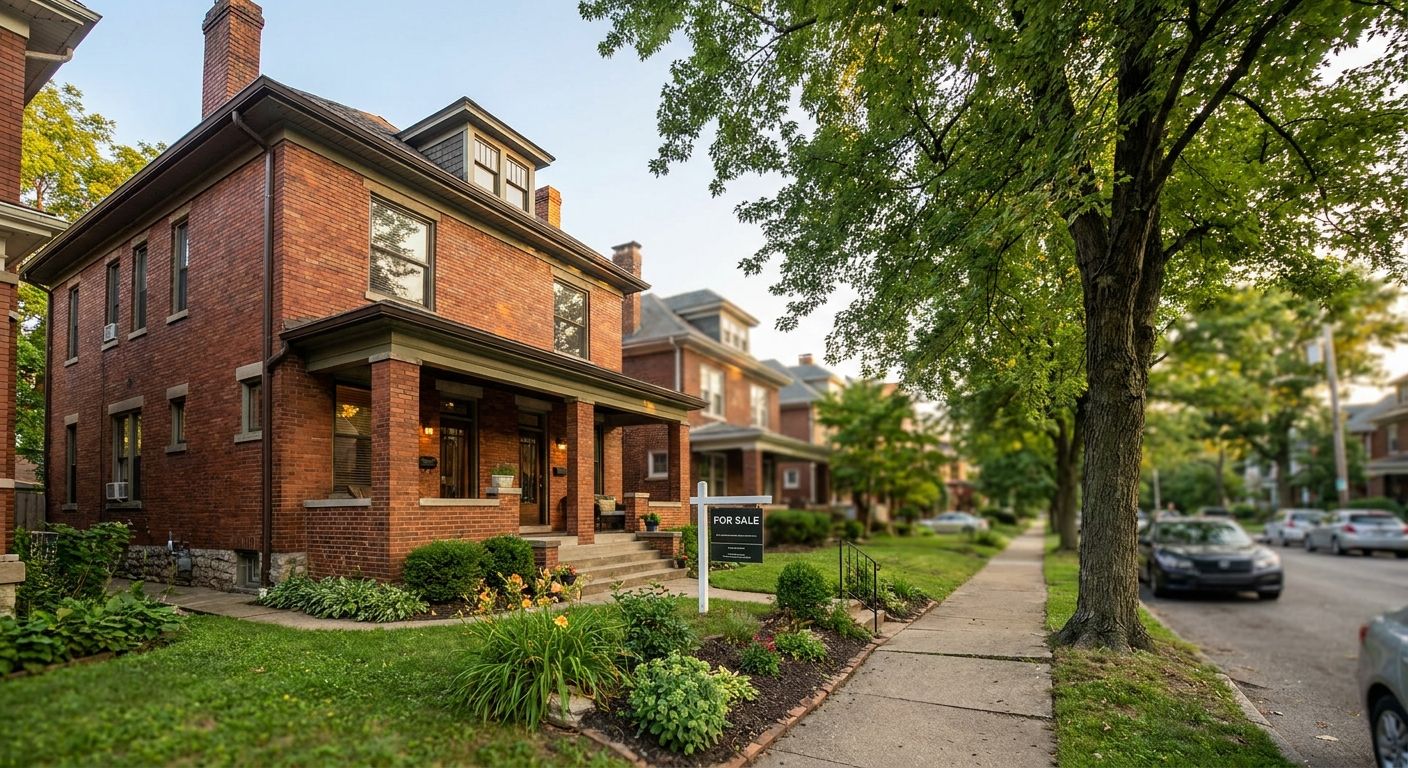
Buying a duplex or multi-family home in Cincinnati means matching the loan to the unit count first, then underwriting the property like a small business. A 2-4 unit building qualifies for residential financing — as little as 3.5% down through FHA if you occupy one unit — while anything with five or more units moves into commercial lending with different down payment and appraisal rules entirely. The second thing buyers miss: lenders want to see the rent roll and expense history before they'll count rental income toward your approval, so that paperwork needs to be ready before you make an offer.
- A multi-family home for sale in Cincinnati with 2-4 units qualifies for FHA financing at 3.5% down if you live in one unit.
- Investor-financed duplexes and triplexes typically need 25% or more down through conventional lenders.
- Buildings with 5+ units require commercial financing, not a standard residential mortgage.
- Get pre-approved and pull the rent roll before writing an offer on any multi-family property in 2026.
Why this matters
A duplex or fourplex behaves like a residential purchase on paper but underwrites like an investment property the moment a lender sees rental income involved. Miss that distinction and you'll shop the wrong loan product, waste weeks with a lender who doesn't do multi-family, or lose a deal because your offer wasn't structured around the building's actual numbers. Getting pre-approved for a mortgage in Cincinnati before you tour anything tells you which unit counts and price points you can actually close on, not just what a Zillow estimate suggests.
How to buy a duplex or multi-family home in Cincinnati
- Decide your occupancy status. Owner-occupied buyers (living in one unit, renting the rest) unlock FHA and conventional owner-occupant terms. Pure investors go straight to investment-property underwriting.
- Get pre-approved for the right loan type. FHA, conventional, and commercial multi-family loans each have separate down payment, reserve, and documentation rules — confirm which one fits before you shop listings.
- Pull the rent roll and expense history. Lenders and you both need current leases, actual collected rent, and trailing 12-month operating expenses, not the seller's optimistic projections.
- Order a multi-unit appraisal. Appraisers value 2-4 unit buildings partly on comparable rents, not just comparable sales, so the appraisal timeline runs longer than a single-family purchase.
- Inspect every unit, not just the vacant one. Occupied units still need access for inspection; build that into your purchase contract's inspection contingency.
- Negotiate, close, and set up landlord operations. Security deposit transfers, existing lease assignments, and tenant notice requirements all need to happen at closing, not after.
Duplex (2 units): 3.5% down if you live in one side
A duplex is the easiest multi-family entry point in the Cincinnati market because it still qualifies for FHA financing at 3.5% down, the same threshold as a single-family home, as long as you occupy one of the two units. Rent from the second unit can offset a portion of your qualifying income under standard FHA guidelines. Buy it as a pure rental with no owner-occupancy and expect a conventional investor loan closer to 25% down instead.
Triplex and fourplex (3-4 units): FHA still works, with one added rule
FHA financing extends to triplexes and fourplexes at the same 3.5% down payment for owner-occupants, but adds a self-sufficiency test: the property's net rental income (after a vacancy factor) must cover the mortgage payment on its own. That test trips up buyers who assumed a 3-4 unit building would qualify exactly like a duplex — verify it during pre-approval, not after your offer's accepted.
5+ unit buildings: commercial financing, no FHA option
Once a property hits five units, it stops being residential real estate in the lender's eyes entirely. Financing shifts to commercial multi-family loans, which are underwritten on the building's income (debt-service coverage ratio) rather than your personal income, typically with shorter amortization schedules and higher down payments. If you're shopping in that range, commercial real estate for sale in Cincinnati covers how that process differs from a residential closing.
Why multi-family financing terms vary
- Occupancy status — owner-occupant vs. pure investor changes which loan programs you qualify for.
- Unit count — 2-4 units stays residential; 5+ units moves to commercial underwriting.
- Credit score and debt-to-income ratio — multi-family purchases carry stricter reserve requirements than a single-family loan.
- Rental income documentation — lenders want leases and collected-rent history, not asking-rent estimates.
- Property condition and reserves — older buildings common in Cincinnati's multi-family stock may need repair reserves set aside at closing.
- Lead-based paint disclosure — federal law requires disclosure for any residential property built before 1978, which covers a large share of Cincinnati's duplex and fourplex inventory.
Talk through your multi-family purchase
Get local guidance on financing, rent rolls, and offer strategy before you tour a listing.
Is a duplex a good investment in Cincinnati?
A duplex works as an investment when the rent from the non-owner-occupied unit meaningfully offsets your mortgage payment, which is the same math FHA's self-sufficiency test runs on 3-4 unit properties. Run the numbers on actual collected rent, not a listing's projected rent, before you commit — a vacant or under-market unit changes the return picture fast. Investment properties for sale in Cincinnati breaks down how to evaluate rental numbers on active listings.
How many units can I buy with an FHA loan?
FHA financing tops out at four units, and that's only with owner-occupancy on one of them. Anything with five or more units requires commercial multi-family financing instead, which is underwritten against the building's income rather than an individual buyer's personal qualification.
Do you need a real estate agent to buy a multi-family property?
Yes, and more so than on a single-family purchase — multi-family deals involve lease reviews, tenant notice requirements, and rent-roll verification that a standard purchase contract doesn't cover on its own. Joey Sandlin has spent 20+ years working Southern Ohio real estate transactions, including the financing and inspection complexities that come with occupied rental units.
FAQ
What down payment do you need for a multi-family home for sale in Cincinnati?
An owner-occupied 2-4 unit property qualifies for FHA financing at 3.5% down in 2026. A pure investment purchase with no owner-occupancy typically requires 25% or more down through a conventional lender.
Can you use rental income to qualify for a multi-family mortgage?
Yes, lenders count a portion of documented rental income toward your qualifying income on 2-4 unit owner-occupied purchases. FHA's self-sufficiency test on 3-4 unit properties requires net rental income to cover the mortgage payment on its own.
Is a fourplex harder to finance than a duplex?
A fourplex isn't harder to finance in terms of down payment — both qualify for the same 3.5% FHA down payment when owner-occupied. The added requirement on 3-4 unit buildings is the self-sufficiency test, which duplexes don't need to pass.
What happens when a multi-family building has 5 or more units?
A 5+ unit building no longer qualifies for residential mortgages and moves into commercial multi-family financing. That financing is underwritten on the property's income rather than your personal income, with different down payment and amortization terms.
Do occupied units get inspected during a multi-family purchase?
Yes, every unit needs inspection access, including occupied ones, and that access should be written into your purchase contract's inspection contingency. Skipping inspection on an occupied unit is one of the most common gaps in multi-family purchase contracts.
Do older Cincinnati duplexes require lead paint disclosure?
Any residential property built before 1978 requires federal lead-based paint disclosure, which covers a large share of Cincinnati's duplex and fourplex stock. Ask for the disclosure documents before you finalize your offer, not after inspection.
What's the biggest mistake first-time multi-family buyers make in Cincinnati?
Shopping listings before confirming which loan type they qualify for is the most common mistake, since FHA, conventional, and commercial terms differ sharply by unit count. Get pre-approved for the specific property type first, then start touring.
One last thing
The self-sufficiency test on 3-4 unit FHA purchases catches more buyers off guard than the down payment ever does — a building can pencil out fine on a spreadsheet and still fail that test if the vacancy factor pushes net rental income below the mortgage payment. Run that math with your lender before you write an offer, not after you're under contract.