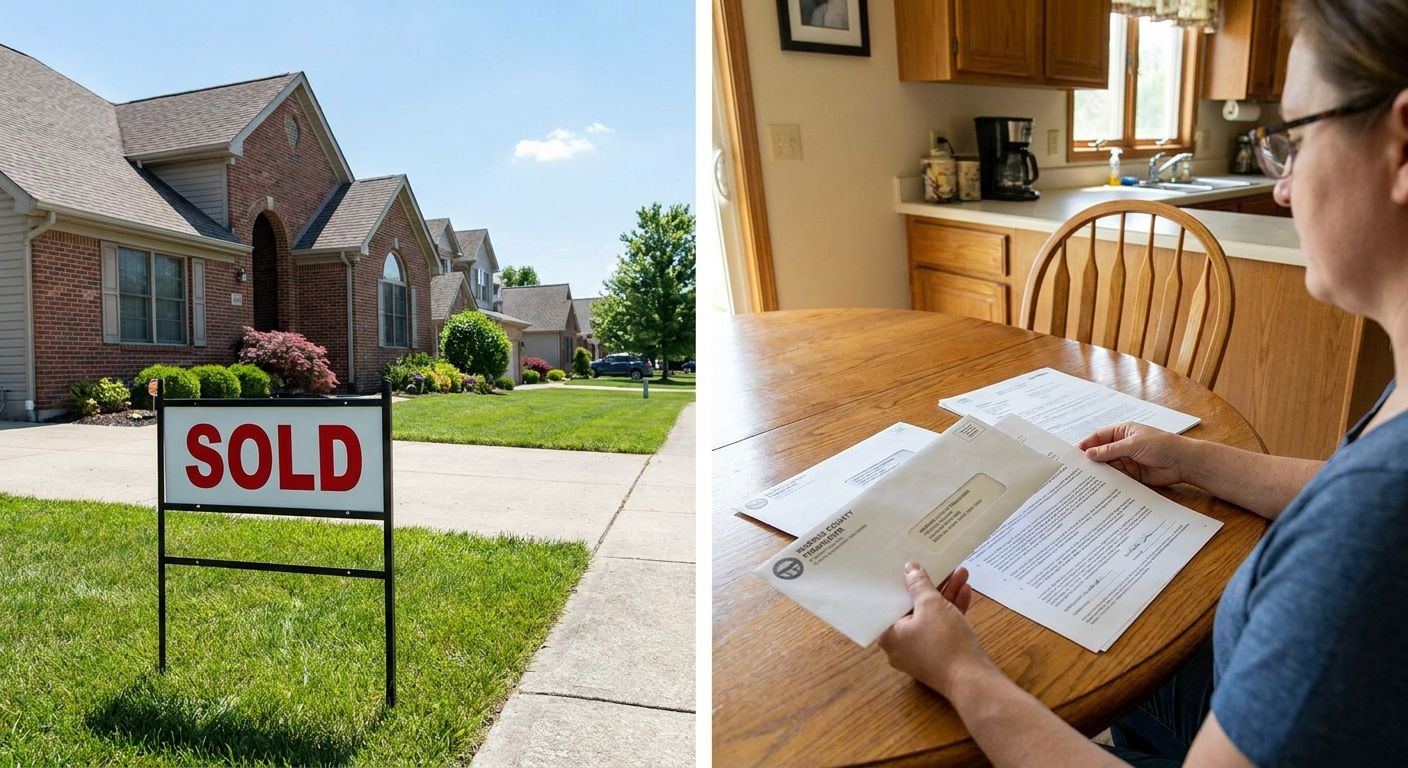
Buying a home in Warren County, Ohio means paying property tax on 35% of the county auditor's appraised market value, not the sale price, and the bill is billed in arrears so the seller owes you a credit at closing in 2026 for the months they still owned the home. That credit, not the sticker-shock annual tax figure, is the part most first-time buyers miss when they review their closing statement.
- Warren County taxes real property at 35% of appraised market value, not the purchase price.
- Ohio bills property taxes in arrears, so sellers credit buyers at closing for time already owned in 2026.
- Owner-occupied homes qualify for a 2.5% tax reduction once the homestead application is filed correctly.
- The auditor reappraises property values every six years, with a lighter update at the three-year mark.
- Sandlin Realtors checks tax prorations on Southern Ohio and Cincinnati-area closing statements before buyers sign.
Why this matters
Property tax proration errors show up on closing day, when there's no time to renegotiate. Warren County's tax structure combines a countywide assessment method with local school, township, and library levies, so two homes a mile apart can carry different effective rates depending on which levies voters approved in that district.
Getting this wrong costs buyers real money at the table. A seller who underpays their prorated share leaves the new owner covering it on the next bill, and a buyer who doesn't ask for the closing costs when buying in Ohio breakdown in writing has no way to catch it before signing.
How property taxes work when buying a home in Warren County, Ohio
The mechanics follow the same statutory process used across Ohio, applied through the Warren County Auditor's office:
- The auditor sets an appraised value for the property based on market data and periodic reappraisals.
- Taxable value is calculated at 35% of that appraised value — this is the assessment ratio used statewide, not something specific to one home.
- Local millage is applied to the taxable value, combining county, township or city, school district, and library levies into one annual figure.
- The bill is issued in arrears, meaning a 2026 tax bill reflects the property's use during the prior tax year, not the current one.
- At closing, the title company prorates the seller's unpaid portion up to the closing date and applies it as a credit to the buyer.
- The buyer takes over responsibility for tax payments going forward, typically due in two installments a year.
That proration step is where most confusion happens. Because Ohio bills in arrears, sellers hand buyers cash at closing to cover taxes for time the seller still owned the home — it's not a fee the buyer pays out of pocket, it's a credit that offsets a bill arriving later in the year.
Owner-Occupancy Credit: a 2.5% reduction for primary residences
Homeowners who occupy the property as their primary residence can qualify for a 2.5% reduction on the tax bill tied to voted levies. This credit doesn't apply automatically to every buyer — it requires filing paperwork with the county after closing, and it doesn't transfer from the previous owner. Skip the filing and you pay the higher rate for that tax year. Verdict: file it the same week you close — there's no reason to leave a 2.5% reduction unclaimed.
Homestead Exemption: relief for senior and disabled homeowners
Homeowners 65 or older, or those who are permanently and totally disabled, can apply for the Homestead Exemption, which reduces the taxable value of the home for qualifying applicants. Income limits apply, and the reduction is separate from the Owner-Occupancy Credit — a qualifying buyer can potentially claim both. Verdict: worth checking eligibility at closing if the buyer fits either category.
CAUV: taxed on farm value, not market value
Land actively used for agriculture can be enrolled in Current Agricultural Use Valuation, which taxes the property based on its agricultural income potential instead of its market value. This matters for buyers looking at working farmland in the county's rural pockets — CAUV enrollment can mean a meaningfully lower bill than a comparable non-farm parcel, but pulling land out of agricultural use later can trigger recoupment of the tax savings. Verdict: confirm CAUV status before closing on any acreage, since it doesn't transfer automatically with a change in use.
Why property tax bills vary across Warren County
- School district levies — schools are typically the largest share of any Ohio tax bill, and levy rates differ by district.
- City vs. township location — incorporated cities and unincorporated townships carry different local millage.
- Voted levies — residents periodically approve new levies for schools, libraries, or safety services, which raise the effective rate in that district.
- Reappraisal timing — Warren County reappraises values on a six-year cycle with an update at the three-year mark, so a home's taxable value can shift even without a sale.
- CAUV or agricultural status — enrolled farmland is taxed differently than residential parcels nearby.
- Owner-occupancy and homestead filings — two identical homes can carry different net bills if only one owner filed for available credits.
“The tax bill on the listing sheet isn't always the bill the new owner will pay — filed credits and levy changes shift it every year.”
How much are property taxes when you buy a home in Ohio?
Property tax in Ohio is calculated on 35% of a home's appraised market value, then multiplied by the local millage rate specific to that taxing district. The exact bill depends entirely on which school district, township or city, and voted levies apply to that address, which is why two nearby homes can carry different totals.
Do buyers or sellers pay property taxes at closing in Ohio?
Both parties handle a piece of it: the seller credits the buyer at closing for the portion of unpaid taxes covering the time they owned the home, since Ohio bills in arrears. After closing, the buyer becomes responsible for all future installments, typically due twice a year.
When are Warren County property tax bills due?
Warren County bills are typically due in two installments, generally landing in late winter and mid-summer, though exact dates shift slightly from year to year. Checking the current due dates directly with the county auditor before closing avoids a missed first payment as the new owner.
Buyers moving through Warren County or the broader Cincinnati corridor benefit from working with an agent who reviews these numbers before the closing table, not after. Sandlin Realtors, led by Joey Sandlin with 20-plus years of Ohio market experience, checks tax prorations and levy history on every closing statement for clients across Southern Ohio and the Cincinnati area — the same scrutiny applies whether the property sits in Portsmouth, Scioto County, or a Warren County suburb.
Get your closing statement reviewed
Talk with an experienced Ohio agent before you sign.
Buyers relocating for a job in the Cincinnati corridor should also line up financing early — working with a Cincinnati-area real estate agent who knows the local levy history saves time once an offer is accepted, and getting pre-approved for a mortgage before house-hunting keeps the tax proration conversation from being a surprise later. Warren County sits inside the wider commuting radius covered in the guide to Cincinnati suburbs, which is worth a look if the search radius isn't locked down yet.
FAQ
What percentage of market value is taxed in Warren County, Ohio?
Warren County taxes real property at 35% of its appraised market value, which is the standard assessment ratio used statewide in Ohio. The remaining 65% of value is not subject to property tax.
Do I pay property taxes at closing when buying a home in Ohio?
You don't pay a new tax at closing, but you receive a credit from the seller covering their prorated share of the current tax bill. That credit offsets the full bill you'll owe once it arrives, since Ohio taxes are billed in arrears.
How often does Warren County reappraise home values?
Warren County reappraises property values every six years, with a lighter update review at the three-year mark. A reappraisal can raise or lower taxable value even if the home hasn't been renovated or sold.
What is the Owner-Occupancy Credit in Ohio?
The Owner-Occupancy Credit is a 2.5% reduction on the portion of a tax bill tied to voted levies, available to homeowners who live in the property as their primary residence. It requires filing an application with the county after closing — it does not carry over from a previous owner.
Can I qualify for both the Homestead Exemption and the Owner-Occupancy Credit?
Yes, an eligible senior or disabled homeowner who also occupies the home as their primary residence can potentially claim both. Each program has separate eligibility rules, so confirm both with the county auditor's office after closing.
How does CAUV affect property taxes on farmland in Warren County?
CAUV taxes enrolled farmland based on its agricultural income potential instead of market value, which usually produces a lower bill on working land. Pulling the land out of agricultural use later can trigger recoupment of the tax savings from prior years.
Why do two homes near each other have different tax bills?
Different school districts, township or city location, and voted levies each affect the local millage rate applied to taxable value. Filed credits like the Owner-Occupancy Credit also change the net bill even on comparable homes.
When is the first property tax bill due after buying a home in Ohio?
The first bill typically arrives on the county's standard semi-annual schedule, generally landing in late winter and mid-summer, though exact due dates shift slightly by year. Confirming the current schedule with the Warren County Auditor before closing prevents a missed first payment.
One last thing
The detail that trips up the most buyers isn't the tax rate — it's the six-year reappraisal cycle. A home bought right before a scheduled reappraisal can see its taxable value shift meaningfully within a year or two of closing, even with zero renovations, simply because the county updated its valuation. Ask where Warren County sits in its current reappraisal cycle before you finalize a budget built around this year's tax bill.