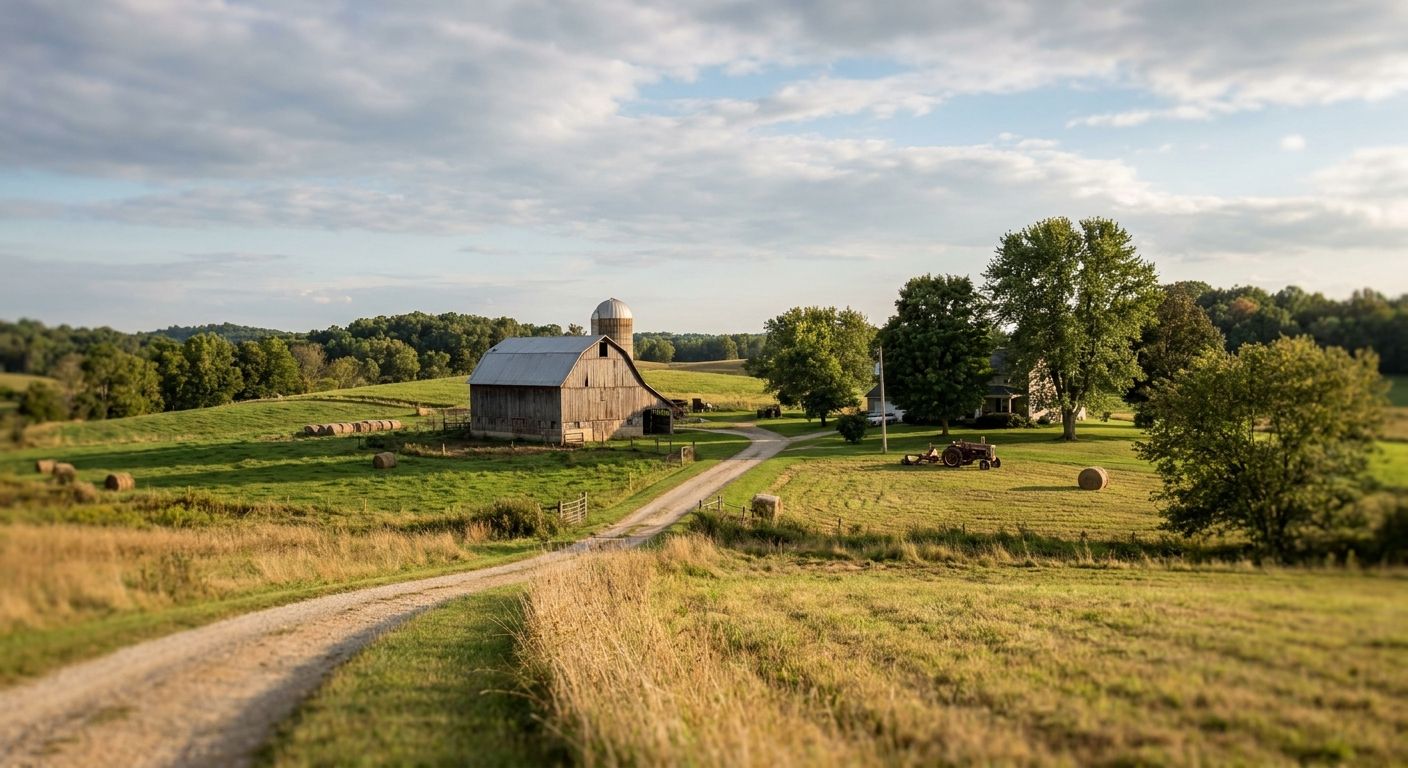
Farms and acreage for sale in Southern Ohio suit buyers who want space, privacy, or land to work — hunting ground near Otway, hobby-farm pasture outside Wheelersburg, or a homestead site in Scioto County. Buying rural land takes different diligence than buying a house in town: zoning, water access, financing, and legal road access all work differently once you're past the city line.
- Farms for sale in Southern Ohio require zoning, water, and access checks that in-town homes don't — do them before you tour.
- Rural loans typically need larger down payments and longer appraisal timelines than a conventional home loan.
- A farm lane isn't legal access — only a recorded easement or deeded road frontage guarantees it.
- Sandlin Realtors, led by Joey Sandlin, has covered Southern Ohio rural transactions for 20+ years across Portsmouth and Scioto County.
Why this matters
Acreage buyers hit surprises that homebuyers rarely see. A parcel with no recorded easement can leave you land-locked even if a farm lane has crossed it for years. A well that needs drilling or an electric line that has to run half a mile changes your real budget by thousands before you've unpacked a box.
Most rural parcels in buying a rural property in Southern Ohio don't move like in-town listings, either — fewer comparable sales, longer time on market, and more properties that trade by word of mouth before they ever hit the MLS. That changes how you search, how you negotiate, and who you need reviewing the paperwork.
How to buy farms and acreage in Southern Ohio
Define what you actually need the acreage for
Acreage purchases fail most often because the buyer never nailed down the use case before shopping. Get specific before you tour anything:
- Hunting or recreation ground with minimal improvements
- Hobby farm or pasture for livestock
- A homestead building site with room to expand
- Timber acreage held as a long-term investment
- Privacy or buffer acreage attached to an existing home
Each use case points you toward a different parcel shape, soil type, and price range — sort this out first.
Pull zoning and land-use records before you tour
County records tell you more than a listing photo ever will. Check these before you spend a Saturday driving out to see a parcel:
- County zoning classification and any agricultural exemption (CAUV) status
- FEMA floodplain overlay for the parcel
- Recorded easements or right-of-ways crossing the property
- Mineral and timber rights — confirm whether they're included with the surface rights
- Any pending variance requests or zoning changes nearby
Confirm water, septic, and utility access
Rural utilities aren't a given the way they are inside city limits. Verify these before you assume a site is buildable:
- Well feasibility, or distance to the nearest rural water district tap
- Septic system age and whether a perc test has been run
- Distance to the nearest electric line and estimated drop cost
- Propane availability if natural gas doesn't reach the parcel
- Cell signal and broadband coverage at the actual building site, not just the road
Walk the ground and check the soil
A site visit tells you what paperwork can't. Bring these questions with you:
- Pull the USDA NRCS soil survey for the parcel
- Note slope and drainage patterns, especially near any planned building site
- Confirm the tillable-versus-wooded acreage split matches the listing
- Check the FEMA flood zone designation against low spots you see in person
- Ask whether standing timber has ever been appraised or harvested
Land near the river corridor comes with its own checklist — see properties near the Ohio River for flood-zone and access considerations specific to that terrain. Buyers focused specifically on hunting and recreation land should weigh timber cover and game access the same way a farmer weighs tillable acreage.
Verify legal access and boundary lines
This is the step buyers skip most often, and it causes the most expensive regret. Confirm:
- Recorded deeded road access — not just a farm lane that's been used for years
- A current survey or plat, not the county's rough tax map
- Any fence line agreements or disputes with adjoining landowners
- Whether adjoining parcels are owned by family, absentee owners, or an unresponsive estate
- Whether the access road is publicly maintained or privately shared
A farm lane used for decades still isn't legal access without a recorded easement. Get title work confirming access before you write an offer, not after.
Line up financing built for rural land
Acreage loans move on a different timeline than a standard mortgage. Expect:
- USDA Rural Development or Farm Credit loan programs designed for rural parcels
- A larger down payment expectation than a conventional in-town home loan
- Longer appraisal timelines, since rural comps are harder to find
- Different terms for land-only purchases versus land-plus-structure deals
- Lender requirements tied to well, septic, or access documentation you gathered in earlier steps
Work with an agent who tracks rural inventory
Many of the best parcels never make it to a national listing site before they sell. Working with an agent who covers Southern Ohio rural transactions closes that gap:
- Access to word-of-mouth listings before they hit MLS
- County assessor and auditor records pulled during due diligence, not after
- Local knowledge of closing timelines and title work specific to rural parcels
- Negotiation leverage on acreage that's sat listed longer than a typical in-town home
For buyers focused on the Portsmouth market specifically, land for sale in Portsmouth covers local inventory patterns in more detail, and buyers searching countywide should read find a realtor in Scioto County before choosing representation.
Joey Sandlin has represented buyers and sellers across Southern Ohio for 20+ years, covering Portsmouth, Scioto County, Wheelersburg, Lucasville, Otway, Rarden, and South Webster — the exact territory where these access, water, and zoning questions come up most.
Talk through your acreage search
Get local guidance on zoning, water access, and financing before you make an offer.
Comparing your options for buying acreage
| Option | Best for | Key limitation |
|---|---|---|
| MLS-listed acreage | Buyers who want inspected, disclosed listings | Fewer parcels than the in-town market, slower turnover |
| FSBO or word-of-mouth land | Buyers with local connections and flexible cash | No agent vetting on title, easements, or access issues |
| County land auction | Buyers comfortable moving fast on as-is terms | Short due diligence window, usually no financing contingency |
| Working with Sandlin Realtors | Buyers who want zoning, water, and access issues flagged before an offer | Requires signed representation, same as any brokered purchase |
Verdict: buyers who want zoning, access, and financing issues caught before an offer — not after closing — are best served working with an agent who covers rural Southern Ohio directly.
Common mistakes acreage buyers make
- Assuming a homesite is buildable without a perc test on file
- Treating a farm lane as legal access when no recorded easement exists
- Underestimating well-drilling or electric drop costs before setting a budget
- Assuming rural water or broadband reaches every parcel in Scioto County
- Making an offer on acreage based on drone photos alone, without a ground walk
FAQ
What's the best way to find farms for sale in Southern Ohio?
Combine MLS searches with an agent who tracks word-of-mouth rural listings, since many acreage parcels in Scioto County and surrounding townships sell before they're widely advertised. County auditor records also surface parcels not yet formally listed.
How much land do I need for a hobby farm?
There's no fixed minimum — it depends on livestock type and pasture rotation plans. Confirm the tillable-versus-wooded split on any parcel before assuming it supports your intended use.
Do I need a well and septic system on rural Ohio property?
Most acreage outside city limits relies on a private well and septic system rather than municipal utilities. Check septic age and perc test status, and confirm well feasibility, before making an offer.
Is financing different for farms and acreage than for a house?
Yes. Rural land loans through USDA Rural Development or Farm Credit programs typically require a larger down payment and a longer appraisal timeline than a conventional home mortgage.
What is CAUV and does it affect farmland taxes?
CAUV (Current Agricultural Use Value) is an Ohio tax program that values qualifying farmland based on its agricultural use rather than market value, which can lower property taxes. Check a parcel's current CAUV status with the county auditor before buying.
Can I hunt on land immediately after buying it in Ohio?
Once you hold title, you can hunt your own land subject to Ohio Department of Natural Resources regulations and any local ordinances. Confirm there are no recorded hunting leases or access agreements tied to the parcel before closing.
How do I check if a rural property has legal road access?
Pull a title search and current survey to confirm recorded deeded access or an easement — a farm lane that's been used for years is not the same as legal access. Title work should confirm this before you write an offer.
Should I use a real estate agent to buy land in Scioto County?
An agent who works rural Southern Ohio transactions regularly can flag zoning, water, and access issues that a generalist agent might miss. That local knowledge matters more on acreage than on a standard in-town home purchase.
One last thing
The detail buyers regret skipping most isn't the soil report or the water test — it's the recorded easement. A farm lane that's been used for decades feels like access, but without a recorded easement or deeded road frontage, you can end up owning land you can't legally reach. Get title work confirming access before you write an offer, not after you've already fallen for the parcel.