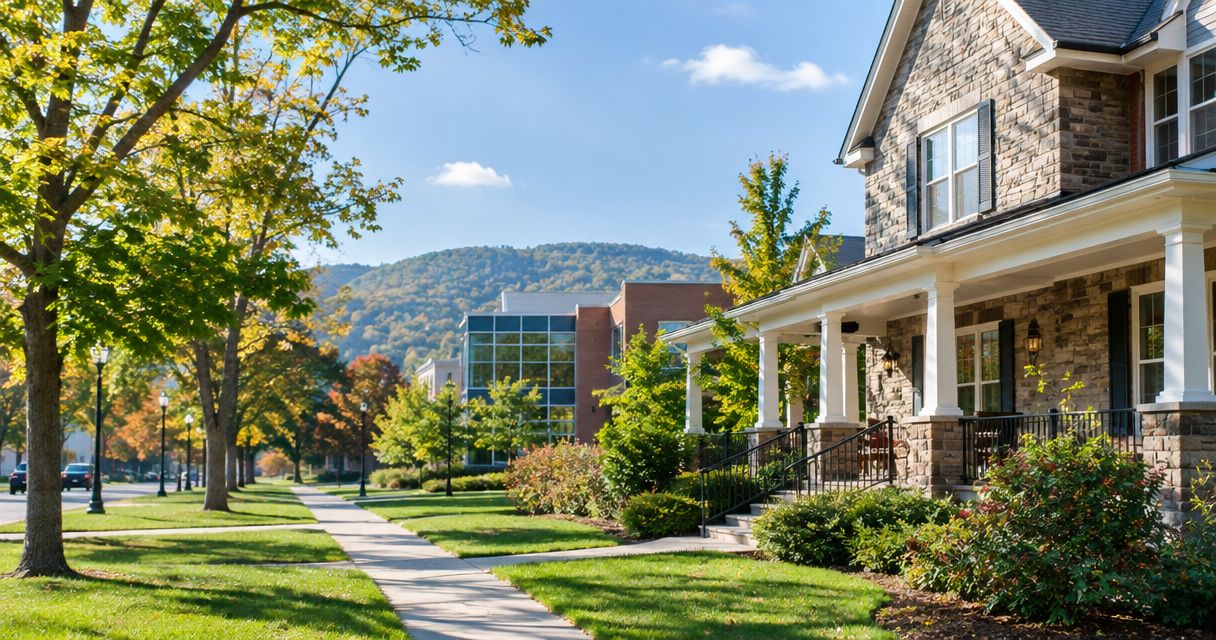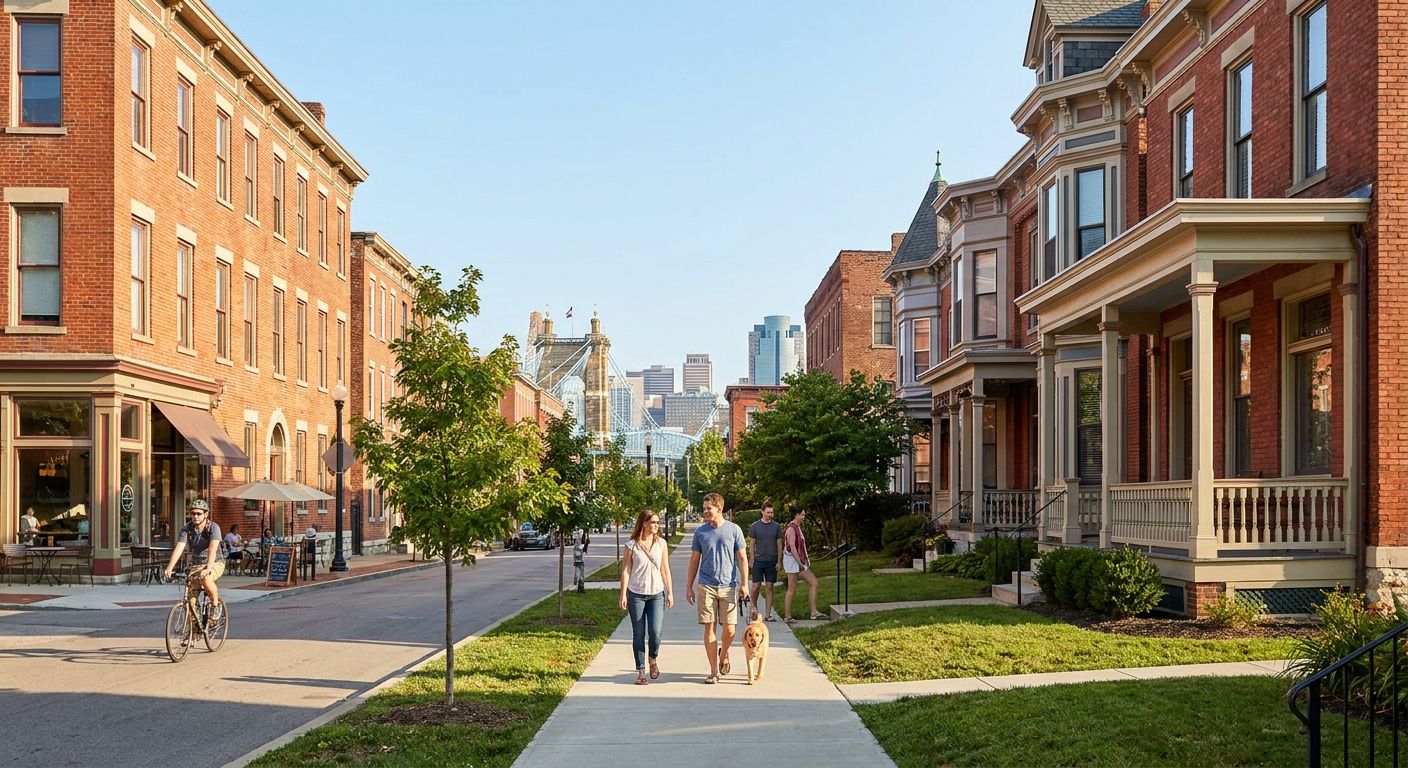
Best overall: Over-the-Rhine. Best for families who want a walkable square: Hyde Park. Best car-light lifestyle: Downtown Cincinnati. These are the walkable neighborhoods Cincinnati homes buyers shortlist most often in 2026—each strong on daily errands on foot, with clear tradeoffs on parking, noise, and inventory pace.
- Over-the-Rhine leads walkable neighborhoods Cincinnati homes shoppers want in 2026.
- Hyde Park wins for walkable squares plus a calmer residential grid.
- Downtown fits buyers who will truly live without a daily car.
- Rank on errands, hills, parking, and noise—not hype photos.
- Sandlin Realtors helps Southern Ohio buyers compare fit before offers.
Why this matters
Walkability is not a vibe score. It is whether you can handle groceries, coffee, school drop-offs, and a weeknight dinner without starting the car. In Cincinnati’s 2026 market, that filter shrinks the map fast: a handful of core neighborhoods deliver true sidewalk living; most suburbs do not.
Buyers who skip this screen often pay twice—once at closing, again in time and parking friction. If you are also weighing first-purchase timing, pair this ranking with a clear read on best Cincinnati neighborhoods for first-time homebuyers. Sandlin Realtors works high-touch representation for Southern Ohio buyers and sellers, including Joey Sandlin’s 20+ years of local guidance when the shortlist needs a hard reality check.
What makes the best walkable neighborhoods Cincinnati homes buyers can trust
Use these six criteria before you fall for a listing photo:
- Daily-errand radius — groceries, pharmacy, coffee, and a hardware stop inside a real walking loop, not a single cute block.
- Sidewalk continuity — continuous pavement, lighting, and crosswalks; dead-end paths kill “walkable” claims.
- Transit and downtown access — bus corridors or a short ride into the core for days you leave the car home.
- Topography — Cincinnati hills cut true walk range; a flat grid beats a scenic staircase for Tuesday logistics.
- Parking and guest reality — street permit rules, garage scarcity, and what visitors actually do at 7 p.m.
- Noise and block character — nightlife density, stadium spillover, and whether the residential streets stay quiet after dinner.
Walkable Cincinnati neighborhoods at a glance
| Neighborhood | Best for | Standout feature | Key limitation |
|---|---|---|---|
| Over-the-Rhine | Overall urban walkability | Findlay Market + dense dining grid | Nightlife noise; tight parking |
| Hyde Park | Families wanting a walkable square | Hyde Park Square retail core | Higher entry competition |
| Oakley | Dining-forward professionals | Oakley Square + Madtree corridor energy | Can feel busy on peak nights |
| Downtown | Car-light or car-free living | Jobs, venues, riverfront access in one footprint | Limited classic single-family stock |
| Mount Adams | Compact hillside village living | Tight streets, views, short loops | Steep grades; tiny inventory |
| Clifton | Campus-adjacent mixed living | Ludlow Ave. corridor + park access | Student-year traffic patterns |
| Northside | Arts-forward value hunters | Independent shops on Hamilton Ave. | More block-to-block variation |
1. Over-the-Rhine: best walkable neighborhoods Cincinnati homes pick for overall urban life
Over-the-Rhine (OTR) is the default answer when buyers want sidewalk density without leaving the city. Findlay Market anchors the grocery run; restaurants, coffee, and entertainment stack within a few blocks. Italianate stock and renovated flats dominate what hits the market in 2026.
Over-the-Rhine pros:
- True errand loop without a car on most weekdays
- Strong food and culture density year-round
- Short hop to Downtown jobs and venues
- Active street life that keeps blocks used after dark
Over-the-Rhine cons:
- Nightlife and event noise on prime corridors
- Parking scarcity for owners and guests
- Renovated inventory moves fast when priced right
Best for: Buyers who want maximum walkable urban energy and will trade quiet nights for access.
Verdict: Buy if you already live car-light and want the densest Cincinnati walking grid. Hold if you need guaranteed off-street parking every night.
2. Hyde Park: best walkable square for established households
Hyde Park pairs a real commercial square with residential streets you can actually walk with kids or dogs. Hyde Park Square concentrates restaurants, services, and retail; surrounding blocks feel more settled than OTR’s party corridors. In 2026 it remains the walkable choice for buyers who want amenities without full downtown intensity.
Hyde Park pros:
- Square-centered errands and dining
- Strong curb appeal on many residential blocks
- Calmer nights than core entertainment districts
- Easy mental map for guests and deliveries
Hyde Park cons:
- Competitive offers on well-kept listings
- Not every side street matches square walkability
- Street parking still tight near the square
Best for: Households that want walkable daily life plus a more residential rhythm.
Verdict: Buy when the block itself walks to the square—not merely “Hyde Park” on the pin.
3. Oakley: best for dining-and-weekend walkability
Oakley gives professionals a walkable commercial spine without committing to Downtown towers. Oakley Square and the surrounding food corridor cover weeknight plans; residential pockets nearby absorb the commute home. It ranks high for buyers who measure walkability in restaurants and coffee first.
Oakley pros:
- Dense dining and brewery access on foot
- Clear “center of gravity” for weekend plans
- Mix of housing types near the square
- Livelier than quiet suburbs, softer than OTR peak nights
Oakley cons:
- Popular strips get congested at peak hours
- Walk quality drops quickly off the main corridors
- Limited pure quiet if you need dead-silent blocks
Best for: Buyers who walk for food, coffee, and social plans more than for a full car-free life.
Verdict: Buy for lifestyle walkability. Skip if your non-negotiable is silence at 11 p.m. every night.
4. Downtown Cincinnati: best for car-light and car-free living
Downtown wins when the job, the gym, the venue, and the grocery run all sit inside one compact footprint. Riverfront access, offices, and entertainment reduce mandatory driving. Housing skews toward condos and renovated units more than big yards—which is the point for this use case in 2026.
Downtown pros:
- Highest job and venue proximity in the city
- Strongest case for owning one car—or none
- Walkable access to the riverfront and major events
- Simple logistics for travelers and remote-office hybrids
Downtown cons:
- Thin supply of classic single-family homes
- Event nights change noise and traffic patterns
- HOA rules and condo budgets need full diligence
Best for: Buyers designing a genuinely car-light week, not a “sometimes walk to dinner” hobby.
Verdict: Buy if your calendar already lives downtown. Wait if you still need a yard-first layout.
5. Mount Adams: best compact hillside village
Mount Adams is a small, steep, highly walkable village above the basin. Streets are tight; loops are short; views are part of the product. Inventory is limited, so 2026 buyers should expect patience and sharp offer prep—not endless browsing.
Mount Adams pros:
- Village scale you can learn in a weekend
- Distinct character and overlook setting
- Short internal walks to local spots
- Clear separation from basin traffic patterns
Mount Adams cons:
- Hills punish casual “walk everywhere” claims
- Very limited listings at any given time
- Guest parking is a recurring friction point
Best for: Buyers who want intimate scale and will accept grades and scarce stock.
Verdict: Buy only after you walk the hills at your normal pace—twice. Skip if mobility or frequent guests are constraints.
6. Clifton: best campus-adjacent walkable living
Clifton centers on the Ludlow Avenue corridor, nearby parks, and university-adjacent energy. Buyers get sidewalk retail and green space without living inside the basin’s event calendar. Block quality varies, so street-level touring matters more than ZIP-code averages.
Clifton pros:
- Ludlow corridor covers many daily needs
- Park access supports real outdoor routines
- Mix of housing styles near walkable nodes
- Useful base for academic and hospital-area workers
Clifton cons:
- Student-year rhythms affect traffic and rentals nearby
- Not every street matches Ludlow’s convenience
- Parking pressure near popular blocks
Best for: Buyers tied to campus or hospital corridors who still want neighborhood walkability.
Verdict: Buy on streets that actually connect to Ludlow on foot. Hold on edge blocks that force a drive for basics.
7. Northside: best arts-forward walkable value hunt
Northside’s Hamilton Avenue spine delivers independent shops, food, and a creative street culture. Walkability is real on the commercial core; residential side streets need a block-by-block read. For 2026 buyers priced out of Hyde Park or prime OTR, it is the walkable alternative that still feels urban.
Northside pros:
- Distinct local retail and food identity
- Lower entry point than several core peers (in relative terms)
- Genuine sidewalk culture on the main spine
- Room to choose quieter residential pockets nearby
Northside cons:
- Bigger quality swings from block to block
- Fewer “everything in one square” guarantees
- Some buyers want more polished streetscapes
Best for: Buyers who value independent businesses and will tour micro-locations carefully.
Verdict: Buy after two different dayparts on the same blocks. Hold if you need uniform polish on every street.
Shortlist your Cincinnati blocks
Get high-touch guidance before you write an offer in 2026.
How we ranked
Rankings follow the six criteria above: errand radius, sidewalk continuity, transit and core access, topography, parking reality, and noise character. Neighborhoods earn a use-case slot only when that slot is distinct—no two “best overall” claims. Sandlin Realtors applies the same homeowner-outcome filter Joey Sandlin has used across 20+ years in Southern Ohio: lifestyle fit first, listing gloss second. No paid placements. No invented walk scores.
Which walkable neighborhood should you choose?
If you want one default in 2026, start with Over-the-Rhine for pure sidewalk density. Choose Hyde Park when the household needs a square plus calmer residential blocks. Choose Downtown only if you will actually drop the daily car. Use Oakley for food-led weeks, Mount Adams for village scale, Clifton for campus adjacency, and Northside when you want walkable character with more pricing flexibility.
Quotable rule: The best walkable neighborhoods Cincinnati homes buyers keep are the ones where Tuesday errands work on foot—not the ones that photograph well on Saturday.
Before you bid, lock financing timing and walk the exact block at commute hour and after dark. Sandlin Realtors can pressure-test that shortlist against real inventory and offer strategy.
FAQ
What are the most walkable neighborhoods in Cincinnati for homes in 2026?
Over-the-Rhine, Hyde Park, Oakley, Downtown, Mount Adams, Clifton, and Northside lead for walkable neighborhoods Cincinnati homes buyers compare in 2026. OTR ranks best overall for daily errands on foot.
Is Over-the-Rhine a good place to buy a walkable home?
Yes—Over-the-Rhine is the strongest all-around walkable pick for urban buyers who accept nightlife noise and tight parking. Tour the exact block at night before you offer.
Which walkable Cincinnati neighborhood is best for families?
Hyde Park is the best walkable family-oriented choice among the core set because of Hyde Park Square and calmer residential streets. Confirm school logistics and parking on the specific block.
Can you live in Cincinnati without a car in 2026?
Yes in Downtown and parts of Over-the-Rhine if your job and errands stay local. Most other neighborhoods still work better with at least one shared car for hills, bulk trips, and regional travel.
Is Hyde Park more expensive than other walkable Cincinnati areas?
Hyde Park typically draws stronger competition on well-kept homes near the square than Northside or some Clifton blocks. Price the micro-location, not the neighborhood name alone.
How do hills affect walkability in Cincinnati?
Hills shrink real walking range even when a map looks close. Mount Adams and some basin-edge streets feel short by distance and long by grade—test them with groceries in hand.
Should first-time buyers focus on walkable Cincinnati neighborhoods?
Only if walkability is a daily requirement, not a weekend preference. First-time budgets often stretch further outside the densest cores, so rank must-haves before you tour.
How can Sandlin Realtors help with walkable Cincinnati homes?
Sandlin Realtors provides high-touch buyer guidance grounded in Southern Ohio market experience, including Joey Sandlin’s 20+ years helping clients match lifestyle needs to the right block before they negotiate.
One last thing
The fastest way to kill a “walkable” shortlist is a single daytime open house. In 2026, walk your final two blocks once at 8:00 a.m. and once after 9:00 p.m. If the errand loop still works and the noise still feels livable, you have a real contender—not a brochure neighborhood.