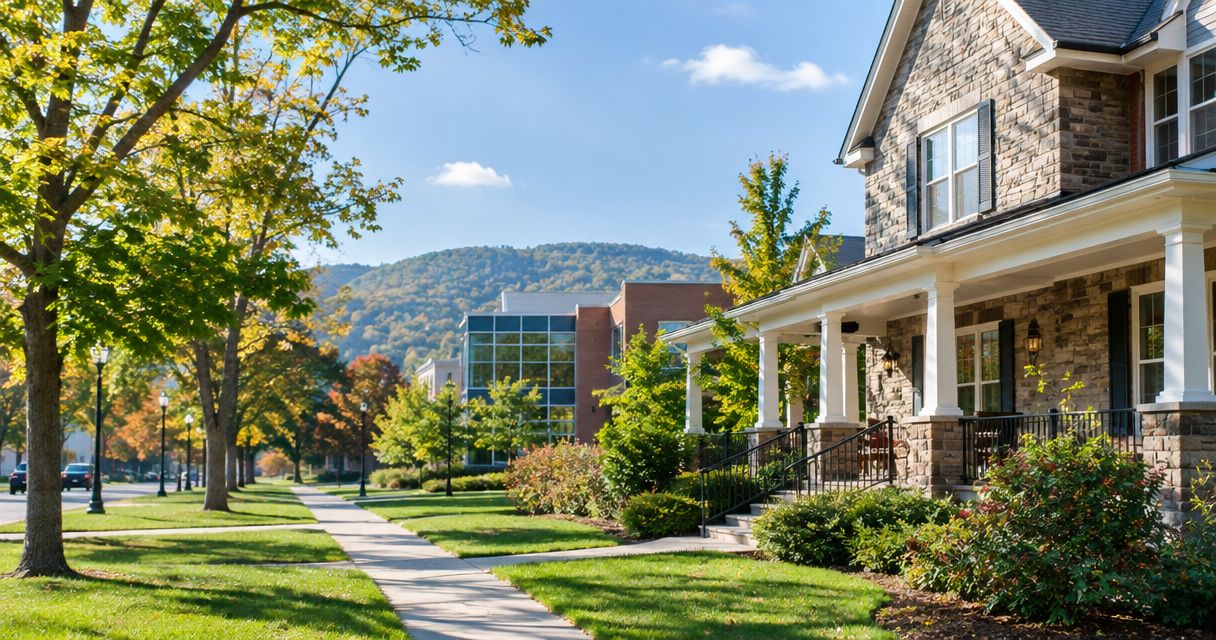
Six Cincinnati neighborhoods have the mix of legal two-family zoning, dependable renter demand, and street-level livability that makes a duplex work as an owner-occupied investment in 2026. Best overall: Northside. Best for a downtown commute: Walnut Hills. Best budget entry point: East Price Hill.
- Northside is the best overall pick among Cincinnati neighborhoods for house hacking a duplex in 2026 — walkable, dense double stock, strong renter demand.
- East Price Hill has the widest inventory of century-old doubles in the city, making it the budget entry point.
- Walnut Hills wins for owner-occupants who want the shortest commute to downtown.
- Norwood and Clifton Heights each pull from a fixed renter pool — Xavier/hospital staff and UC students.
- FHA financing lets an owner-occupant buy a 2-4 unit property with as little as 3.5% down, with a 12-month occupancy requirement.
Why this matters
House hacking a duplex only pencils out if the neighborhood does two jobs at once: it has to be somewhere you'll actually live for at least the first year, and it has to attract renters reliably enough that the second unit offsets a real chunk of your mortgage. Cincinnati is unusually well suited to this because so much of its housing stock — Northside, Price Hill, Walnut Hills, Norwood, Westwood, Clifton Heights — was built as legal two-family homes before single-family-only zoning became the citywide default.
That history matters in 2026 because it means the duplex use is already baked into the property, not something you're fighting a variance to add. Sandlin Realtors' guide to house hacking a duplex in Cincinnati covers the financing and inspection side in more detail; this page ranks where to actually buy.
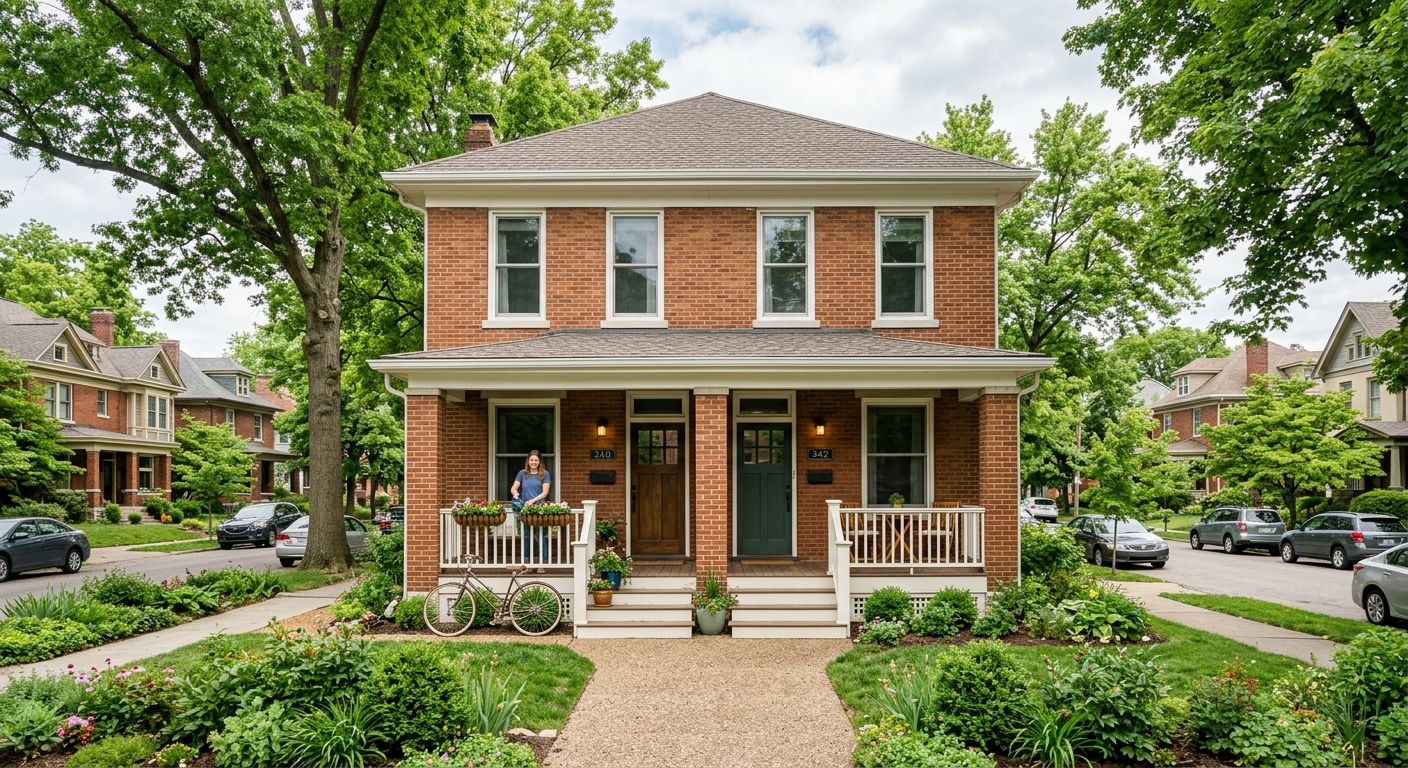
The classic version of this property is a two-story frame or brick double with a shared front porch split into two doors, one unit stacked over the other or side by side. Cincinnati has thousands of these left standing across its older streetcar suburbs, and most are still zoned for exactly the use they were built for.
What makes the best Cincinnati neighborhood for house hacking
- Legal two-family zoning already in place — no variance, no rezoning fight
- A fixed renter demand anchor — a university, hospital system, or employer corridor nearby
- A commute or lifestyle the owner-occupant will actually tolerate for the required occupancy period
- Housing stock old enough to have the duplex layout, not distressed to the point of a gut renovation
- A rent roll strong enough to offset a meaningful share of the mortgage payment
- Resale demand on the street, in case the owner-occupant later converts the property back to single-family
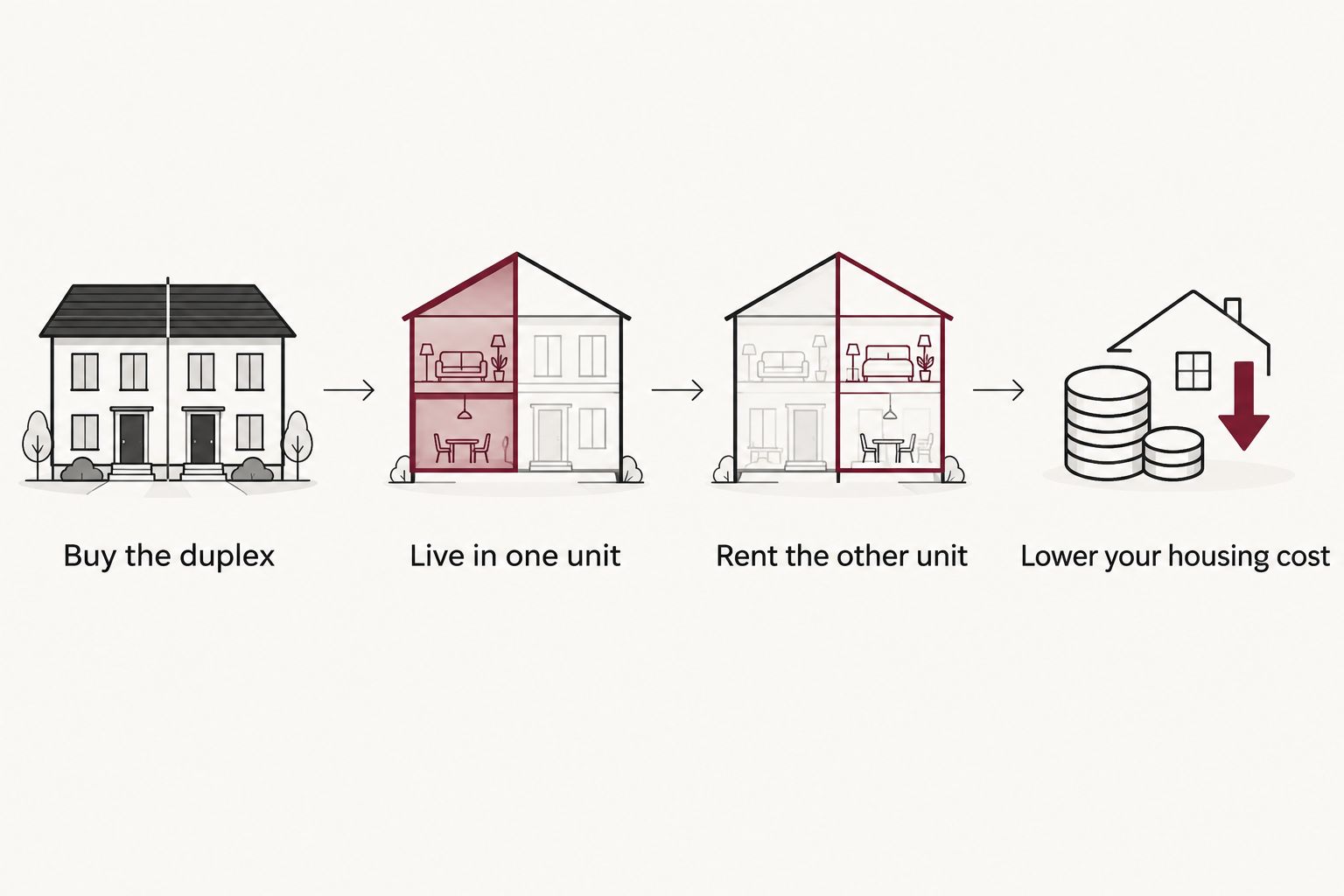
The house hacking mechanism, in order
Cincinnati house hacking neighborhoods at a glance
| Neighborhood | Best for | Standout feature | Key limitation |
|---|---|---|---|
| Northside | Overall balance | Walkable business corridor, dense double stock | Investor competition drives up bidding |
| East Price Hill | Budget entry point | Widest inventory of century-old doubles in the city | Condition varies block to block |
| Walnut Hills | Downtown commute | Shortest drive to downtown employers | Reinvestment still uneven street to street |
| Norwood | Independent rental demand | Own city services, close to Xavier/hospital corridor | Separate city tax structure to factor in |
| Westwood | Inventory scale | Largest neighborhood in Cincinnati by population | Requires pocket-by-pocket homework |
| Clifton Heights | Student renter demand | Walking distance to UC campus and the medical center | Higher tenant turnover, academic-year leases |
1. Northside: best Cincinnati neighborhood for house hacking overall
Northside pairs a walkable Hamilton Avenue business strip — breweries, coffee shops, independent retail — with a deep stock of two-story frame doubles on the surrounding side streets. The renter pool skews toward young professionals who want to walk to dinner, which keeps vacancy short when a unit turns over.
Northside pros:
- Active local business corridor keeps rental demand steady
- Easy access to I-74 and I-75 for downtown or suburban commuters
- Deep inventory of legal two-family properties
Northside cons:
- Investor competition on move-in-ready doubles has pushed up bidding
- Some properties need electrical or plumbing updates before the second unit passes inspection
Northside verdict: Buy. It's the closest thing to a default answer for house hacking a duplex in Cincinnati in 2026.
2. East Price Hill: best for the widest inventory of doubles
East Price Hill was built for factory workers a century ago, and the housing stock reflects it — block after block of doubles, many still carrying their original two-unit layout. It sits a short drive from downtown via the 8th Street corridor, and neighborhood redevelopment groups have been active on the commercial strip.
East Price Hill pros:
- Highest concentration of duplex-style housing in the city
- Lower entry point than east-side neighborhoods for a comparable double
- Visible reinvestment on the main commercial corridor
East Price Hill cons:
- Condition swings sharply from block to block
- Resale timelines run longer on the streets furthest from the reinvestment corridor
East Price Hill verdict: Buy, with an inspection contingency that actually gets used.
3. Walnut Hills: best for a short downtown commute
Walnut Hills is a former streetcar suburb minutes from downtown and Xavier University, with a historic housing stock and a commercial district — Peebles Corner — that's seen consistent reinvestment through 2026. For an owner-occupant who works downtown, it cuts commute time more than any other neighborhood on this list.
Walnut Hills pros:
- Shortest commute to downtown employers among the ranked picks
- Historic double and rowhouse stock with real architectural character
- Ongoing commercial-corridor investment supports long-term resale demand
Walnut Hills cons:
- Price competition from investors chasing the revitalization story
- Some blocks are still transitional, not yet reflected in comparable sales
Walnut Hills verdict: Buy for anyone prioritizing commute time over square footage.
4. Norwood: best for a fixed, independent renter pool
Norwood is its own city, fully surrounded by Cincinnati, with its own police, schools, and municipal services. Proximity to Xavier University and the hospital employers along Montgomery Road keeps a steady renter base flowing through its residential side streets, where doubles are common.
Norwood pros:
- Renter demand tied to nearby employers, not just general population growth
- Independent municipal services
- Doubles common on quieter residential blocks
Norwood cons:
- A separate city tax structure to factor into the numbers
- Inventory is thinner than Price Hill or Westwood
Norwood verdict: Buy for an owner-occupant who wants a stable, less-cyclical tenant base.
5. Westwood: best for shopping the largest inventory
Westwood is Cincinnati's largest neighborhood by population, made up of enough distinct pockets that it behaves more like a collection of small neighborhoods than one market. The flatter sections near Harrison Avenue carry the highest concentration of doubles, with a wide enough price range to fit most house-hack budgets.
Westwood pros:
- Largest supply of homes to shop from in the city
- Wide price range accommodates more buyers
- Established bus lines across most pockets
Westwood cons:
- Safety and condition perception varies significantly block to block
- Requires more legwork than a smaller, more uniform neighborhood
Westwood verdict: Hold until you've walked the specific pocket you're considering — then buy.
6. Clifton Heights: best for student and hospital-staff renter demand
Clifton Heights sits against the University of Cincinnati campus, with dense multi-family and double housing built to serve students and hospital staff walking to work. Demand here is about as close to guaranteed as Cincinnati rental housing gets, tied directly to a campus and medical center that aren't relocating.
Clifton Heights pros:
- Consistent demand from UC students and medical-center staff
- Walking distance to campus jobs and the hospital corridor
- Doubles and small multi-family buildings are the norm, not the exception
Clifton Heights cons:
- Academic-year leases mean higher turnover than a standard rental
- Landlord involvement runs more hands-on than a long-term tenant setup
Clifton Heights verdict: Buy if you're comfortable managing turnover; skip if you want a low-touch tenant relationship.
How this list was ranked
Each neighborhood was weighed against the same six criteria above: existing legal duplex zoning, a fixed renter demand anchor, owner-occupant livability, housing stock condition, rent-offset potential, and resale demand. No neighborhood on this list required an exception to make the cut — all six already function as double-occupancy housing today.
Get local guidance before you write an offer
Joey Sandlin has 20+ years walking these Southern Ohio streets.
Which Cincinnati neighborhood should you choose for house hacking?
For most first-time house hackers in 2026, Northside is the default pick — walkable, dense double stock, and a renter pool that doesn't require a specialized tenant strategy. Choose East Price Hill if the budget is the tightest constraint. Choose Walnut Hills if commute time to downtown matters more than anything else. Choose Norwood or Clifton Heights if a specific renter type — hospital staff, students — fits your management style better than a general rental pool.
FAQ
What is the best Cincinnati neighborhood for house hacking a duplex in 2026?
Northside is the strongest overall pick in 2026 because it combines a dense stock of legal two-family homes with a walkable business corridor that keeps renter demand steady. East Price Hill and Walnut Hills are strong alternatives depending on budget or commute priorities.
How much down payment do you need to house hack a duplex in Cincinnati?
An owner-occupant can buy a 2-4 unit property with an FHA loan for as little as 3.5% down. Conventional loan programs typically require more, so FHA is the most common route for a first house hack.
How long do you have to live in a house-hacked duplex?
FHA loan terms generally require the owner-occupant to live in one unit for at least 12 months before renting it out or moving. This requirement is standard across FHA-financed multi-unit purchases.
Is Walnut Hills or Northside better for house hacking?
Walnut Hills wins on downtown commute time; Northside wins on overall balance between walkability, renter demand, and available inventory. Pick Walnut Hills if commute is the priority, Northside otherwise.
Are duplexes legal in most Cincinnati neighborhoods?
In neighborhoods built before single-family-only zoning became standard — Northside, Price Hill, Walnut Hills, Norwood, Westwood, Clifton Heights — two-family use is typically already legal on the property. Always confirm zoning on the specific parcel before assuming.
What's the biggest risk with house hacking an older Cincinnati double?
Deferred maintenance is the biggest risk with century-old duplex stock, particularly electrical and plumbing systems that predate the two-unit conversion. A full inspection before closing catches most of this.
Is Clifton Heights a good fit for a first-time house hacker?
Clifton Heights offers close to guaranteed renter demand from University of Cincinnati students and hospital staff, but academic-year leases mean more tenant turnover than a standard rental. It suits an owner-occupant comfortable with hands-on management.
Does Norwood count as part of Cincinnati for house hacking purposes?
Norwood is its own independent city fully surrounded by Cincinnati, with separate municipal services and tax rates. Renter demand there is tied to nearby employers and Xavier University, making it a strong standalone option.
One last thing
Most of these doubles predate single-family-only zoning entirely — they were the standard middle-class housing product across Cincinnati's streetcar suburbs before that zoning shift took hold. Buying one in 2026 isn't finding a workaround; it's buying the property type the neighborhood was originally built around.