Choosing a Cincinnati neighborhood with a dog or cat in mind means looking past square footage and checking yard type, trail access, vet proximity, and how the streets handle daily walks. This guide ranks six neighborhoods across Greater Cincinnati for pet owners heading into 2026, based on lot size, park infrastructure, and walkability.
- Mariemont is the best Cincinnati neighborhood for pet owners overall, with large lots and quiet, tree-lined streets.
- Northside wins for walkable pet owners who want dog-friendly shops and patios within a few blocks.
- College Hill sits beside Mount Airy Forest, Cincinnati's largest off-leash trail network.
- Anderson Township suits pet owners who want acreage and room to roam without leaving the metro.
- Wyoming offers established, tree-canopied streets and a short drive to veterinary specialists.
Why this matters
A pet-friendly street in 2026 looks different from what it looked like a decade ago: more remote workers home during the day, more dog parks built into new developments, and more buyers asking about yard fencing before they ask about school ratings. Joey Sandlin has spent more than 20 years reading these shifts across Southern Ohio and Greater Cincinnati, and pet accommodation now comes up in nearly every buyer consultation involving a dog, cat, or multi-pet household.
Sandlin Realtors works with buyers across Portsmouth, Scioto County, and Greater Cincinnati, so the neighborhood comparisons below draw on the same on-the-ground read used with clients searching for a home that fits both the family and the pets in it.
What makes the best Cincinnati neighborhood for pet owners
- Yard type and fencing norms — full lots versus shared courtyards or zero-lot-line construction
- Off-leash and trail access — designated dog parks, greenways, or forest preserves within a short drive
- Walkability for daily routine — sidewalks, crosswalks, and pet-friendly retail within walking distance
- Veterinary and emergency care proximity — how far to a general vet and to an emergency clinic
- HOA and rental pet policies — breed or weight restrictions that show up in condo and townhome communities
- Traffic and noise exposure — street speed and volume, since this affects both safety and stress for animals
Cincinnati neighborhoods for pet owners at a glance
| Neighborhood | Best for | Standout feature | Key limitation |
|---|---|---|---|
| Mariemont | Large yards and quiet streets | Planned garden-city layout with mature trees | Limited housing turnover; inventory moves fast |
| Northside | Walkable, dog-friendly city living | Independent shops and patios that welcome dogs | Smaller lots, less private yard space |
| College Hill | Off-leash trails and forest access | Borders Mount Airy Forest's trail network | Older housing stock needs inspection attention |
| Anderson Township | Acreage and room to roam | Larger lot sizes than most inner-ring suburbs | Longer commute into downtown Cincinnati |
| Wyoming | Established streets, easy vet access | Mature tree canopy and low-traffic layout | Higher demand keeps competition tight |
| Loveland | Trail-based daily walks | Direct access to the Little Miami Scenic Trail | Some flood-plain pockets need flood-zone checks |
1. Mariemont: best Cincinnati neighborhood for pet owners wanting yard space
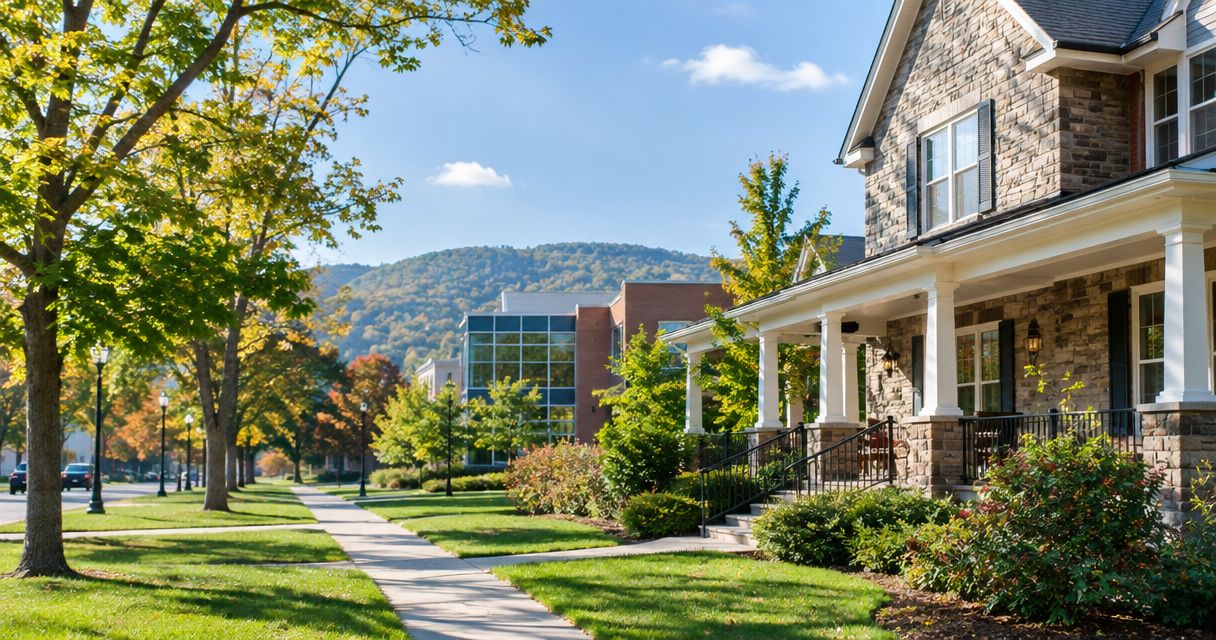
Mariemont is a planned garden-city community east of downtown, built around wide lots, mature trees, and quiet residential streets. Lot sizes here run larger than in most inner-ring Cincinnati neighborhoods, which matters directly for a dog that needs room to run without a daily drive to a park.
Mariemont pros:
- Larger yards than comparable inner-ring neighborhoods
- Low-traffic residential streets suited to leash walks with kids in tow
- Established tree canopy that keeps summer walks cooler
- Strong resale demand if a future move is on the table
Mariemont cons:
- Housing inventory turns over slowly, so timing a purchase takes patience
- Older homes may need fencing added rather than found in place
Best for: pet owners prioritizing private yard space over walk-to-everything convenience. Verdict: Buy.
2. Northside: best for walkable pet owners who want city life
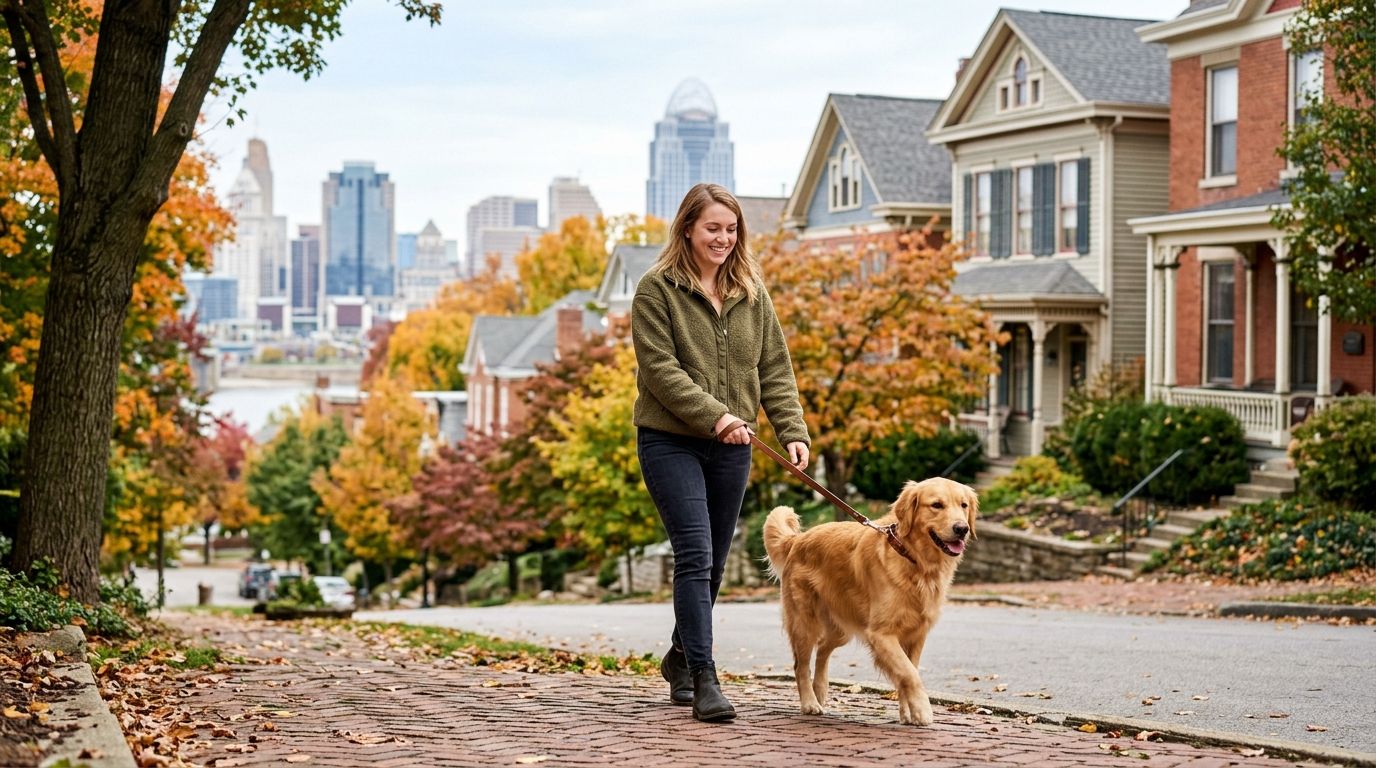
Northside is one of Cincinnati's most walkable urban neighborhoods, with a business district built around independent shops, coffee spots, and patios that routinely welcome leashed dogs. It suits a pet owner who wants daily routine — the coffee run, the evening walk — built into a five-minute radius rather than a car trip.
Northside pros:
- Pet-friendly retail and restaurant patios within walking distance of most housing
- Sidewalk infrastructure that supports multiple daily walks
- Strong sense of neighborhood identity and community events
Northside cons:
- Yards run smaller, and some housing stock has no yard at all
- Street parking and traffic density can complicate leash-walking with reactive dogs
Best for: pet owners who value walkability and city amenities over a large private lot. Verdict: Buy.
3. College Hill: best for off-leash trails and forest access
College Hill borders Mount Airy Forest, one of the oldest municipal reforestation projects in the country, established in 1911. The forest includes a designated off-leash dog park and miles of wooded trail, which puts serious trail time within a five-minute drive for anyone living in the surrounding streets.
College Hill pros:
- Direct proximity to Mount Airy Forest's off-leash area and trail system
- More affordable entry point than several comparable Cincinnati neighborhoods
- Established residential streets with sidewalks in most sections
College Hill cons:
- Older housing stock often needs an inspection focused on aging systems
- Some blocks sit closer to arterial roads with higher traffic noise
Best for: pet owners who prioritize trail access and off-leash time over walkability to retail. Verdict: Hold — a strong fit if the specific block checks out on an inspection.
4. Anderson Township: best for acreage and room to roam
Anderson Township sits along the eastern edge of Hamilton County and typically offers larger lot sizes than the inner-ring suburbs closer to downtown. For a pet owner who wants a fenced half-acre rather than a fenced quarter-acre, this is where that math starts to work.
Anderson Township pros:
- Larger average lot sizes than most Cincinnati-area suburbs
- Lower housing density means quieter streets overall
- Proximity to Lake Isabella for outdoor time beyond the yard
Anderson Township cons:
- Commute times into downtown Cincinnati run longer
- Fewer walkable retail districts than Northside or Mariemont
Best for: pet owners prioritizing space over commute time. Verdict: Buy for anyone not tied to a downtown office schedule.
5. Wyoming: best for established streets and easy vet access
Wyoming is a close-in, tree-canopied suburb with a reputation for stable, low-turnover housing. Its layout keeps through-traffic off residential streets, and its central location within Greater Cincinnati keeps drive times to veterinary clinics short in either direction.
Wyoming pros:
- Mature tree canopy and low-traffic residential grid
- Central location shortens drives to veterinary care
- Long-term neighborhood stability with low year-over-year turnover
Wyoming cons:
- Demand keeps competition tight on available listings
- Lot sizes run smaller than Anderson Township or Mariemont
Best for: pet owners who want a settled, low-traffic street without a long commute. Verdict: Buy.
6. Loveland: best for trail-based daily routines
Loveland sits along the Little Miami Scenic Trail, a paved multi-use path that draws walkers, runners, and cyclists with dogs on a near-daily basis. For an owner whose dog needs miles rather than laps around a block, direct trail access changes the daily routine more than almost any other single feature.
Loveland pros:
- Direct access to the Little Miami Scenic Trail for long daily walks
- Small-town character with a walkable downtown core
- River-adjacent setting for owners who want water access nearby
Loveland cons:
- Some lower-lying pockets sit near flood zones and need a flood-zone check before an offer
- Farther from downtown Cincinnati than the inner-ring suburbs
Best for: pet owners building a routine around trail mileage rather than yard size. Verdict: Hold — confirm flood-zone status on the specific parcel first.
How we ranked these Cincinnati neighborhoods
The ranking weighs yard type and lot size first, since that's the feature buyers with dogs ask about most, followed by trail or park proximity, walkability, and vet access. HOA pet policies and traffic exposure served as tiebreakers between neighborhoods that scored close on the first three criteria.
The same space-conscious logic applies below the yard level, too. A condo or townhome buyer in a walkable neighborhood like Northside often keeps pet ownership simple — a cat, a small dog, or a low-footprint setup like an aquarium — and the same principle that guides picking beginner-friendly saltwater fish for a compact tank applies to matching any pet to a smaller unit: match the animal's actual space needs to the square footage available, not the other way around.
Talk to a Cincinnati pet-owner specialist
Get a shortlist of pet-friendly listings matched to your yard and trail priorities.
Which Cincinnati neighborhood should you choose?
For most pet owners weighing Cincinnati neighborhoods in 2026, Mariemont is the strongest overall pick — the combination of yard size, low traffic, and mature streets covers the widest range of pet needs. If walkability matters more than yard size, Northside is the better fit. If trail mileage is the priority, Loveland or College Hill both deliver, with a flood-zone or inspection check as the one condition to clear first.
None of these six is a wrong choice for a pet owner — the differences come down to which criterion you weight heaviest: yard, trail, walkability, or commute.
FAQ
What is the best Cincinnati neighborhood for pet owners in 2026?
Mariemont ranks best overall for pet owners in 2026 because of its larger lot sizes and low-traffic residential streets. Northside and Anderson Township are strong alternatives depending on whether walkability or acreage matters more.
Is Northside good for dog owners?
Yes — Northside's business district includes shops and patios that regularly welcome leashed dogs, and its sidewalk network supports multiple daily walks. Yards run smaller than in suburban neighborhoods, so it suits owners prioritizing walkability over private outdoor space.
Which Cincinnati suburb has the largest yards for dogs?
Anderson Township and Mariemont both offer larger average lot sizes than most inner-ring Cincinnati neighborhoods. Anderson Township tends to have the largest parcels overall, at the cost of a longer commute downtown.
Are there off-leash dog parks near Cincinnati?
Mount Airy Forest, bordering College Hill, includes a designated off-leash dog park along with miles of wooded trail. It's one of the most established off-leash options in the Cincinnati area.
Do HOAs in Cincinnati suburbs restrict pets?
Some condo and townhome communities carry breed or weight restrictions, particularly in newer developments. Check the specific HOA documents for any property before assuming a pet policy from the neighborhood alone.
Is Loveland a good area for dog walking?
Loveland sits directly along the Little Miami Scenic Trail, a paved multi-use path popular with dog walkers covering longer distances. Some lower-lying sections near the river sit in flood zones, so check flood-zone status before making an offer.
How close is veterinary care in Wyoming, Ohio?
Wyoming's central location within Greater Cincinnati keeps drive times short to veterinary clinics in most directions. This makes it a practical pick for owners managing an older pet or one with ongoing care needs.
One last thing
Mount Airy Forest, the trail network bordering College Hill, was established in 1911 as one of the earliest municipal reforestation projects in the country — meaning the tree cover pet owners walk under today is well over a century old, not a recent park addition. That kind of mature canopy is worth checking for on a listing photo alone: shade changes how livable a yard feels for a dog on an August afternoon in 2026, and it's not something a builder can add after closing.