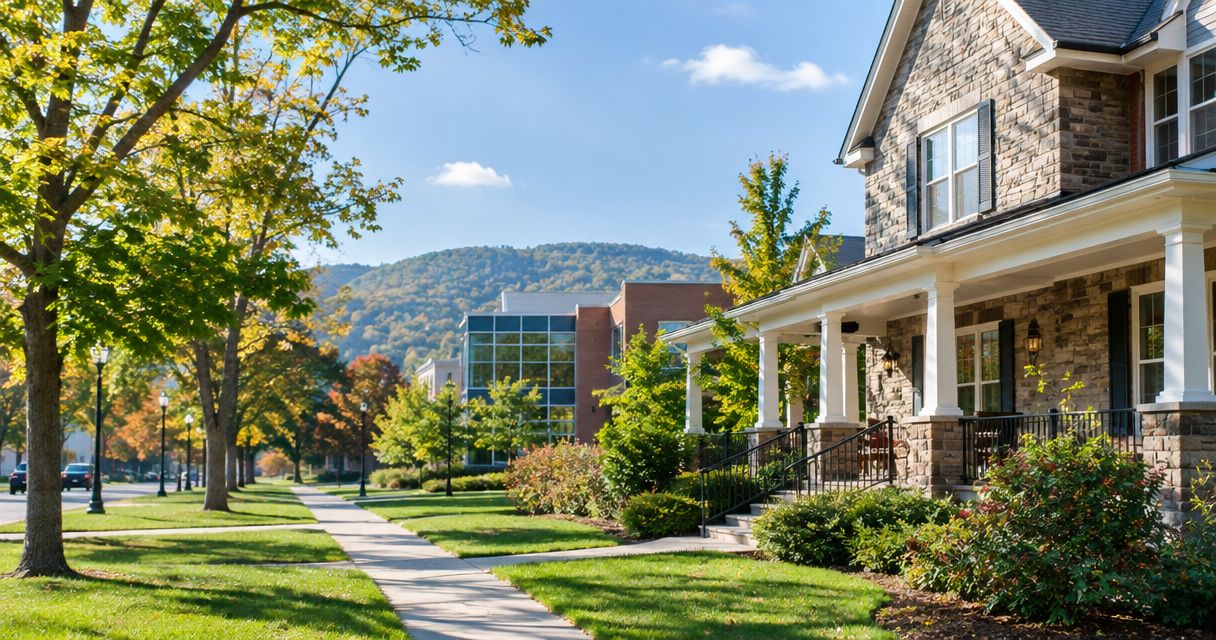
Cincinnati's rental market rewards investors who pick neighborhoods on fundamentals, not hype. Norwood wins as the best overall pick for cash flow, Clifton wins for student rental demand near the University of Cincinnati, and College Hill wins as the best budget entry point for a first investment property.
- Norwood is the best overall Cincinnati neighborhood for rental investment in 2026 thanks to its duplex-heavy housing stock and central location.
- Clifton and Corryville lead for student rental demand next to the University of Cincinnati and UC Medical Center.
- College Hill offers the lowest entry point for a first-time investor building a Cincinnati portfolio.
- Oakley and Walnut Hills carry higher renovation risk but stronger long-term appreciation upside.
- Match the neighborhood to your renter profile before you match it to the purchase price.
Why this matters
Cincinnati investors keep asking the same question: which neighborhood actually cash-flows once you factor in an older housing stock, property taxes, and tenant turnover? Picking the wrong pocket of the city means fighting vacancy for months. Picking the right one means a renter pool that renews without a fight.
Joey Sandlin has spent 20+ years advising Southern Ohio homeowners and investors across Portsmouth, Scioto County, Wheelersburg, Lucasville, Otway, Rarden, and South Webster, and Cincinnati investment questions come up constantly from clients weighing a second market. The neighborhoods below get evaluated the same way any serious investment property purchase in Cincinnati should be: renter demand first, housing condition second, price last.
What makes a Cincinnati neighborhood good for rental investment
- Renter demand drivers — proximity to major employers, hospitals, or universities that guarantee a renter pool
- Housing stock condition — pre-war housing needs more capital before it rents at market rate
- Access to downtown and the interstate system — commute time drives rent ceilings
- Neighborhood trajectory — active permits and business openings signal rising rents ahead of rising prices
- Multi-family availability — duplexes and triplexes spread risk better than single-family rentals
- Local landlord and tax climate — some Cincinnati neighborhoods carry heavier code-enforcement activity than others
Best Cincinnati neighborhoods for rental investment at a glance
| Neighborhood | Best for | Standout feature | Key limitation |
|---|---|---|---|
| Norwood | Cash flow and multi-family stock | Independent city surrounded by Cincinnati, heavy duplex inventory | Aging infrastructure needs inspection before close |
| Clifton / Corryville | Student rental demand | Walking distance to University of Cincinnati and UC Medical Center | Higher tenant turnover every August |
| College Hill | Budget entry point | Lower purchase prices, roughly 8 miles from downtown | Slower appreciation than the east-side neighborhoods |
| Oakley | Young professional renters | Walkable business district, close to Hyde Park | Renovated inventory commands a premium |
| Northside | Long-term appreciation | Revitalized business corridor along Hamilton Avenue | Redevelopment is uneven block to block |
| Walnut Hills | Redevelopment upside | About 3 miles east of downtown, active corridor investment | Heaviest rehab costs on this list |
1. Norwood: best Cincinnati neighborhood for rental cash flow
Norwood is its own incorporated city, fully surrounded by Cincinnati, roughly 6 miles from downtown with direct access to I-71. The housing stock leans toward duplexes and small multi-family buildings, which is exactly the inventory an investor wants for spreading vacancy risk across two or three units instead of one.
Norwood pros:
- Multi-family stock keeps a single vacancy from wiping out monthly cash flow
- Central location pulls renters commuting to downtown, Oakley, or Blue Ash
- Purchase prices still trail the east-side neighborhoods
Norwood cons:
- Older housing stock means roofs, plumbing, and electrical need real inspection budgets
- Independent city status means a separate set of code-enforcement rules to learn
Norwood verdict: Buy. It's the strongest cash-flow play on this list for an investor buying their first Cincinnati rental in 2026.
2. Clifton / Corryville: best Cincinnati neighborhood for student rental demand
Clifton and the adjacent Corryville district sit inside walking distance of the University of Cincinnati and UC Medical Center, roughly 3 miles north of downtown. That guarantees a renter pool every fall regardless of what the broader rental market is doing.
Clifton pros:
- Renter demand tied to enrollment, not the general economy
- Short commute to two of Cincinnati's largest employment centers, the university and the medical campus
- Historic housing stock supports higher per-bedroom rents when split into student units
Clifton cons:
- Turnover every August means more turnover-related repairs and re-leasing costs
- Student tenants bring more property management overhead than working professionals
Clifton verdict: Buy if you want a rental strategy anchored to student housing demand specifically.
3. College Hill: best Cincinnati neighborhood for a first-time investor's budget
College Hill sits about 8 miles northwest of downtown and carries the lowest purchase-price barrier to entry on this list. The housing stock is mostly single-family, built in the early 20th century, with a mix of owner-occupants and long-term rentals already established.
College Hill pros:
- Lowest capital requirement to acquire a first Cincinnati rental
- Established rental base means fewer surprises on occupancy history
- Room for appreciation as adjacent neighborhoods fill in
College Hill cons:
- Appreciation has historically lagged the east-side corridor
- Some blocks still carry deferred-maintenance housing stock
College Hill verdict: Buy for an investor prioritizing entry price over speed of appreciation.
4. Oakley: best Cincinnati neighborhood for young professional renters
Oakley's walkable business district, centered on Oakley Square, sits about 8 miles east of downtown next to Hyde Park. Renters here skew toward young professionals who want a walkable commercial strip without downtown rent levels.
Oakley pros:
- Walkability drives renewal rates higher than in car-dependent neighborhoods
- Proximity to Hyde Park supports steady rent growth
- Renovated units lease quickly to working professionals
Oakley cons:
- Renovated inventory prices out cash-flow-first buyers
- Competition from other investors keeps good listings moving fast
Oakley verdict: Hold for cash flow, Buy if appreciation is the primary goal.
5. Northside: best Cincinnati neighborhood for long-term appreciation
Northside, roughly 5 miles north of downtown, has spent the last several years building out its Hamilton Avenue business corridor. The neighborhood's arts-and-food identity is drawing renters who want character over convenience.
Northside pros:
- Business corridor investment tends to precede residential rent growth
- Distinct neighborhood identity supports renter loyalty and longer stays
- Still priced below Oakley for comparable housing stock
Northside cons:
- Revitalization is uneven block to block, so due diligence on the specific street matters
- Older housing stock carries the same rehab risk as Norwood and College Hill
Northside verdict: Buy for a longer hold, not a quick flip.
6. Walnut Hills: best Cincinnati neighborhood for a redevelopment play
Walnut Hills sits about 3 miles east of downtown near the Peebles Corner commercial district, with active redevelopment underway. This is the highest-risk, highest-upside pick on the list, and it belongs in a portfolio built for a 2026-and-beyond hold, not a quick turn.
Walnut Hills pros:
- Closest proximity to downtown of any neighborhood on this list
- Active corridor investment ahead of full rent recovery
- Historic housing stock with strong architectural bones
Walnut Hills cons:
- Heaviest rehab budgets of any neighborhood here
- Redevelopment timeline is not guaranteed to move on an investor's schedule
Walnut Hills verdict: Wait unless you have renovation capital and a multi-year hold horizon.
How we ranked these Cincinnati rental markets
Each neighborhood got scored against the six criteria above: renter demand, housing condition, access, trajectory, multi-family availability, and the local tax and code-enforcement climate. Norwood, Clifton, and College Hill scored highest on renter demand and entry cost, which is why they lead the list. Oakley, Northside, and Walnut Hills scored higher on trajectory and appreciation but carry more renovation risk, which is why they land lower for an investor prioritizing cash flow over appreciation.
Older housing stock is the common thread across Norwood, College Hill, and Northside specifically. Before closing on a rental in any of these neighborhoods, get a proper roof inspection into the purchase timeline — vetting a reliable roofing contractor before you finalize a renovation budget prevents the kind of surprise that turns a cash-flow property into a money pit in year one. The same logic applies whether you're buying a single-family rental or a duplex or multi-family property in Cincinnati — the inspection contingency matters more than the listing photos.
Which Cincinnati neighborhood should you buy in?
For most investors entering the Cincinnati market in 2026, Norwood is the default pick: multi-family stock, central access, and a price point that still supports cash flow. If your strategy is built around guaranteed renter demand, Clifton wins on proximity to the university and the medical campus. If capital is the constraint, College Hill gets you in the door for less while the neighborhood fills in around you.
Investors selling appreciated properties to redeploy capital into one of these neighborhoods should also look at how a 1031 exchange works when buying a home in Cincinnati before the sale closes — the timeline requirements are strict and missing them turns a tax-deferred move into a taxable one.
Talk through your Cincinnati rental strategy
Get local guidance before you write an offer in 2026.
FAQ
What is the best Cincinnati neighborhood for rental investment in 2026?
Norwood is the best overall pick in 2026 for cash flow, thanks to its duplex-heavy housing stock and central access to I-71. Clifton leads for guaranteed student rental demand, and College Hill offers the lowest entry price.
Is Clifton or Norwood better for a rental property?
Clifton wins for guaranteed renter demand tied to the University of Cincinnati and UC Medical Center. Norwood wins for cash flow because its multi-family housing stock spreads vacancy risk across more than one unit.
Which Cincinnati neighborhoods have the most multi-family rental stock?
Norwood has the heaviest concentration of duplexes and small multi-family buildings on this list. Walnut Hills and Northside also carry multi-family inventory but need more renovation capital.
Is College Hill a good neighborhood for a first rental property?
Yes, College Hill is the most affordable entry point on this list, roughly 8 miles northwest of downtown Cincinnati, with an established base of long-term single-family rentals.
How far is Walnut Hills from downtown Cincinnati?
Walnut Hills sits about 3 miles east of downtown Cincinnati, making it the closest neighborhood on this list to the central business district. It also carries the heaviest rehab costs of the group.
Do older Cincinnati rental properties need extra inspection before purchase?
Yes. Neighborhoods like Norwood, College Hill, and Northside have pre-war housing stock where roofs, plumbing, and electrical systems need a full inspection before the renovation budget gets set.
What should an investor check before buying a rental in Cincinnati?
Check renter demand drivers, housing age and condition, distance to downtown or major employers, and the local code-enforcement climate. Purchase price should be the last factor, not the first.
One last thing
The neighborhoods that look cheapest on paper in 2026 — College Hill, parts of Norwood — are cheap because the housing stock is older, not because demand is weak. Budget the inspection and the roof line item into the offer before you run the cap rate math, or the first year of ownership erases the discount you thought you got.